Short Note / Jul 11, 2026
DOW-UAP-PR115: why an infrared point can flicker in a UAP video
DOW-UAP-PR115 does not resolve its small infrared contrast area. Its official note gives a concrete sensor warning: auto-gain can make a source near its background temperature blend in or appear to flicker.

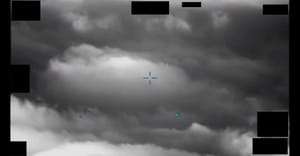
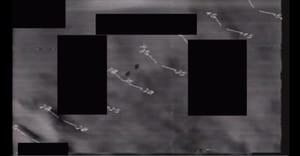
DOW-UAP-PR115 is a 2019 Gulf of America record in PURSUE Release 04. The public file contains eight seconds of infrared material from a U.S. Air Force sensor. AARO’s accompanying note addresses a feature viewers often mistake for object behaviour: flicker.
What auto-gain changes
According to the record description, infrared auto-gain can cause a source near the temperature of its background to blend into that background or appear to flicker. That is a sensor-processing warning, not an identification of the source in PR115.
The distinction matters because a flickering mark can look like an object changing brightness, shape, or state. In the released frames, the contrast area remains small and transient. The public release does not provide the additional data needed to test those impressions, such as range or a second imaging channel.
What the file does not settle
The auto-gain note does not prove the contrast area was background-temperature noise, a conventional object, or any other specific source. It explains why the visible flicker alone cannot carry those conclusions.
PR115 remains unresolved in the release. That label records the absence of a final determination; it does not turn the infrared point into a resolved physical object.
The useful next data
A sensor mode, gain setting, range estimate, or calibrated original file would make the image easier to assess. The public version gives viewers a short infrared fragment and one important technical caveat: contrast can vanish into its thermal background and return as the display adjusts.