News / Jul 18, 2026
When the Sky Burns: Perseids, Fireballs, and the UFO Reports That Weren't
Every August, the Perseids peak — and so do UFO hotline calls. Pilots report lights moving faster than any aircraft should. Residents describe glowing objects that "dropped out of the sky" with a tail. Radar operators occasionally log contacts nobody can immediately identify. The recurring explanation, when one comes, is usually a bright meteor. But the cases below show that "usually" is doing a lot of work.
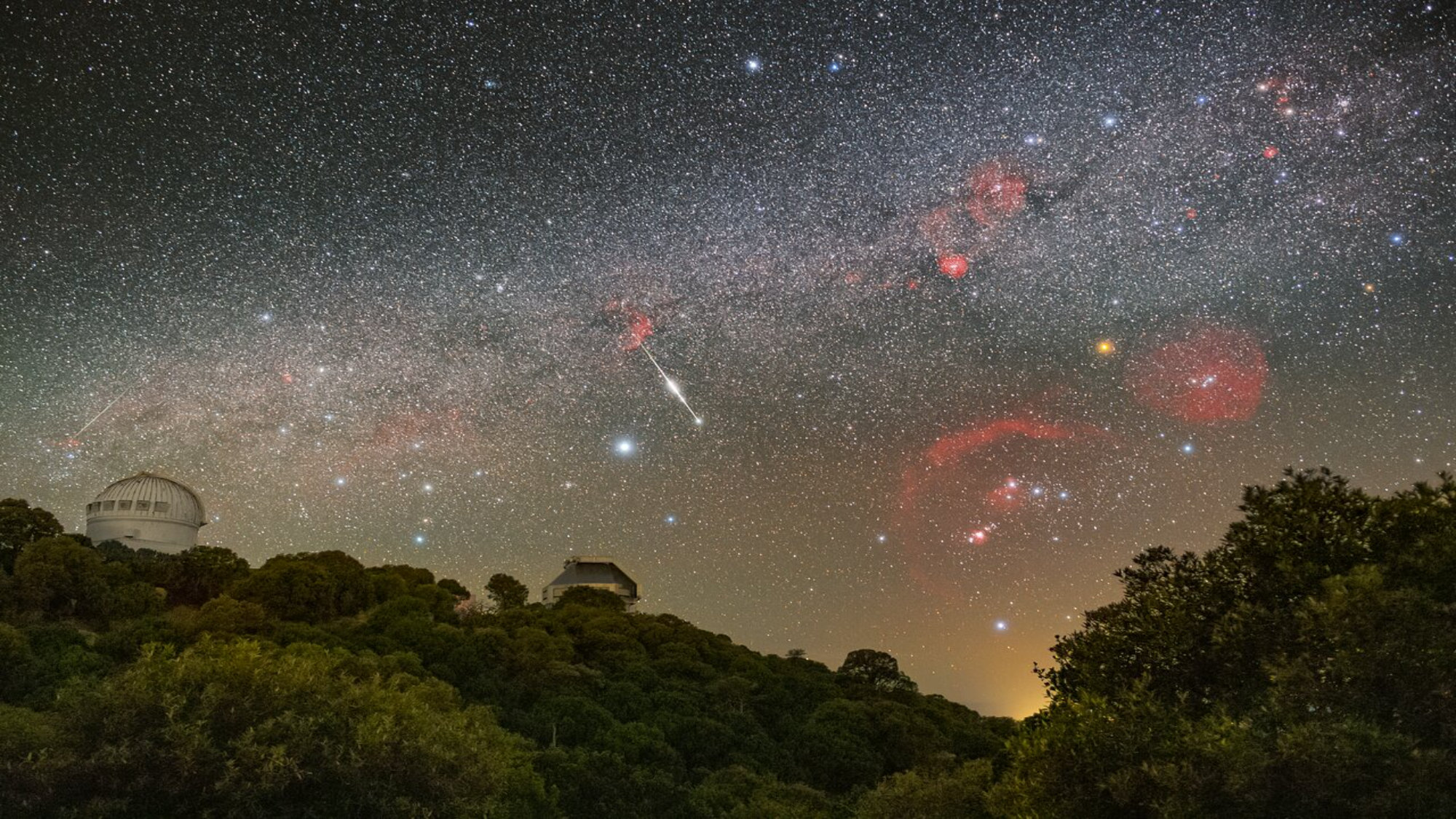
What the Perseids Actually Are
The Perseids are debris from Comet 109P/Swift-Tuttle, a trail of rock and dust that Earth crosses every summer between mid-July and late August, typically peaking around August 12–13. Most particles burn up as unremarkable one-second streaks. Larger fragments become fireballs: objects rivaling Venus in brightness, trailing colored light, occasionally loud enough to produce a sonic boom as they break apart.
A fireball entering the atmosphere at 40 to 70 kilometers per second can cross half the visible sky in a few seconds — fast enough that ground observers, pilots, and even radar operators have mistaken the effect for something structured and deliberate rather than a burning rock. Nickel and magnesium content can turn the trail green or turquoise, colors rare enough in the night sky to draw outsized attention. And when a meteor breaks apart mid-flight, it can look like multiple objects flying in formation — a detail that shows up repeatedly in the pilot accounts below.
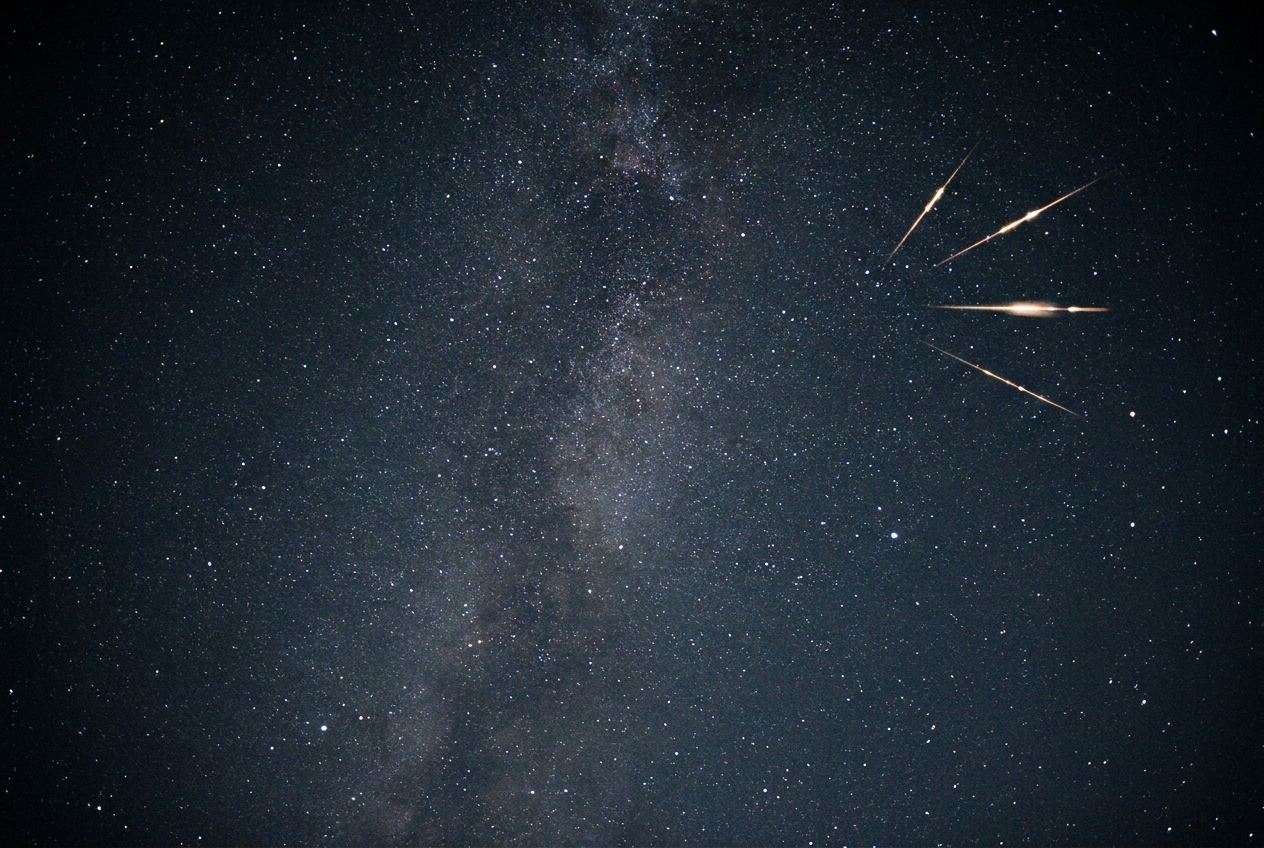
Six Cases, Six Different Outcomes
Lakenheath-Bentwaters, August 1956
On the night of August 13–14, near the Perseid peak, radar at two neighboring Suffolk air bases tracked contacts that vanished and reappeared, including one target that reportedly reversed direction abruptly; NICAP records cite speeds approaching 18,000 mph and a failed intercept by a scrambled jet. The Condon Committee later called it "the most puzzling and unusual case in the radar-visual files" — not a meteor identification, but an acknowledgment that conventional explanations didn't fully fit either. Skeptic Philip Klass argued for a mix of anomalous radar propagation and misread meteor activity. Seventy years later, the case remains open, sitting awkwardly between both explanations.
Chiles-Whitted, July 1948
Pilots Clarence Chiles and John Whitted described a glowing, cigar-shaped object racing toward their aircraft near Montgomery, Alabama, before banking into a cloud. Project Sign initially treated the report seriously. Astronomers J. Allen Hynek and Donald Menzel, working independently, later concluded the pilots had likely seen a bolide reshaped by memory into something more solid-looking. Project Blue Book eventually filed it under probable meteor — though the identification never became unanimous among later researchers.
The Green Fireballs, 1948–1952
Bright green fireballs kept appearing over southern New Mexico, clustered suspiciously near the Los Alamos and Sandia nuclear labs, feeding fears of Soviet surveillance tech or something entirely unclassified. Astronomer Lincoln LaPaz searched extensively and found no craters, no fragments, nothing consistent with a normal meteorite impact — which deepened the mystery instead of closing it. Time magazine covered the phenomenon in 1951 under the headline "Great Balls of Fire." It's remembered less as a solved case than as a moment when location, not evidence, turned a sky phenomenon into a security question.
The 1973 Wave
Hundreds of UFO reports swept through states like Kentucky, Ohio, and Georgia that fall, with witnesses describing objects that appeared suddenly, hovered, then shot away. Elevated meteor activity likely explained a portion of the individual sightings, but the wave's overall size owed as much to media coverage and copycat reporting as to anything in the sky — the meteor explanation cleared up individual cases without accounting for the phenomenon as a whole.
Canada, July 2021
A Royal Canadian Air Force Globemaster and a KLM 787 both reported a bright green object over the Gulf of St. Lawrence that vanished into a cloud. NORAD confirmed the military aircraft's altitude change was routine, not evasive, contradicting some viral claims of a near-miss. Canada's own occurrence-reporting system filed the object under a catch-all: weather balloon, meteor, rocket, or UFO. The date sits within the Perseids' early activity window, making a fireball plausible — but the government's file never confirmed it.
Ireland, November 2018
Multiple commercial pilots, including a British Airways captain and a Virgin Atlantic crew, reported a very bright object off County Kerry moving at extreme speed before veering sharply. One pilot suggested live on the radio that it might be a meteor or re-entering debris. The Irish Aviation Authority opened a formal investigation — and nearly four years later closed it as "inconclusive," not confirmed as a meteor at all, despite how the case is often summarized in retrospect.
Telling the Difference Yourself
A few practical markers separate a Perseid fireball from a harder-to-explain sighting: duration (a Perseid burns out in one to three seconds; unresolved UAP reports often show sustained tracks lasting much longer), path (meteors move in a straight, predictable line, while many contested reports describe sudden turns), and color (green or turquoise usually points to metal content in a meteor, a shade uncommon in aircraft lighting). Clear skies in July or August raise the baseline odds that an unexplained light is meteoric — though as Lakenheath-Bentwaters and the Irish case show, raised odds are not the same as a closed file.
None of this makes the Perseids a universal explanation. What connects these six cases is less a tidy pattern than an uneven track record: some incidents got a clean meteor identification, others got an official "inconclusive," and at least one has resisted resolution for nearly seventy years. The meteors will keep arriving every August. Whether any given report from that month gets solved, misfiled, or left open seems to depend less on the sky than on who happens to be looking up, and how long anyone stays interested enough to check.
Sources
- Lakenheath-Bentwaters incident — Wikipedia; NICAP records; Condon Committee report; Philip Klass skeptical analysis
- Chiles-Whitted UFO encounter — Wikipedia; Project Sign and Project Blue Book files; J. Allen Hynek, Donald Menzel analyses
- "Great Balls of Fire" — Time magazine, November 1951; History.com (Green Fireballs over New Mexico)
- 1973 UFO wave — Center for UFO Studies (CUFOS); NICAP; James Hatter commentary
- Canadian pilot green UFO, July 2021 — Vice News; Canadian Civil Aviation Daily Occurrence Reports; NORAD statement
- Irish pilot UFO, November 2018 — Irish Aviation Authority; Irish Examiner; pilot radio archive
- NASA Meteor Watch; American Meteor Society (AMS); Sky at Night Magazine ("17 things commonly mistaken for UFOs")