
note / May 11, 2026
AI completes the UAP for you
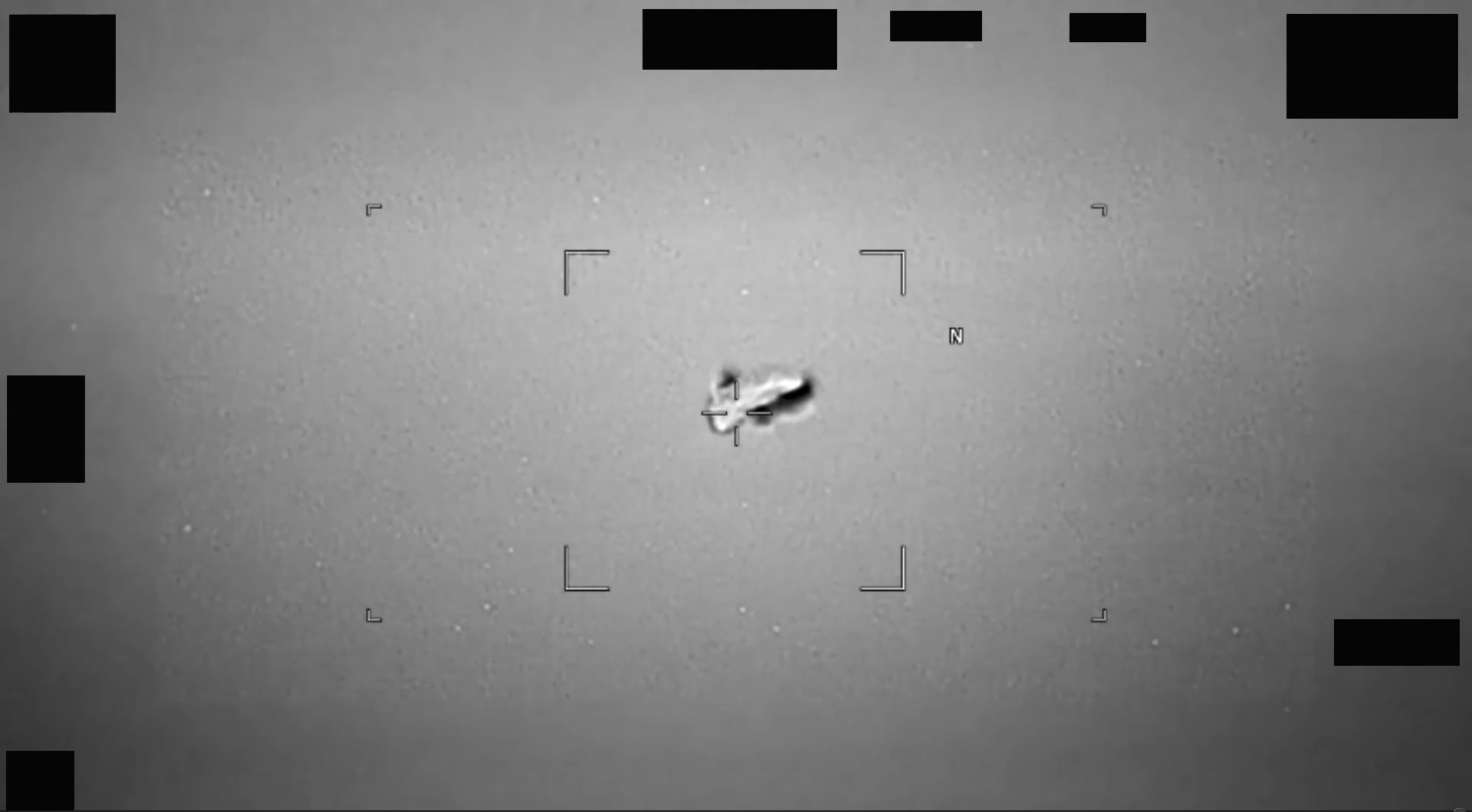
PR-046 is a nine-second infrared clip with a football-shaped contrast blob and three projections. The useful lesson is not that AI can identify it, but that AI shows how fast a vague frame becomes a story.
official sourceDVIDS: DOW-UAP-PR46, Unresolved UAP Report, INDOPACOM, 2024
The official frame
PR-046 is one of the cleaner examples of a modern UAP problem: the source is official, but the public information is thin.
DVIDS describes the case as nine seconds of infrared footage from a U.S. military platform in INDOPACOM in 2024. The reporter did not provide an oral or written description of the observation. The public description says the sensor focuses on a contrast area resembling a football-shaped body with three radial projections.
The same page also warns readers not to treat that description as an analytical judgment, investigative conclusion, or factual determination.
The trap
That caveat is the whole case.
The public is not looking at an object. It is looking at a processed infrared frame: contrast, sensor behavior, compression, atmosphere, motion, range uncertainty, and the choices made by whoever clipped and published the video.
But the mind does not like leaving a blob as a blob. Give it a “football-shaped body” and three projections, and it starts completing the missing geometry. A balloon becomes a craft. A craft becomes a program. A program becomes proof.
What the AI image is doing
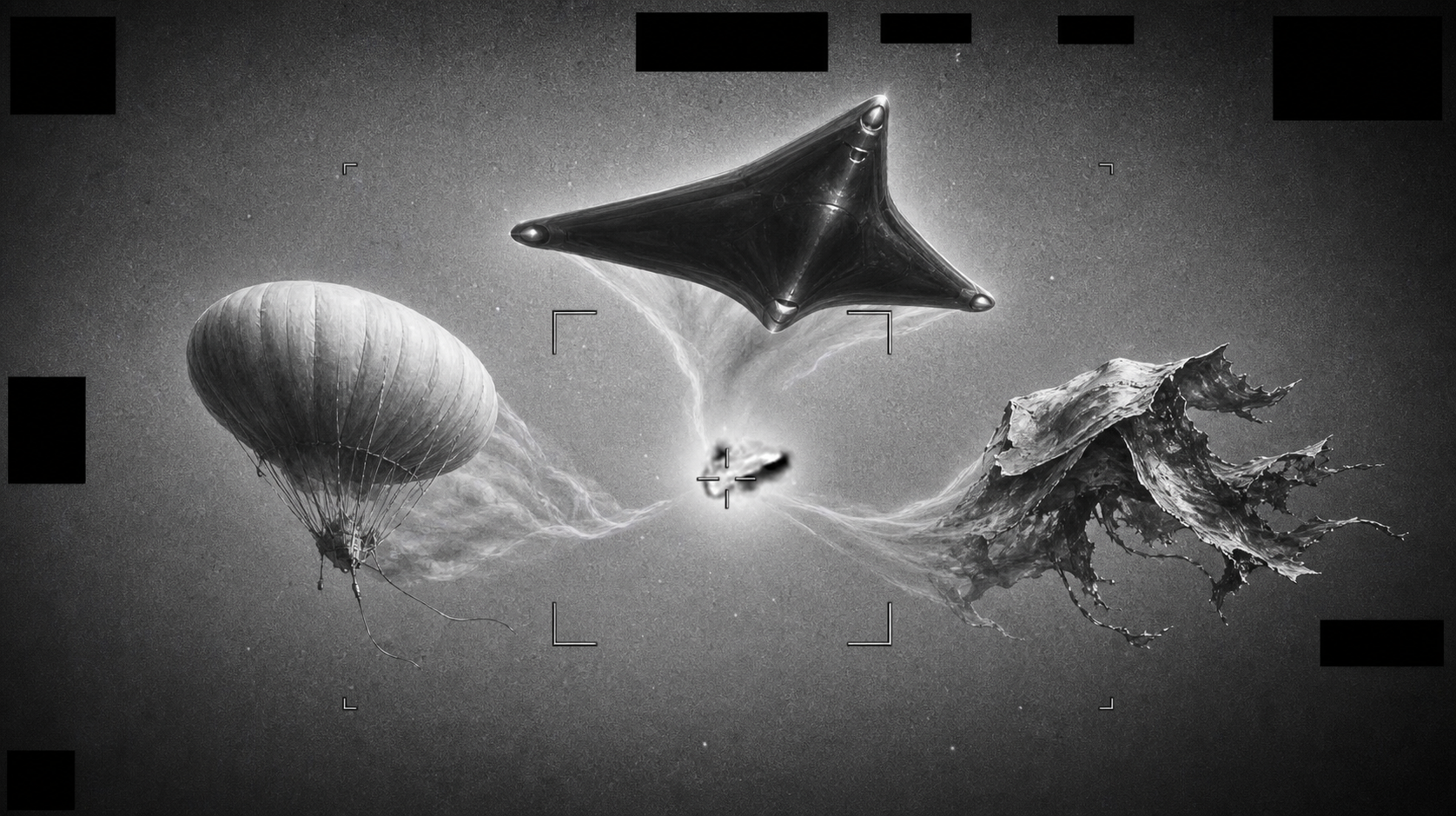
The second image above is not a reconstruction in the forensic sense. It is a reconstruction of interpretation.
From the same vague visual seed, it makes three dramatic possibilities: a tethered aerostat, torn reflective material, and an exotic compact craft. That is useful precisely because it is artificial. It shows how easily a weak frame can be made to feel stronger than it is.
This is the danger with AI in UAP research. It can make uncertainty look designed. It can turn a low-information source into a high-confidence picture.
The balloon fit
Metabunk's PR-046 thread points at a mundane comparison: a tethered surveillance aerostat or balloon-like object. The thread notes that if the footage is inverted, the official “three radial projections” language begins to look compatible with known aerostat shapes.
That does not settle the case. It does set a useful floor: before “unknown craft,” the shape has to survive comparison with known airborne systems, wind behavior, tethered platforms, and thermal-image artifacts.
What would actually help
The public clip needs context more than imagination: range, platform motion, altitude, sensor mode, full video before and after the nine seconds, wind data, metadata, and the reason the event stayed unresolved.
Without those, the honest reading is narrow. PR-046 is visually interesting and officially released. It is also too thin to carry the weight people will want to put on it.
Where this leaves it
The best use of PR-046 is not as a trophy clip. It is a teaching object.
It shows the gap between “official” and “understood.” It also shows the new problem AI adds to UAP culture: the moment a frame is ambiguous, the machine can generate the missing UFO for us.