News / Jul 29, 2026
Rendlesham Forest: what the 1980 U.S. Air Force record actually says
The famous Rendlesham Forest UFO case has a real military paper trail. Its strongest document is narrower, and stranger, than the legend built around it.
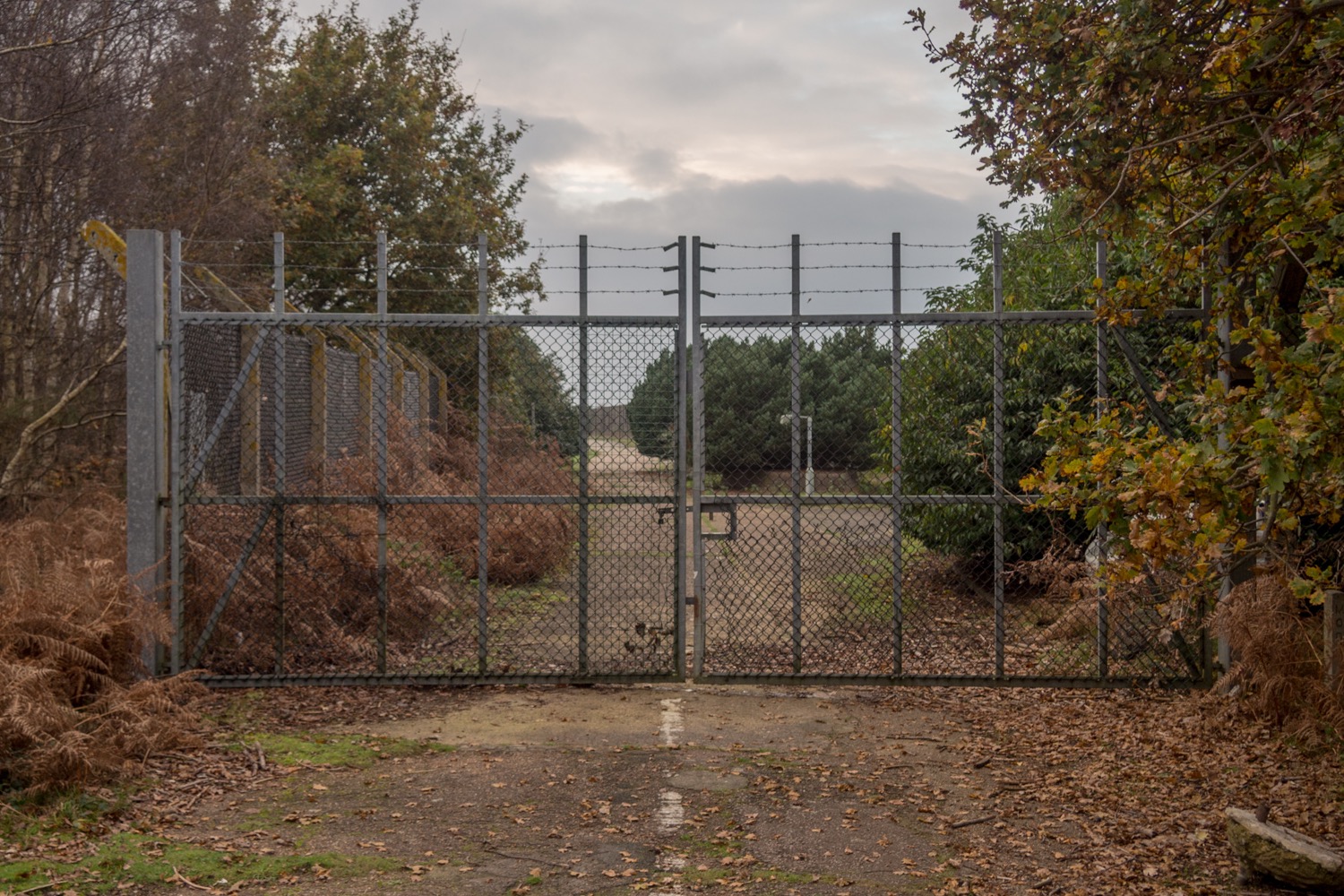
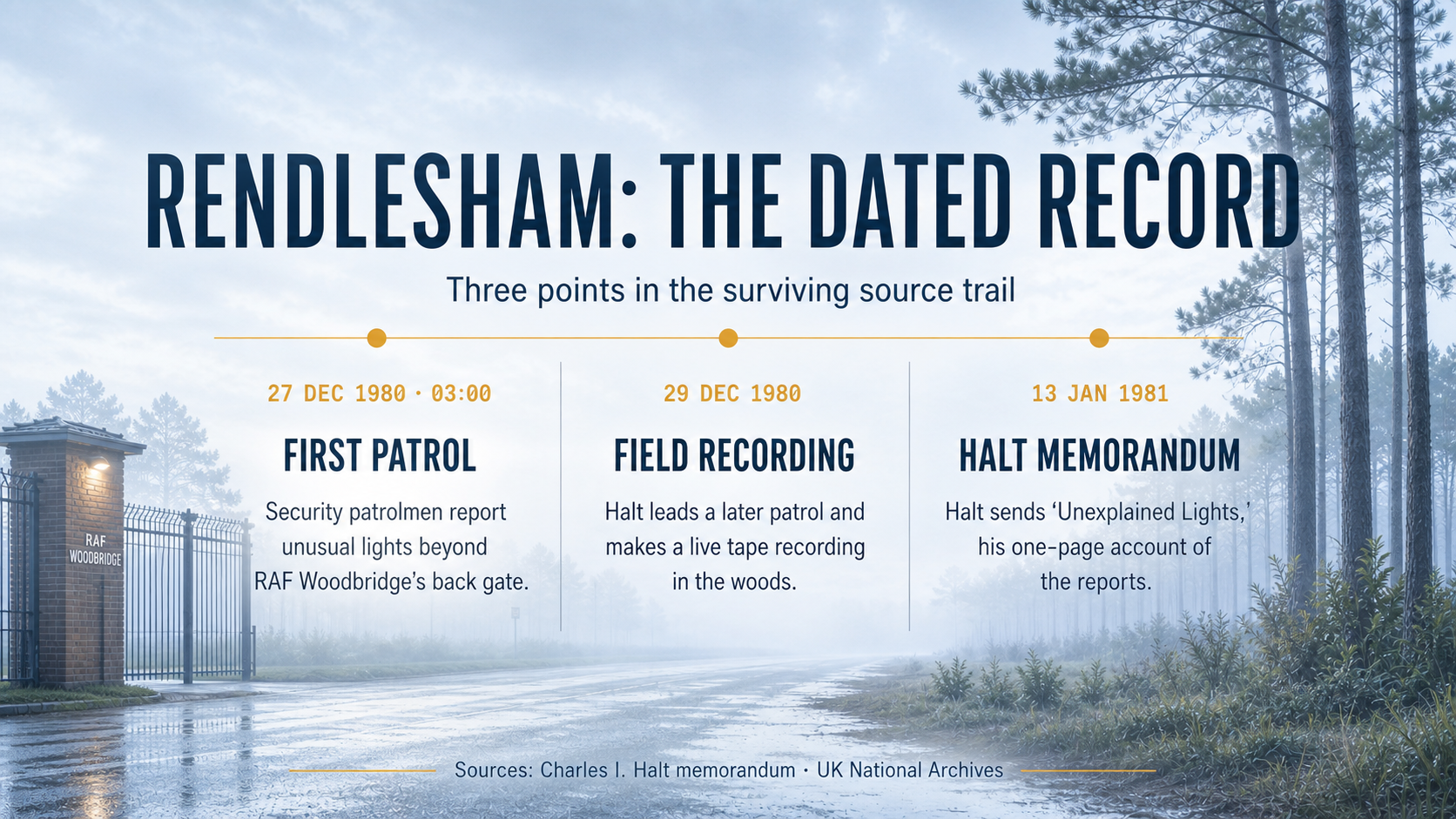
Near the back gate of RAF Woodbridge in Suffolk, two U.S. Air Force security patrolmen saw unusual lights shortly after 3 a.m. on 27 December 1980. Their first thought, according to the officer who later wrote it up, was an aircraft accident. They asked to leave the base perimeter and investigate the forest.
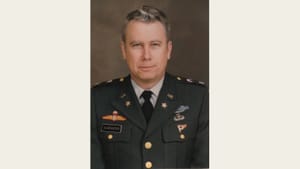
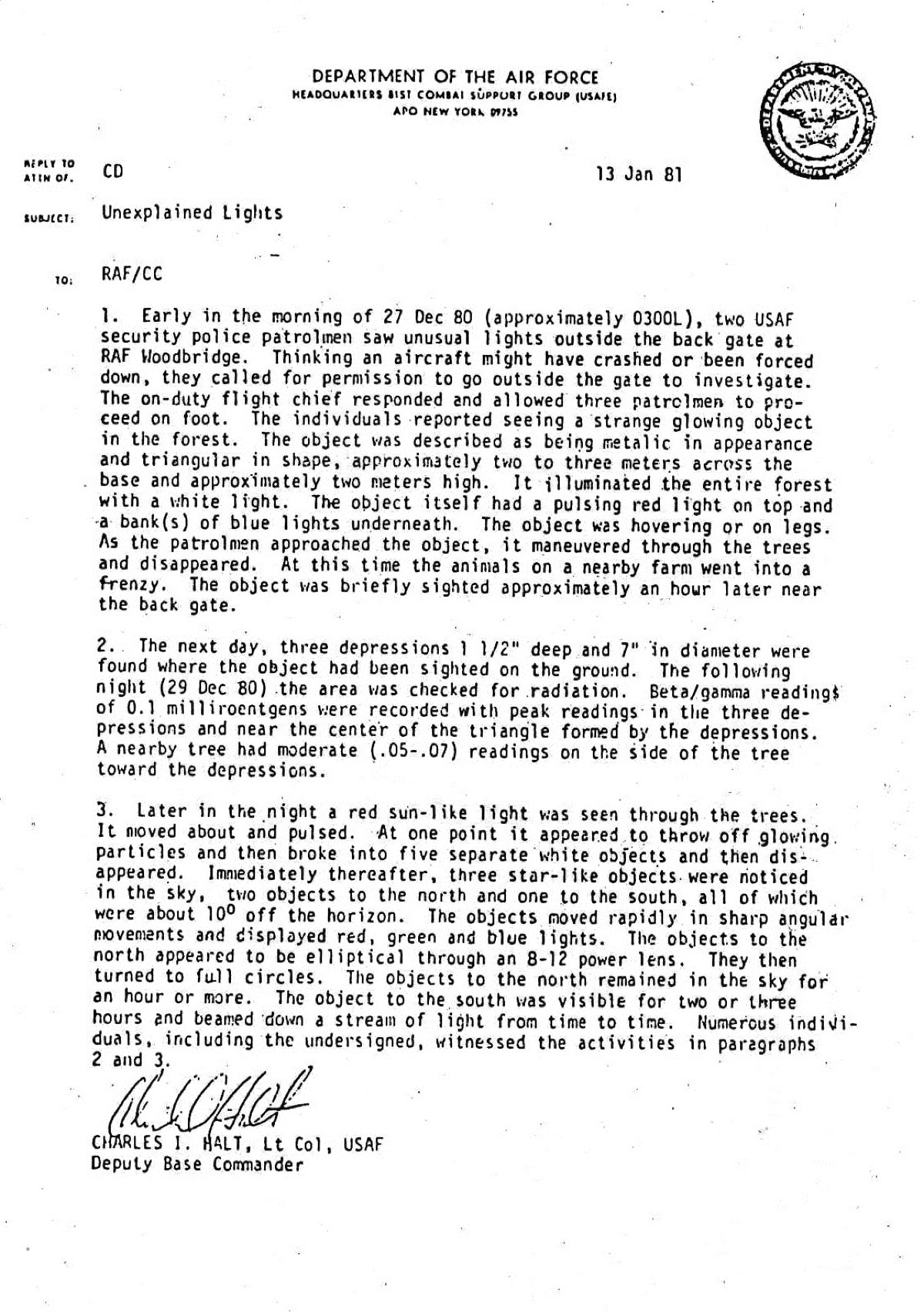
Halt, then the deputy base commander, set out the account in a one-page memorandum dated 13 January 1981. It describes a glowing object, lights in the sky, marks on the ground and a later patrol led by Halt himself.
The memorandum records what the airmen reported and what Halt later said he saw. It does not attach an identified object, photographs or the results of a completed investigation.
What the memo says
Halt's memo is headed Unexplained Lights. It says the first patrol reported a metallic-looking, triangular object in the trees, roughly two to three metres across, with a red light above and blue lights below. The memo says it appeared to move through the trees and disappear.
The following day, the report says, personnel found three small depressions and marks on nearby trees. It also records beta/gamma readings of 0.1 milliroentgens, with peak readings in the depressions and near the centre of the triangle they formed. A nearby tree was reported to have readings of 0.05–0.07 milliroentgens on the side facing the depressions.
On the later night, Halt took a team into the woods. His memo describes lights moving through the trees and, later, three star-like objects in the sky. One was said to send down a stream of light at intervals.
The recording and the missing follow-up
The UK National Archives says Halt made a live tape recording during the later expedition. Its guide to the Ministry of Defence UFO files also identifies the original report and follow-up papers as DEFE 24/1512, and a later Rendlesham file as DEFE 24/1948/1.
The tape preserves reactions made in the field rather than a recollection given decades later. It is not, however, an instrument record that can independently identify a distant light, aircraft or vehicle.
The MoD record contains no documented follow-up to the radiation figures in the memo. In 1997, the government said the report had been judged to contain nothing of defence significance and that there was no record of an official assessment of Halt's readings. In 2001, it said the only USAF material it held was Halt's memorandum, that it had no evidence of another official USAF investigation or documentation, and that records from the period showed no unusual radar returns.
What later accounts added
Rendlesham acquired the nickname "Britain's Roswell" after the event entered the press and UFO literature. The later story includes more witness interviews, reconstructions, theories about the nearby Orfordness lighthouse and claims that go beyond the concise 1981 report.
Sergeant Jim Penniston, one of the original patrolmen, later described approaching and touching a craft. Those details do not appear in Halt's memo. Its narrower account is that servicemen at RAF Woodbridge reported unusual lights on two nights, and that Halt believed his patrol saw something he could not identify.
There is no surviving official radar confirmation in the MoD record cited by Parliament, and no official assessment of the memo's radiation figures. Those are the two most concrete gaps in the file.
What survives in the file
The surviving record contains a named senior officer, a dated memorandum and a contemporaneous field recording. It preserves an episode military witnesses could not identify at the time. It does not identify what they saw.
Sources
- The National Archives: UFO reports. The archive's Rendlesham entry identifies the December 1980 correspondence as DEFE 24/1948/1.
- The National Archives: Briefing document on records regarding UFOs, pp. 12–13. It describes the two nights, Halt's recording and the relevant file references.
- Charles I. Halt, “Unexplained Lights,” 13 January 1981. Scan of the contemporaneous memorandum.
- UK Parliament, House of Lords: Lieutenant Colonel Charles Halt Memorandum, 14 October 1997. The MoD said there was no record of an official assessment of the reported radiation readings.
- UK Parliament, House of Lords: Rendlesham Forest Incident, 16 October 2001. The MoD said it held no evidence of another official USAF investigation or unusual radar returns.
- Taras Young: RAF Woodbridge East Gate, 30 November 2014, CC BY-SA 4.0. Feature photograph; it shows the former East Gate, not the 1980 event.