News / Jul 25, 2026
John B. Alexander and the Advanced Theoretical Physics Working Group
Retired Army Colonel John B. Alexander remains a notable figure in the history of UAP research. Through military service, laboratory work, and later private research networks, he helped track where official interest in unidentified aerial phenomena actually existed within the U.S. defense establishment.
In the history of official interest in unidentified anomalous phenomena, John B. Alexander occupies a distinct place. Rather than presenting himself as a witness to extraordinary encounters, he focused on a different question: whether any U.S. government office held authoritative answers, data, or recovered materials related to UFOs.
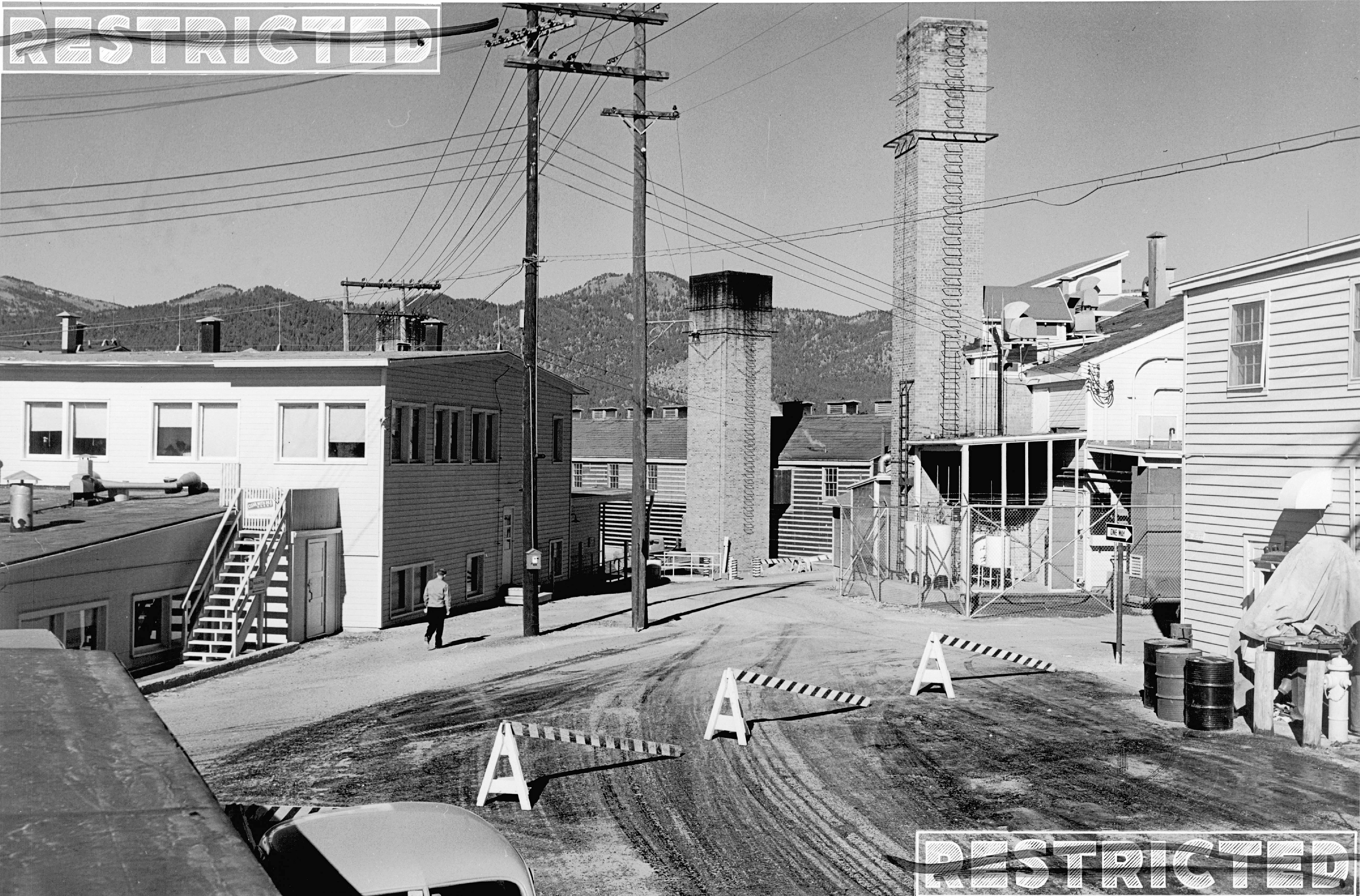
Alexander’s career included Special Forces service in Vietnam, later work at Los Alamos National Laboratory, and participation in Robert Bigelow’s National Institute for Discovery Science (NIDS). That background gave him access to military, technical, and scientific circles that were often separate from the public UFO debate.
The 1985 ATP project
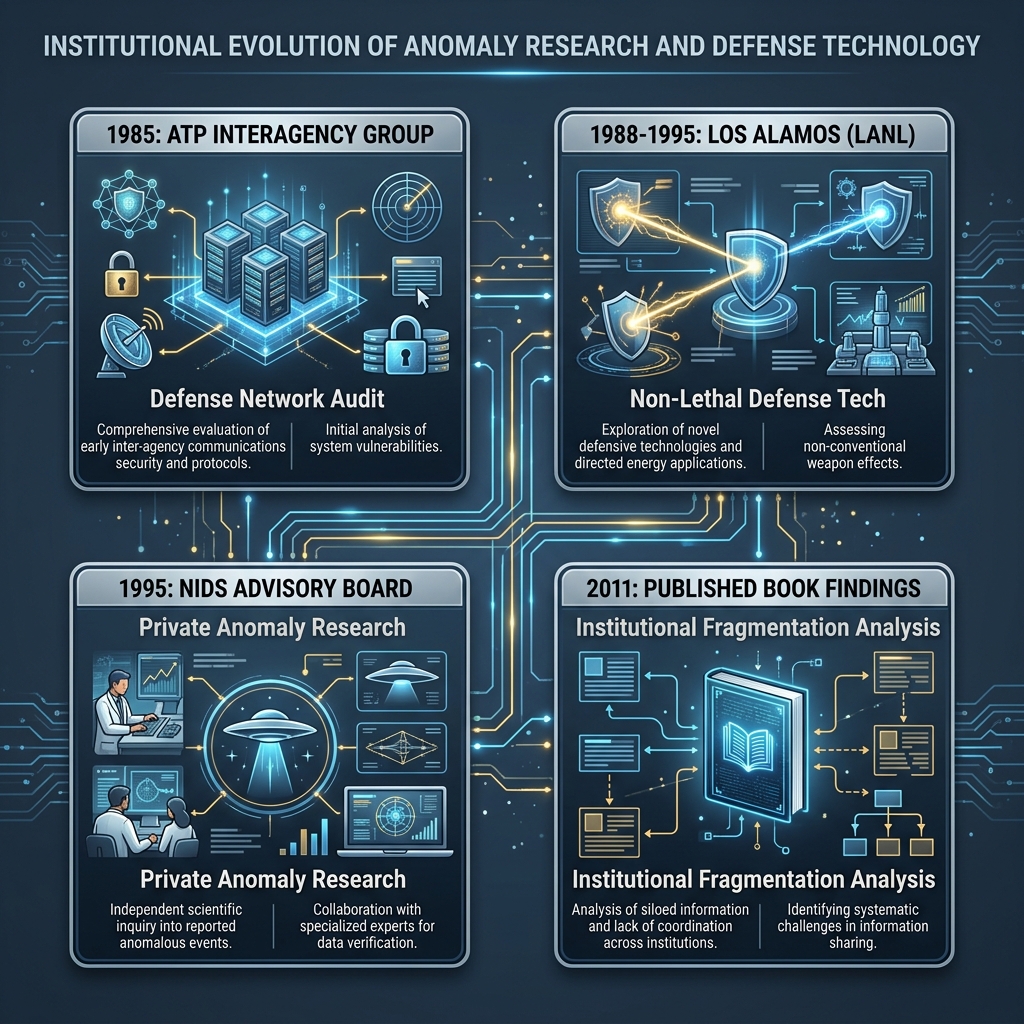
In 1985, Alexander helped organize an informal study group known as the Advanced Theoretical Physics (ATP) project. According to Alexander’s later account, the group brought together military officers, intelligence personnel, engineers, and defense contacts to discuss whether any compartmented government program possessed definitive UFO-related material or knowledge.
The group’s purpose was not to prove or disprove extraterrestrial hypotheses. Instead, it tried to determine whether a hidden repository, office, or program actually existed inside the national security system.
In Alexander’s telling, the result was not the discovery of a central UFO authority, but rather a pattern of fragmented information, inconsistent reporting, and limited institutional follow-through. He later discussed that experience in his 2011 book, UFOs: Myths, Conspiracies, and Realities.
Los Alamos years
From the late 1980s into the mid-1990s, Alexander worked at Los Alamos National Laboratory as project manager for non-lethal defense. His work included areas such as acoustic systems, high-power microwaves, non-lethal chemical agents, and directed-energy concepts for military and law-enforcement use.
That role did not make him a UAP researcher in the formal sense, but it placed him inside a high-level technical environment. It also explains why he could discuss anomalous claims with physicists, engineers, and defense officials without operating as an outside commentator.
NIDS and private research
After leaving government service, Alexander joined the Science Advisory Board of NIDS, the private research organization founded by Robert Bigelow in 1995. NIDS investigated a wide range of anomalies, including aerial reports and field cases associated with Skinwalker Ranch.
At NIDS, Alexander worked alongside figures such as Jacques Vallée, Edgar Mitchell, and Colm Kelleher. The project helped establish a model for later private-sector investigations into defense-adjacent anomaly research.
That lineage is often linked to Bigelow Aerospace Advanced Space Studies (BAASS), which later received the DIA’s AAWSAP contract in 2008. The AAWSAP / AATIP history is frequently conflated, so the distinction matters: AAWSAP was the contract, while AATIP is usually discussed as a related but separate label in the public record.
Why Alexander matters
Alexander’s importance lies less in dramatic claims than in institutional perspective. He represents a type of insider who tried to trace the bureaucratic footprint of UAP interest across military, intelligence, and scientific networks.
His broader argument is that official UAP history was rarely centralized or orderly. It was more often scattered across individuals, short-lived initiatives, and fragmented channels of communication.
Related UAP Logbook reading
- Robert Bigelow's UFO machine had a contract number
- Hal Puthoff never really left the edge
- The CIA archive has a UFO and psi problem
- The Grusch / Immaculate Constellation question changed doors