Short Note / Jun 04, 2026
The Roswell bodies page people skip
The Air Force answer to Roswell bodies was not one clean event. Page 16 of Case Closed makes a messier argument: memories from years of balloon work, dummy recoveries, and two later accidents got pulled back into July 1947.
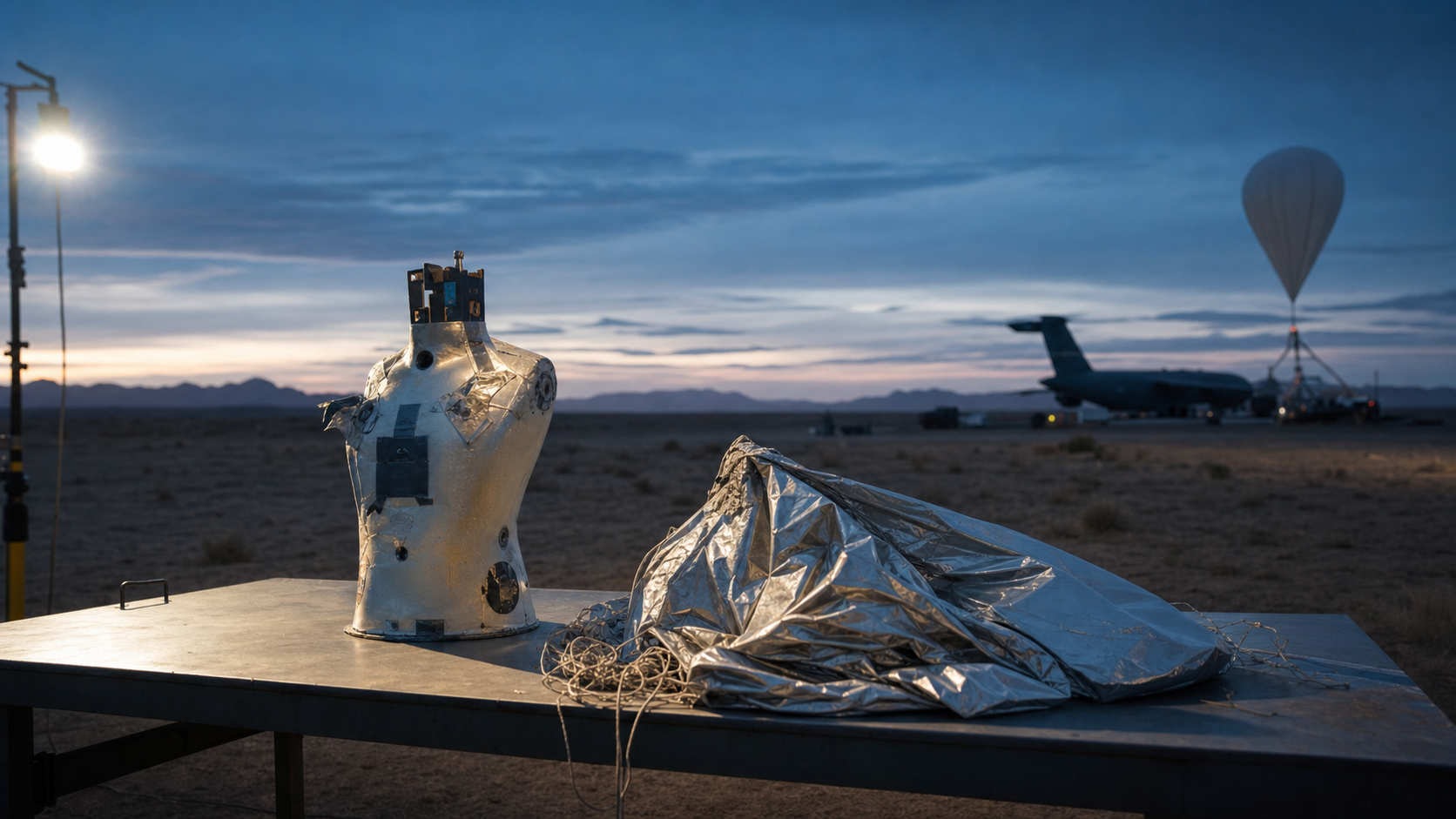
The 1997 U.S. Air Force report on Roswell bodies didn't give one answer. Page 16 of The Roswell Report: Case Closed lays out a messier argument: events from different years got folded back into July 1947 — high-altitude balloon work, test dummies, recovery teams, and two later accidents. The later ones were a 1956 KC-97 crash that killed 11 Air Force members and a 1959 manned-balloon mishap that injured two pilots.
The shortcut version of the Air Force answer is "test dummies." The actual argument is memory-mixing. That's the version worth arguing with: not one dummy in a desert, but scenes, witnesses, and retellings from later years pulled toward Roswell after the story reopened in the late 1970s.
The same report says body claims only entered the Roswell case after 1978, attaching themselves to the July 1947 recovery of Project Mogul components. First the debris story, then decades later the body story attached itself to it.
Page 16 isn't vague. The "aliens" in the New Mexico desert were probably test dummies; the unusual military activity was balloon launch and recovery work; the hospital-body claims were most likely a blend of the KC-97 crash and the manned-balloon accident. That gives critics a cleaner target: the dummy timeline has to fail, the KC-97 and balloon-accident overlap has to fail, the late arrival of body claims after 1978 has to fail. Cleaner than arguing with the word "dummy."
Roswell survives because people remember the contradiction: first a flying disc, then a balloon. The body story survives in a different way — witnesses, books, TV segments, and later retellings added rooms, stretchers, small bodies, hospital scenes, and autopsy claims to a case that began with debris in a field. The Air Force answer isn't that everyone imagined the same thing at once. It's that they remembered different things from different years and put them into one famous week.
Dry, yes.
Also harder to dismiss without reading the page.
Sources
- U.S. Air Force: The Roswell Report.
- Project Gutenberg mirror: The Roswell Report: Case Closed, text version.
- DisclosureIndex / TransparencyUFO post, June 4, 2026.