Science / Jun 01, 2026
Salvatore Pais and the UFO patents the Navy fought for
The patent office pushed back. The Navy pushed harder. Years later, Salvatore Pais is still talking about the UFO patents that made his name impossible to ignore.
The Navy UFO patents did not begin as folklore.
The patent office pushed back first.
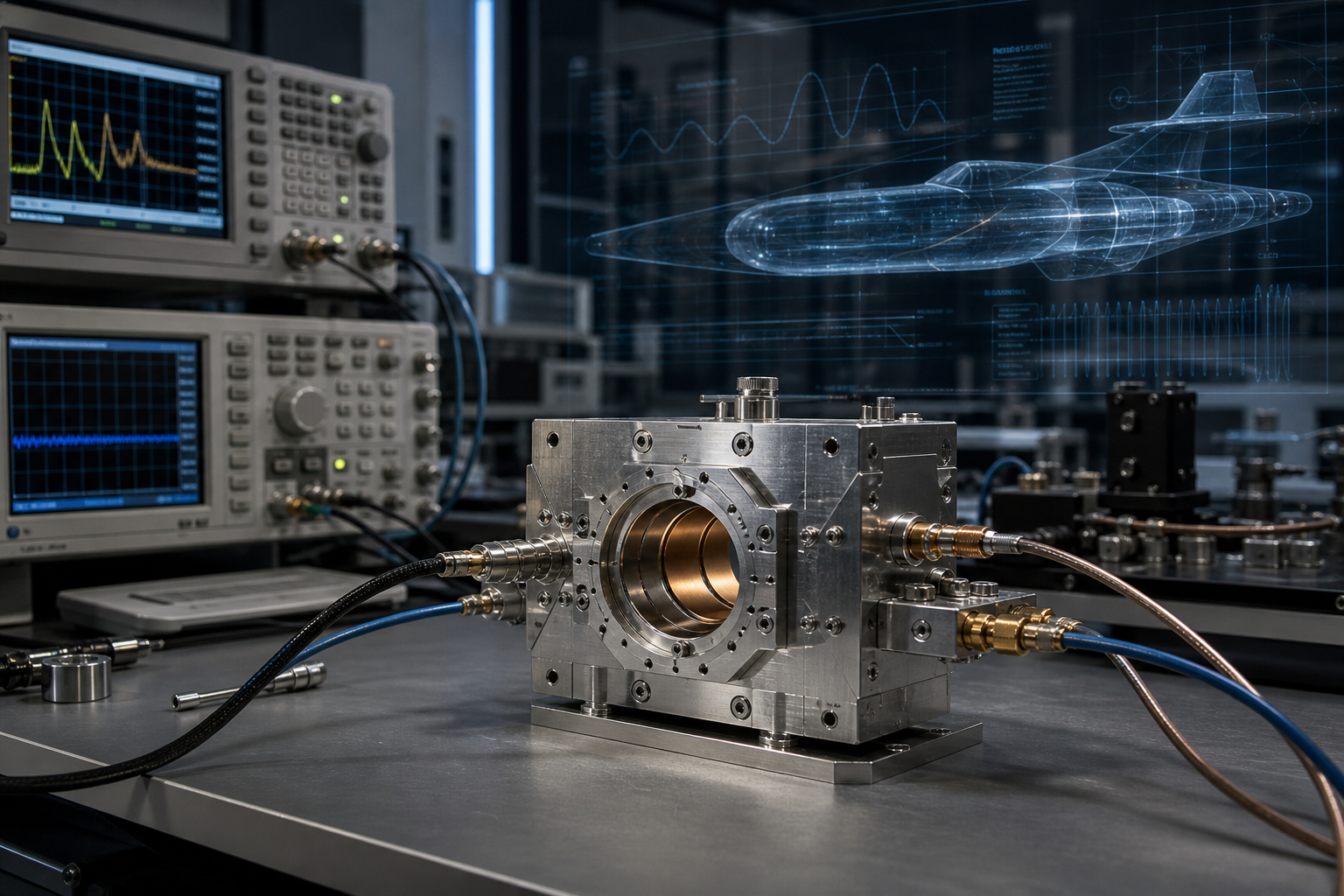
Salvatore Cezar Pais had filed a Navy-owned patent for a craft built around resonant cavities, microwave emitters, a polarized vacuum around the vehicle, and the phrase that made the whole thing travel: inertial mass reduction.
Then the Navy pushed harder.
Not an anonymous forum account. Not a blurry conference slide. The U.S. Navy.
Senior Navy figures helped carry the claims through the patent process. The patent family kept growing. A gravitational-wave generator. An electromagnetic field generator. Superconductors. Compact fusion.
Then came the part that keeps the file alive: the Navy spent three years trying to test the core idea.
NAWCAD later said it could not prove the Pais Effect.
Still, Salvatore Pais did not disappear back into a dead file. He went long-form. Curt Jaimungal. Tim Ventura. Project Unity. Hard Truths. The Navy paperwork became a launch point for something wider: the Pais Effect, the Superforce, compact fusion, UAP detection, the quantum vacuum, and the old dream of a machine that changes what a vehicle can do.
That tension keeps dragging it back.
The patent fight
The file trail starts before the internet myth does.
As The War Zone reported, the patent office did not simply wave the most famous Pais craft patent through. The Navy had to argue for it. Dr. James Sheehy, then Chief Technology Officer at Naval Aviation Enterprise, became one of the names attached to that push.
The language around that fight is why the story still has heat. The Navy did not just say, in effect, "let an inventor have his paperwork." It argued that the technology was operable and pointed to national security concerns, including possible Chinese advances.
Heavy company for claims many physicists would dismiss before the second paragraph.
It made the patents more than strange documents. It made them institutional.
The test bill
In 2021, The War Zone reported the part that keeps the whole thing from floating away into pure lore. Naval Air Warfare Center Aircraft Division told the site that experiments tied to the Pais Effect ran from October 2016 to September 2019. The cost was about $508,000.
The result was blunt: the effect could not be proven.
NAWCAD also said there was no further research and no known transition to another government or civilian organization.
The charge is not the failure. It is that the Navy tested it at all.
Because the Navy did not merely file the claims and move on. It spent money, time, and lab attention on an idea that had already begun to sound like UFO propulsion in public.
Then the result came back empty.
And somehow the story got louder.
The patents before the legend
Pais's name sits on a cluster of Navy-owned patents and patent applications that read like a greatest-hits list of impossible aerospace promises.
There is a Craft using an inertial mass reduction device, filed in 2016 and granted in 2018. It describes a vehicle with resonant cavity walls and microwave emitters, with the claim that high-frequency electromagnetic waves can create a local polarized vacuum outside the craft.
There is an Electromagnetic field generator, granted in 2018, built around a shell that can spin and vibrate at high frequency.
There is a High frequency gravitational wave generator, granted in 2019, with claimed uses around propulsion, communication through solid objects, and asteroid disruption or deflection.
Then come the other big words: room-temperature superconductors, high-temperature superconductors, compact fusion.
A granted patent is not a working machine. It is not a flight test. But these were not random internet PDFs. They were filed under the U.S. Navy, carried through official channels, and wrapped in language that made UFO and UAP readers stop scrolling.
Especially the craft patent.
It looked close enough to the old flying-saucer dream to be dangerous, but official enough to be hard to laugh away.
The word that traveled
The phrase Pais Effect is the engine of the story.
Pais argues that rapidly moving charged matter can produce extremely high electromagnetic energy densities. In the patent and interview language, that becomes a bridge to vacuum effects, inertia reduction, gravitational waves, compact fusion, and vehicles that no longer behave like ordinary aircraft.
The pitch works because it offers a mechanism.
Instead of only saying a strange thing was seen, it points to a proposed physical process. It gives the UFO and UAP imagination a machine room.
But the test result still sits there: the effect was not proven.
The part that does not sit still
A failed test would normally drain the room.
This one did not, because the stack is still odd.
Navy ownership. Patent-office resistance. Senior support. The word "operable." China language. A three-year test. A negative result. Then Pais himself, still talking in public as if the larger physics picture remained alive.
Any single piece is easy to shrink. Together, they are harder to forget.
The story lives there: not as a working craft, and not as an empty curiosity, but as a collision between official process and impossible-sounding ambition.
Then Pais started talking
The patents could have stayed as a closed internet object: old links, old screenshots, old debates over whether the Navy had hidden anti-gravity in plain sight.
Instead, Pais went long-form.
In 2022, he appeared on Curt Jaimungal's Theories of Everything for an interview that runs more than two hours. The chapter list alone is a map of the afterlife: UFO patents, Pais Effect, patent rejection, disinformation claims, James Sheehy, microwave emitters in craft walls, UAP detection, arXiv, Podkletnov, Ning Li.
In 2023, he appeared with Tim Ventura in an episode titled The Superforce & Pais Effect. That conversation moved through UAP, metamaterials, the Schwinger limit, non-equilibrium plasmas, TR-3B rumors, the inertial mass reduction vehicle patent, and the high-energy electromagnetic field generator experiment.
There are also Project Unity and Hard Truths appearances, where the subject matter widens again: intuitive science, consciousness, fusion, military technology, and the philosophical edge of physics.
The interviews matter because they change the texture.
The patent file is cold. The interviews are alive.
Pais does not sound like someone apologizing for a dead administrative oddity. He presents the work as part of a much bigger physics picture. He rejects the idea that the patents were simply a bluff. He keeps talking as if the Navy test did not get the last word.
The YouTube version is different
On YouTube, the Navy UFO patent trail becomes less about what the government proved and more about what the government briefly allowed into view.
Different engine.
The file trail asks: what was filed, who backed it, what was tested, what failed?
The interview trail asks: what if the inventor is still pointing at something he thinks the test did not capture?
The second question is much more clickable. It is also much easier to overrun.
Once the conversation moves from a specific test to the Superforce, the quantum vacuum, UAP detection, compact fusion, and consciousness, almost everything starts to glow. The language becomes big enough to hide weak spots.
The hardware has to stay in view: what was built, what was measured, what changed?
Why UFO culture keeps it close
The Pais file gives UFO and UAP culture something it rarely gets: official paperwork attached to impossible-sounding propulsion language.
That pull keeps dragging it into discussions around the Tic Tac, black-budget aerospace, reverse engineering, and the idea that some UAP may be advanced human technology rather than non-human craft.
The fit is obvious.
A Navy patent describes a craft that appears to attack inertia itself. Navy pilots later become central witnesses in the modern UAP era. The public sees official documents, strange diagrams, and phrases that sound close to the behavior people have been arguing about since 2017.
That proximity is why it travels.
The edges matter.
The visible trail stops short of operational UAP, the Nimitz case, recovered vehicles, or a working Navy platform. What we can see is stranger in a narrower way: patents, internal advocacy, experimental testing, a failed public result, and then a long interview afterlife.
The visible chain is already strange enough.
The weird part that remains
The Navy did not have to carry this in public.
It did not have to put the craft patent under its own name. It did not have to fight the patent-office resistance. It did not have to spend years testing the effect. And after the test came back empty, Pais did not have to keep walking into long interviews where the old claims could be pulled apart again.
But all of that happened.
The strange center of the Salvatore Pais story is a set of claims that moved further through the system than they probably should have, then found a second life once Pais started talking.
For a few years, a very strange idea moved through very real rooms.
It is still moving.
Related UAP Logbook notes
- The UFO claims hiding inside physics words
- Latest UFO files released: where to check first
- war.gov UFO files: PURSUE portal, UAP videos, and old cases
- What is PURSUE? The UAP records release program explained
- AARO, PURSUE, and UAP file releases
Sources
- Google Patents: Craft using an inertial mass reduction device.
- Google Patents: Electromagnetic field generator and method to generate an electromagnetic field.
- Google Patents: High frequency gravitational wave generator.
- The War Zone: Docs show Navy got "UFO" patent granted by warning of similar Chinese tech advances.
- The War Zone: Navy's advanced aerospace tech boss claims key "UFO" patent is operable.
- The War Zone: The secretive inventor of the Navy's bizarre "UFO patents" finally talks.
- The War Zone: Emails show Navy's "UFO" patents went through significant internal review.
- The War Zone: The Navy finally speaks up about its bizarre "UFO patent" experiments.
- Theories of Everything with Curt Jaimungal: Salvatore Pais on quantum gravity, UFO patents, Pais Effect, and the Superforce.
- Alternative Propulsion Engineering Conference / Tim Ventura: The Superforce & Pais Effect, published October 1, 2023.