News / Jun 15, 2026
The 1949 Army flying saucer study asked the Russia question
A 1949 Army flying saucer study in PURSUE Release 03 shows the early UFO problem inside defense planning: 210 incidents, a Russia rumor, Air Materiel Command, RAND, and no clean answer.
The Army wasn't asking about aliens in 1949.
It was framed as Russia.
A newly released file in PURSUE Release 03 shows the flying saucer problem moving through the U.S. Army's planning channels while the Cold War was hardening. The file is DOW-UAP-D084, titled US Army-Flying-Saucer-Study_1949. It was published June 12, 2026, through the Department of War's PURSUE portal.
The file is a 25-page bundle of routing slips, memoranda, a public-information bulletin, and one evaluation page with a blunt question behind it: were the reports natural phenomena, or could they point to foreign technology?
The Winchell rumor
The loudest line arrives through radio.
On April 3, 1949, broadcaster Walter Winchell claimed on ABC that the flying saucers nobody in authority had explained were guided missiles from Russia. The Army bulletin preserved the item under the heading "FLYING SAUCERS."
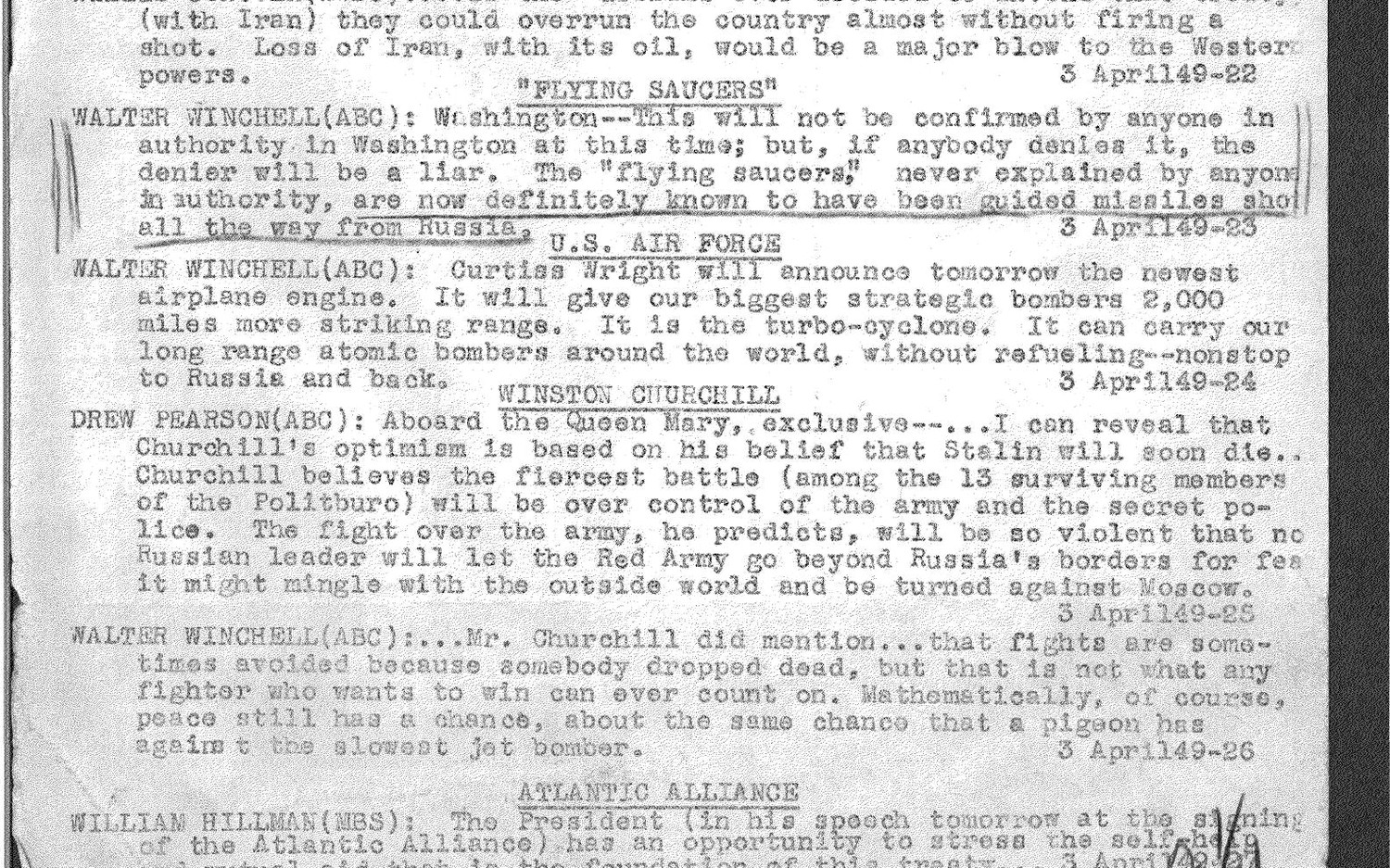
That is where DOW-UAP-D084 stops reading like an old UFO curiosity and starts reading like an early defense-planning file. A public claim had attached flying saucers to Russia. The Army wanted to know what the intelligence side could actually support.
A later page says the Intelligence Division could not verify Winchell's statement. It also raises a possibility: Winchell may have published the item to force an official statement on the subject.
What the Army asked for
The central memo is dated March 22, 1949. It says the evaluation study was prepared at the request of P&O, the Plans and Operations Division of the Army General Staff.
The question was narrow enough to fit in one sentence: were the reports natural phenomena, or could they be traced to a foreign power?
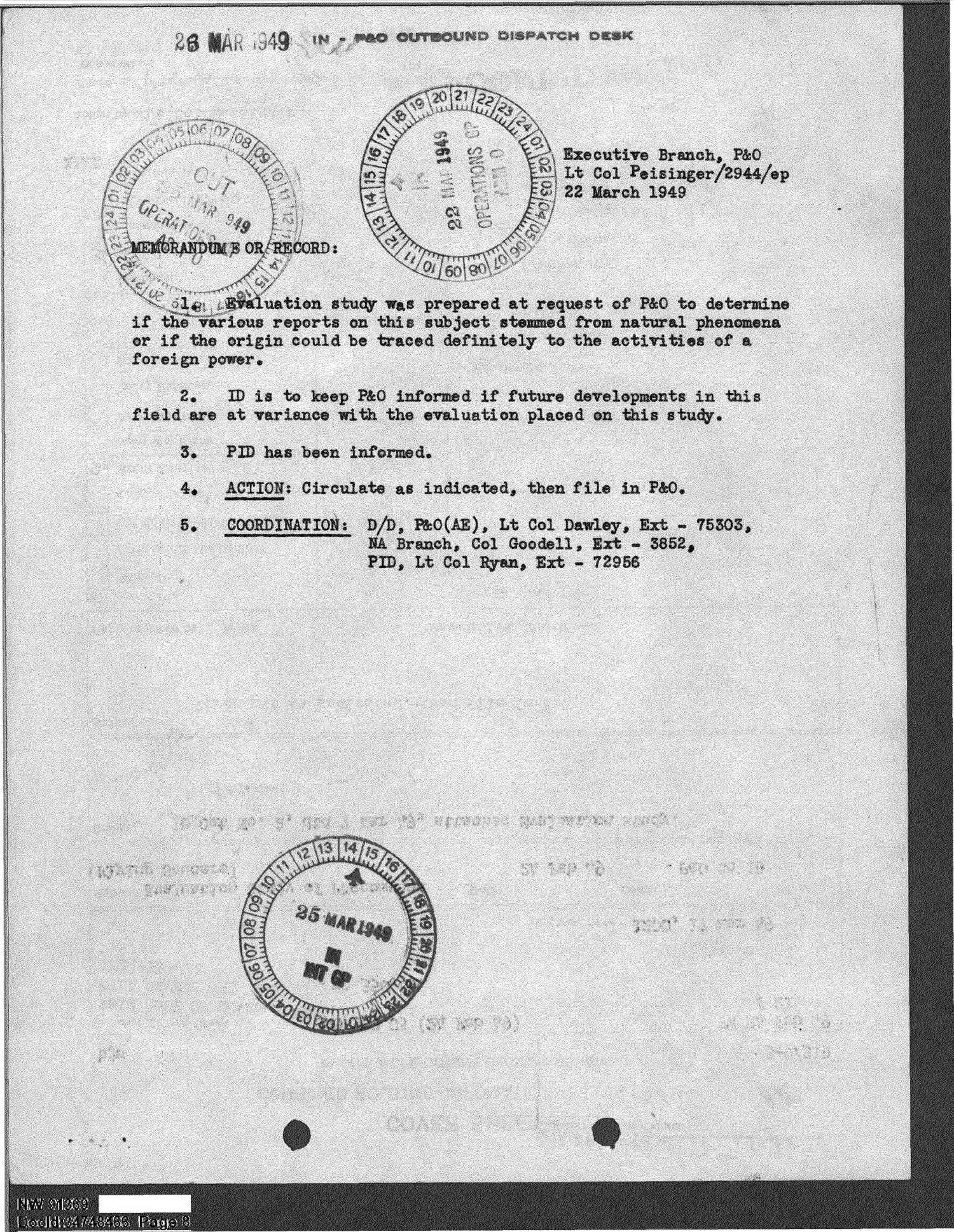
Another memorandum explains why P&O cared. Until the phenomenon was properly evaluated, the file says, a foreign implication remained possible.
That does not mean the Army believed flying saucers were Soviet weapons. It means the question had become serious enough for routing forms, branches, extensions, signatures, and a written evaluation.
The 210 incidents
The evaluation page is the strongest page in the file.
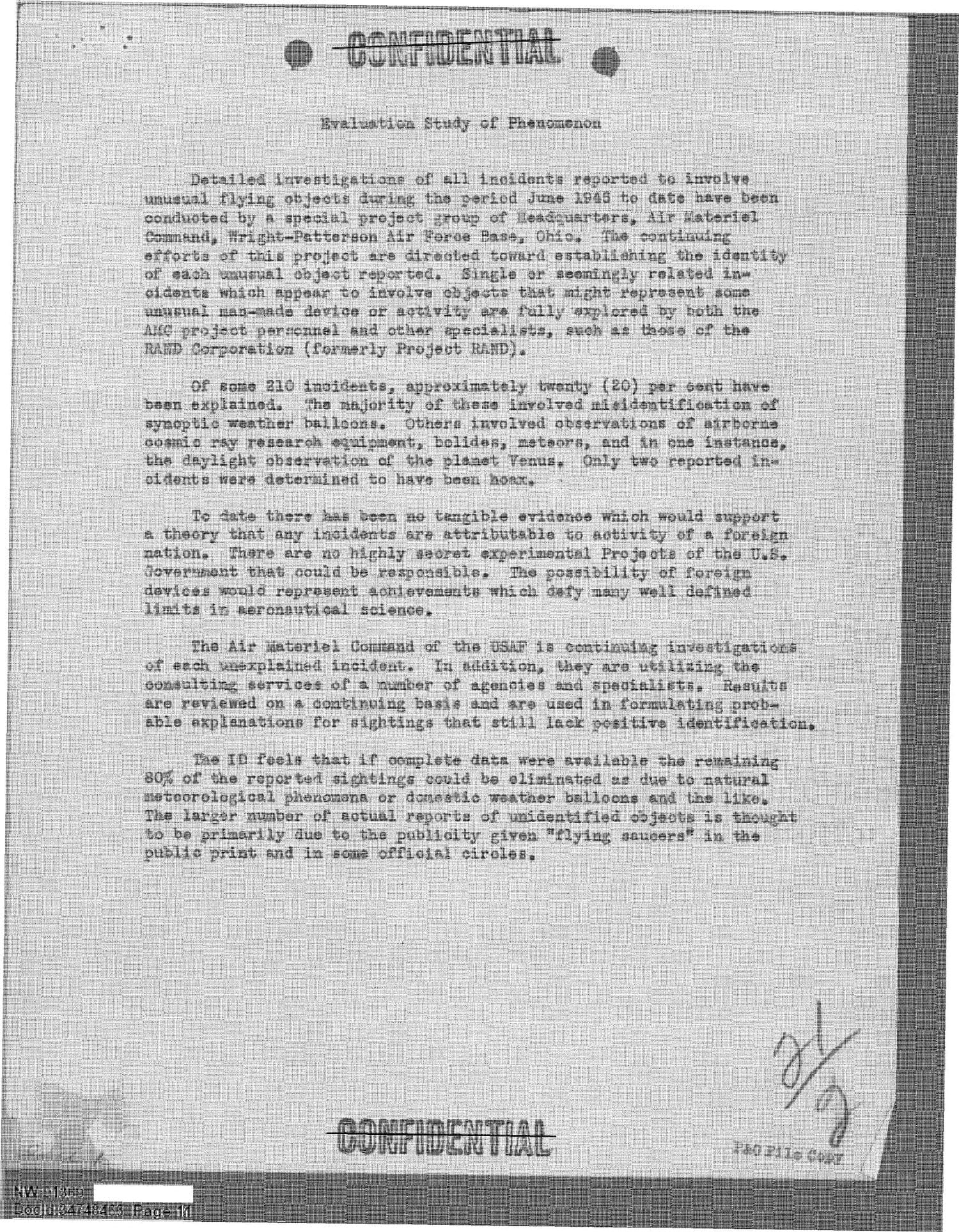
It says detailed investigations had been conducted for all incidents reported to involve unusual flying objects from June 1948 onward. The work was being handled by a special project group at Headquarters, Air Materiel Command, Wright-Patterson Air Force Base.
For cases that appeared to involve an unusual man-made device or activity, the file says Air Materiel Command personnel and specialists including RAND were brought in.
The numbers are the part that still reads sharply.
Of about 210 incidents, the study says, roughly 20 percent had been explained. The explanations included weather balloons, airborne cosmic-ray research equipment, bolides, meteors, and one daylight observation of Venus. Only two reported incidents were described as hoaxes.
The study then draws the line defense planners wanted to see. It says there was no tangible evidence supporting the theory that any incidents were attributable to a foreign nation. It also says no highly secret U.S. experimental projects could account for them.
That is the file's cleanest tension. The study did not call the remaining cases solved. It rejected the foreign-power claim as unsupported, then kept Air Materiel Command on the unexplained incidents.
What the study thought was happening
The file leans toward missing data, ordinary explanations, and publicity.
The Intelligence Division believed that if complete data were available, the remaining 80 percent of reported sightings could be eliminated as natural meteorological phenomena, domestic weather balloons, and similar causes.
It also blamed the rising number of reports partly on publicity around flying saucers in newspapers and official circles.
The pattern is recognizable. A strange report appears. Media attention grows. More reports arrive. Officials have to sort fresh sightings from the cultural wave around them.
DOW-UAP-D084 shows that loop already running in 1949.
Why DOW-UAP-D084 matters
The file matters because it catches the flying saucer problem before later UFO vocabulary hardened around it.
This is not a modern UAP office looking backward and adding a 1949 file to a portal. The original paperwork says "flying saucers." The original Army question was whether the reports pointed to nature or foreign technology. The original evaluation pulled in Air Materiel Command, Wright-Patterson, and RAND.
The file gives no photograph, no recovered object, no witness packet, and no final identification for the unresolved cases. It gives a working government scene instead: a rumor about Russian missiles, a request from Army planners, about 210 reports under review, and an intelligence answer that refused to turn missing explanations into a foreign-weapons conclusion.
Release 03 has flashier material. The FBI orb videos move faster. The Harare airport file has a cleaner headline. The Cheyenne Mountain case has an official rendering.
DOW-UAP-D084 is quieter. It may be more revealing. It shows the UFO question already inside the national-security machine in 1949, with the same hard problem sitting on the desk: what is actually in the sky, and who, if anyone, built it?
Related UAP Logbook notes
- PURSUE Release 03: CIA files, FBI orbs, and a 1949 flying saucer study
- The FBI orb files are taking over PURSUE Release 03
- CIA-UAP-017: The Harare airport UFO that put Zimbabwe on high alert
- Edward Teller's UAP calculations: the 1949 Sandia green fireball conference
- Kodiak UFO file: the 1949 green-blue light over Naval Air Station Kodiak
Sources
- Department of War PURSUE Release 03: DOW-UAP-D084, US Army-Flying-Saucer-Study_1949.
- Department of War PURSUE Release 03 data CSV: uap-data.csv?release=3.
- DOW-UAP-D084 page-level source checks: March 22, 1949 memorandum for record; evaluation-study page; April 18, 1949 comment memorandum; April 1949 Army bulletin excerpt.