News / Aug 01, 2026
The hardest part of finding alien life may be keeping Earth out of the sample
Before a Mars rock can answer whether life once existed beyond Earth, scientists have to show that the signal did not arrive from Earth with the mission.
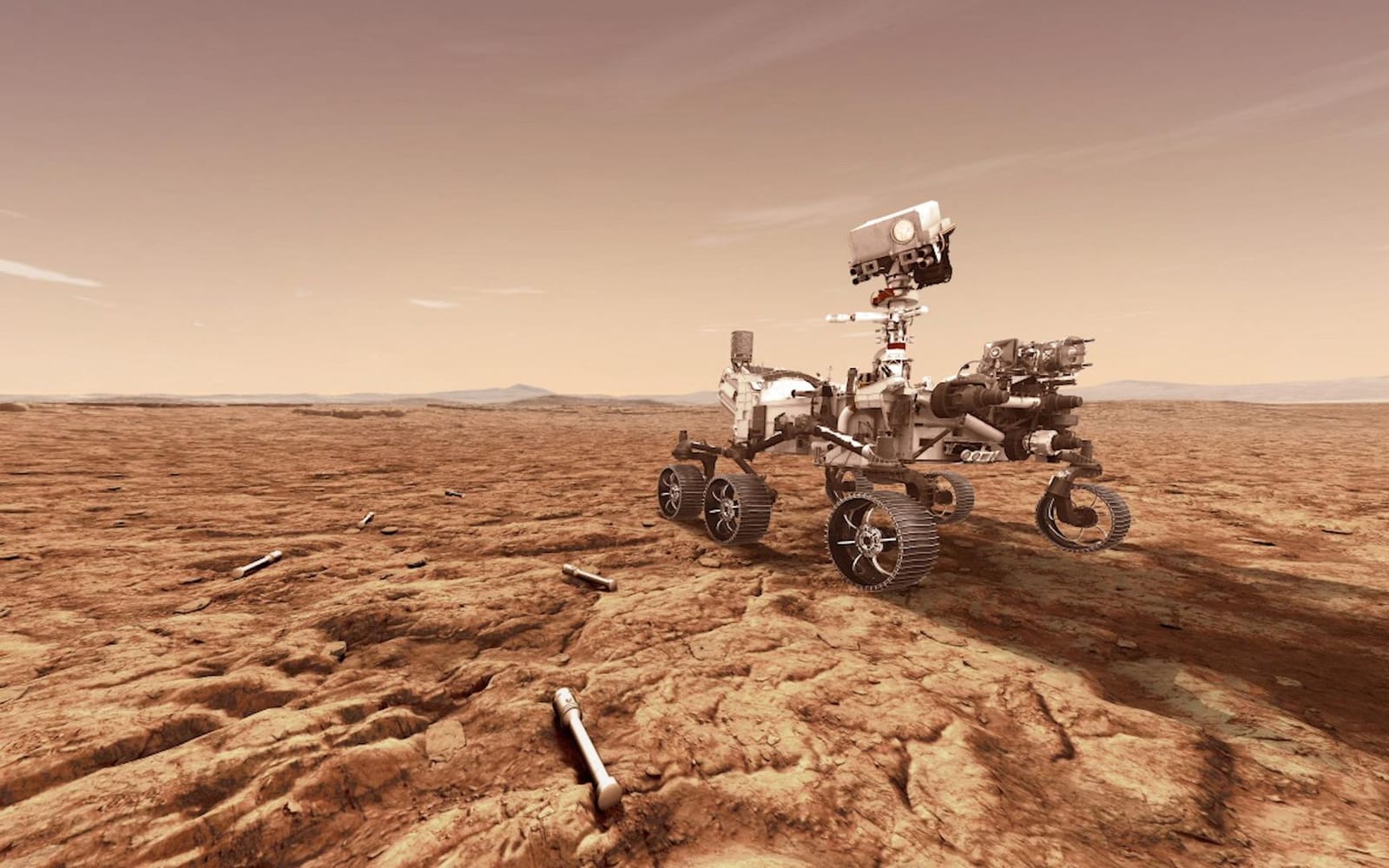
A small titanium tube sits on Mars with a problem no camera can solve.
NASA's Perseverance rover drilled into a rock in Jezero Crater, sealed the core inside one of its ultraclean sample tubes, and left it on the surface as part of a depot intended for a future return to Earth. The rock, nicknamed Cheyava Falls, contains organic compounds and structures that NASA has cautiously described as a potential biosignature — a word choice that scientists spent weeks debating before it appeared in a press release.
But if a laboratory on Earth ever finds a truly intriguing molecule inside one of those tubes, an unusual isotope ratio, or a microscopic feature that resembles a fossilized cell, the first fight won't be over whether it's alien. It will be over whether it's from Earth.
"It's the least glamorous part of astrobiology and the most important," says Dr. Karen Olsson-Francis, a planetary protection researcher at the Open University who has worked on contamination control for multiple Mars missions. "If you can't trace exactly what touched that sample, you don't have a discovery. You have an anecdote."
The trillion-dollar contamination problem
Planetary protection operates on two fronts that are easy to confuse but fundamentally distinct. The first is forward contamination: preventing Earth biology from hitchhiking to another world. The second is backward contamination: keeping anything that returns from Mars sealed inside a secure facility until safety testing is complete.
For the scientists who will eventually analyze Perseverance's samples, there's a third front that gets less attention. It's not about safety. It's about credibility.
"Every sample tube has a biography," explains Dr. Luther Beegle, principal investigator for SHERLOC, one of Perseverance's primary life-detection instruments. "Which clean room it was assembled in. Who handled it. What solvents were used on nearby surfaces. What the biological burden count was on the day it was sealed. If we don't have that biography, we can't interpret what we find inside."
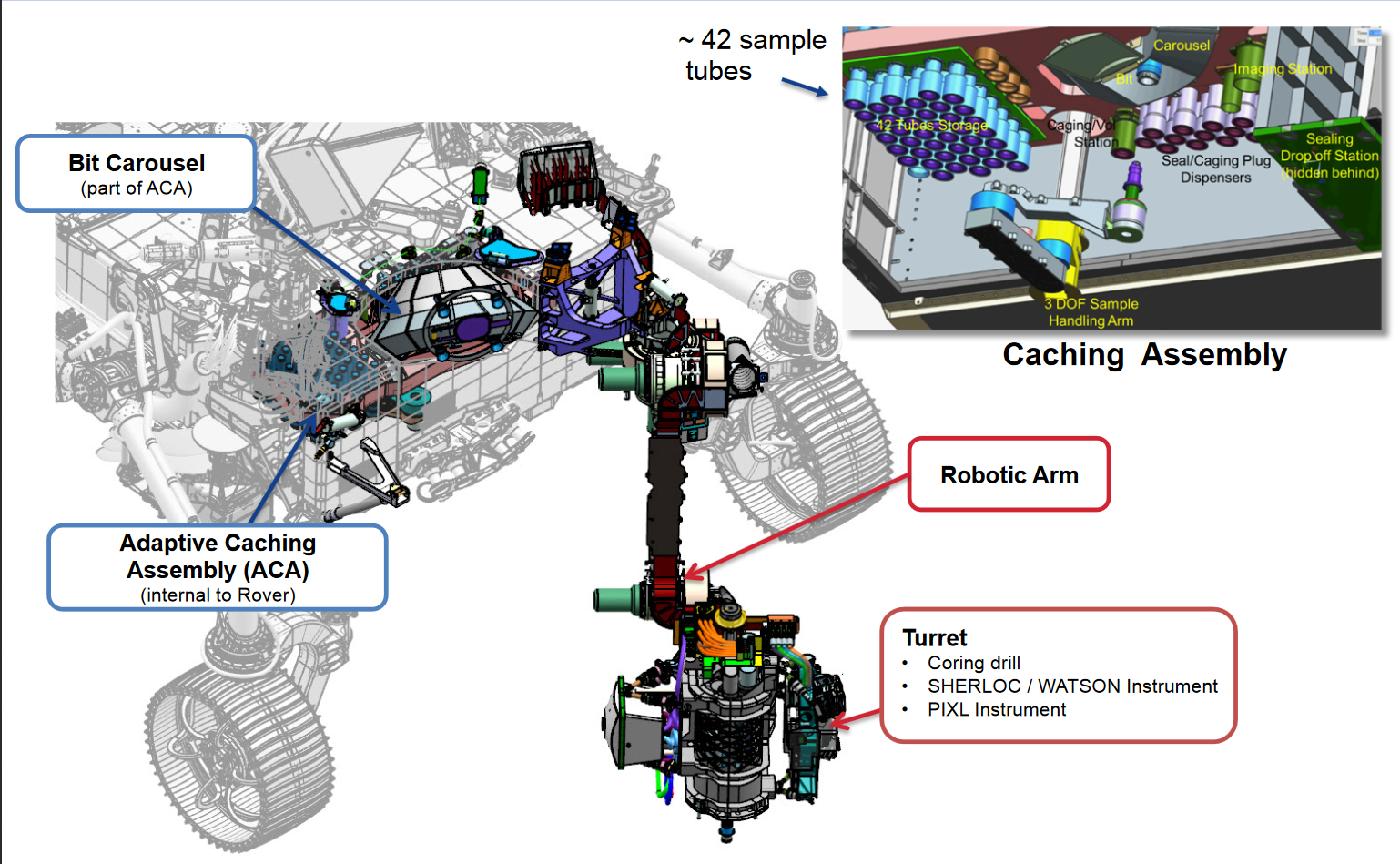
The Perseverance team engineered the rover's sampling and caching subsystem with a defined contamination budget — a precise accounting of how much terrestrial organic material is allowed into the system. Components were assembled in clean rooms, handled by technicians in full protective garments, and subjected to microbial reduction protocols. Critical surfaces were sealed behind protective barriers before launch.
None of this achieves zero. It achieves controlled.
"Absolute sterility is a myth," says Beegle. "Our instruments are made of manufactured materials. Clean rooms have background chemistry. Modern mass spectrometers can detect compounds at parts-per-trillion concentrations. The goal isn't perfection. The goal is documentation good enough to identify your own fingerprints when they show up in the data."
Why Viking still haunts the field
In 1976, NASA's Viking landers conducted the first — and so far only — life-detection experiments on Mars. One of them, the Labeled Release experiment, produced results that its principal investigator, Gilbert Levin, argued for decades were consistent with microbial metabolism. The scientific consensus ultimately rejected a biological explanation, concluding that the reactive chemistry of Martian soil — possibly involving perchlorates — had produced a false positive.
The Viking controversy shaped an entire generation of Mars scientists. It also embedded a deep institutional caution into how NASA discusses any finding that might suggest biology.
When the Perseverance team examined Cheyava Falls, they saw features that checked multiple boxes: organic compounds detected by SHERLOC, vein-like structures that could indicate past fluid flow, and tiny "leopard spot" patterns that resemble features sometimes associated with microbial activity on Earth. The press release announcing the find used the phrase "potential biosignature" only after internal debate over whether even that qualified language was too strong.
"That debate was healthy," says Dr. Amy Williams, an astrobiologist at the University of Florida and a Perseverance science team member. "Viking taught us that interesting chemistry is not the same as biology. We owe the public honesty about uncertainty. The only way to reduce uncertainty is to bring samples home and to know absolutely that what we're measuring came from Mars, not from our own hardware."
The unsexy paperwork behind a Nobel-worthy discovery
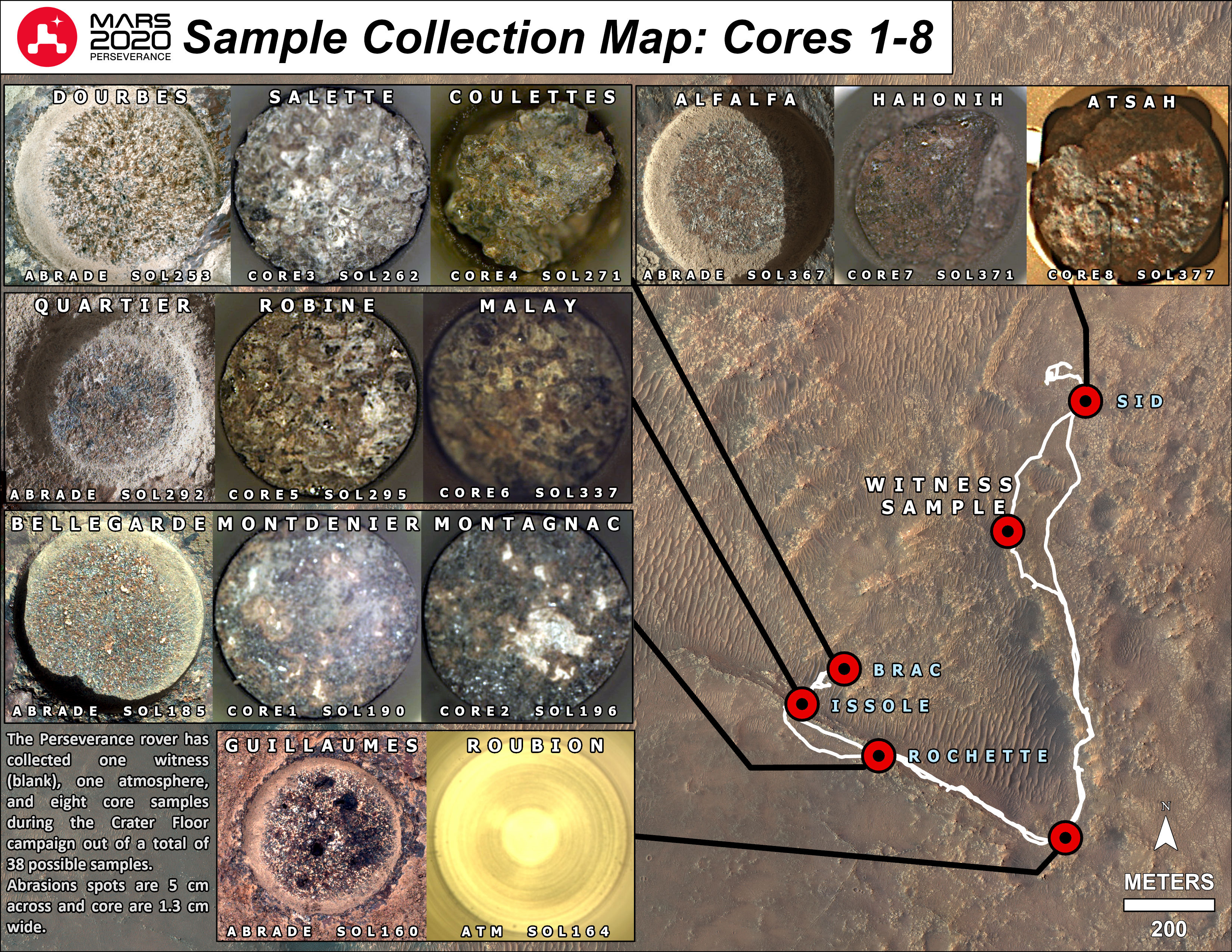
If Perseverance's samples ever return to Earth — and that is currently a very large if — they will enter a receiving facility designed to operate as both a maximum-containment laboratory and a forensic evidence locker.
Every tube will arrive with a chain of custody record. Researchers will cross-reference four primary records before drawing any conclusions: the initial instrument measurements of the rock before drilling, the biological and chemical baseline documentation for that specific tube and all handling hardware, seal integrity logs across the entire journey from Mars surface to laboratory, and blank control samples processed in parallel.
"The paper trail is the discovery," says one NASA planetary protection engineer who spoke on background because they were not authorized to discuss analytical protocols. "Without it, you're just holding an interesting rock."
That paper trail extends backward through years of clean-room audits, forward contamination budgets, and assembly logs. It includes the names of technicians who tightened bolts and the batch numbers of solvents used to wipe down surfaces. It is tedious, expensive, and entirely invisible to the public. It is also the only thing standing between a Nobel Prize and a retraction.
Meanwhile, the budget clock is ticking
Here is what the article you are reading does not have: a confirmed date for when those tubes will leave Mars.
NASA's Mars Sample Return program has spent much of the last two years in crisis. An independent review in 2023 concluded that the original architecture — a lander, a fetch rover, a rocket to launch samples into Mars orbit, and an orbiter to catch them — was years behind schedule and billions over the initially projected budget of roughly $5 to $7 billion. The total cost could exceed $10 billion under the existing plan, with sample return slipping well into the 2040s.
In response, NASA solicited alternative proposals from commercial partners and internal teams. As of early 2026, the agency is evaluating redesigned architectures that could reduce cost and accelerate the timeline, but no final decision has been announced. The samples Perseverance has already cached — including Cheyava Falls — remain on the surface, waiting.
"Every year those tubes sit on Mars, they're exposed to radiation, temperature swings, and dust," Williams notes. "The samples are stable, but stable isn't the same as ideal. There's urgency here that I'm not sure the public fully appreciates."
What ocean worlds add to the equation
The contamination challenge gets harder the farther you go.
NASA's Europa Clipper, which launched in October 2024, is an orbiter — it will not touch Europa's surface. Its planetary protection requirements focus on trajectory control and preventing an accidental crash that could seed the moon's subsurface ocean with Earth organisms.
But surface landers for Europa or Enceladus, should they ever materialize, will demand cleanliness standards far stricter than anything applied to Mars missions. An ocean world with liquid water in contact with rock represents a habitable environment. Introducing Earth life into such an environment isn't just a contamination problem; it's an ethical one.
"If there's biology in Europa's ocean, it's been evolving in isolation for billions of years," says Olsson-Francis. "You don't get to study it by contaminating it first."
What a confirmed discovery actually requires
There is no single moment when a researcher declares "alien life found." The standards that astrobiologists have developed over the past two decades demand multiple independent lines of evidence that converge on a single explanation.
A confirmed detection would require concordant chemical, structural, and isotopic data, all consistent with biological origin, all embedded in a geological context that supports habitability, and all surviving cross-examination against negative controls that exclude terrestrial contamination. Partial matches don't count. Interesting anomalies don't count. Viking didn't count.
The samples Perseverance has collected can meet those standards — but only if the chain of custody holds from the moment a drill bit touched Martian rock to the moment a mass spectrometer on Earth generates its first peak.
"People want a headline," says Williams. "Science wants the paperwork."
Related UAP Logbook notes
- Mars is rewriting the search for life — one careful word at a time
- Enceladus, Europa, and Titan: Where the Search for Life Is Going Next
- The exoplanet biosignature search, and why K2-18 b is a cautionary tale
Sources
- NASA/JPL Planetary Protection Office documentation and mission categories.
- NASA Mars 2020 Perseverance mission documentation, sampling & caching subsystem specifications (PIA24742, PIA24743).
- NASA Office of Safety and Mission Assurance, restricted Earth-return standards.
- Mars Sample Return Independent Review Board (IRB) Report (2023).
- Viking 1 & 2 Labeled Release experiment records and historical consensus reviews (Levin et al., 1976-2016).
- Public presentations and published statements by Dr. Karen Olsson-Francis (Open University), Dr. Luther Beegle (NASA/JPL SHERLOC PI), and Dr. Amy Williams (University of Florida / Perseverance Science Team).
- NASA/JPL Planetary Protection: Missions and categories.
- NASA/JPL Planetary Protection: Mission implementation.
- NASA Safety and Mission Assurance: Planetary Protection.
- NASA/JPL: Mars 2020 Perseverance biological cleanliness.
- NASA: Mars Sample Return landing options and containment design, Jan. 7, 2025.
- NASA Astrobiology: Planetary Protection Research.