Main Article / Jul 26, 2026
What Article 3 of the 1971 nuclear risk-reduction treaty says — and why Coulthart called it SALT
A 1971 U.S.–Soviet risk-reduction agreement requires both sides to notify each other of "unidentified objects" detected by missile warning systems. The clause is not in SALT I or SALT II. Coulthart cited it as a SALT provision in a NewsNation segment on July 26, 2026. Grusch cited it in 2023, Luna cited it in the same year, and Elizondo cited it in his 2024 book. Here is the original text, the chronology that explains the SALT mislabel, and what the language does and does not establish.
Ross Coulthart told a NewsNation audience on July 26, 2026 that a U.S.–Soviet nuclear agreement required both sides to "consult on UFOs," describing the relevant provision as part of a "nuclear missile deterrent treaty." The provision he meant exists. The treaty he named does not.
The clause is real, the label is wrong
On a NewsNation "Reality Check" segment, Coulthart told host Megan Medic that a U.S.–Soviet nuclear agreement required both sides to "consult on UFOs," describing it as "a nuclear missile deterrent treaty" and "a nuclear missile reduction treaty." The provision he meant is Article 3 of the Agreement on Measures to Reduce the Risk of Outbreak of Nuclear War, signed in Washington on September 30, 1971, by Secretary of State William P. Rogers and Soviet Foreign Minister Andrei Gromyko. It reads in full:
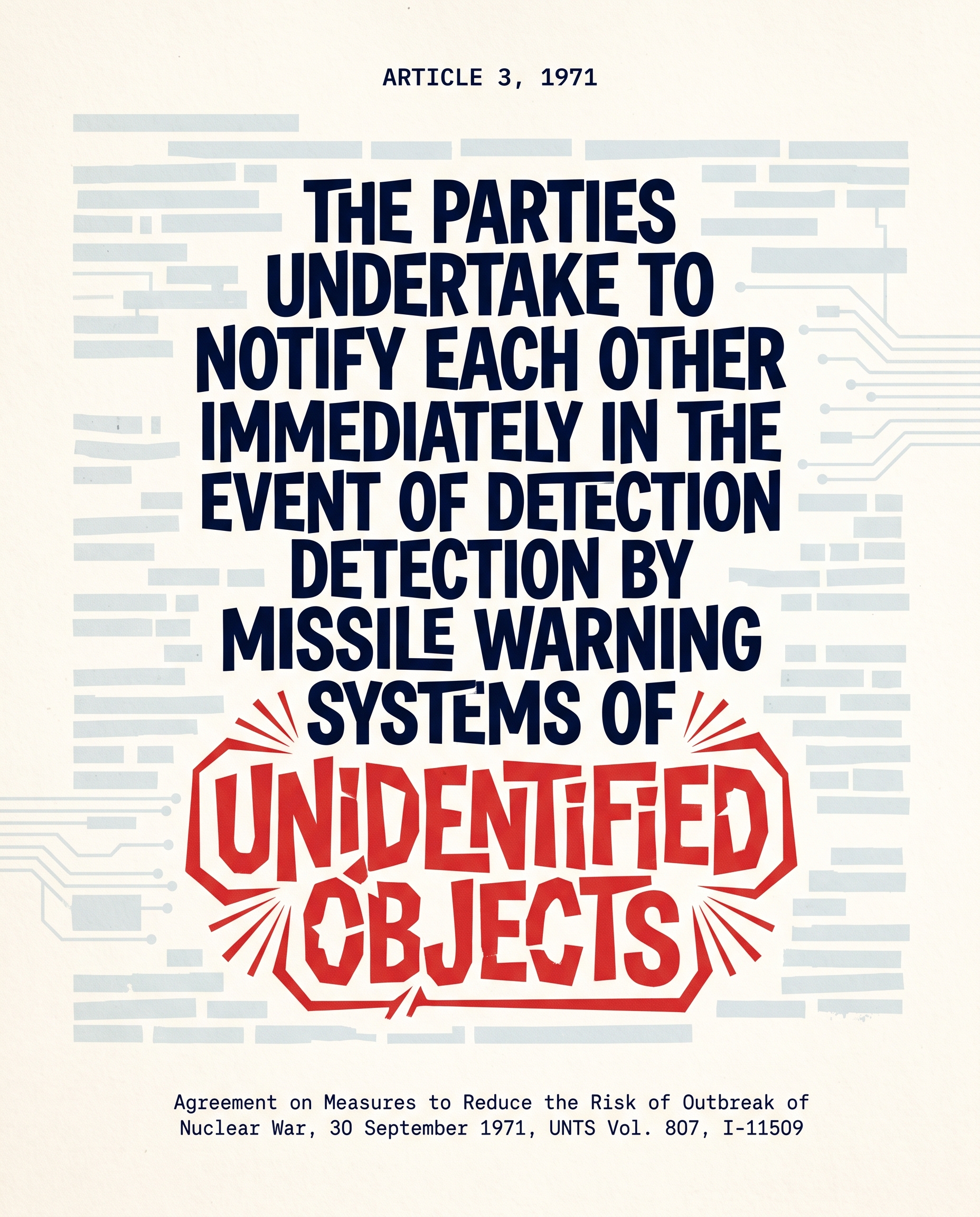
"The Parties undertake to notify each other immediately in the event of detection by missile warning systems of unidentified objects, or in the event of signs of interference with these systems or with related communications facilities, if such occurrences could create a risk of outbreak of nuclear war between the two countries."
This is a separate, smaller instrument from the Strategic Arms Limitation Talks. SALT negotiations began in Helsinki in November 1969, and SALT I — the ABM Treaty and the Interim Agreement on Strategic Offensive Arms — was signed eight months after the risk-reduction agreement, on May 26, 1972. SALT II followed in Vienna on June 17, 1979. Neither SALT text contains the "unidentified objects" language. A reader searching the SALT treaties for Coulthart's clause will not find it there, and it is easy to conclude wrongly that the clause itself is invented.
Why the clause exists
Article 3 sits inside the same document as two other notification duties: Article 1 covers accidental or unauthorized use of nuclear weapons, and Article 2 covers accidental or unexplained detonations. All three route through the Washington–Moscow hotline, established in 1963 after the Cuban Missile Crisis and referenced directly in Article 6 of the agreement.
The drafters were addressing a known operational problem: early-warning radar and satellite systems on both sides occasionally produced signals neither side could explain, and a misread signal at the height of the Cold War carried existential stakes. The treaty text does not name a cause. It is broad enough to cover space debris, unannounced missile tests, and equipment faults — and broad enough, on its face, to cover anything else the warning systems flagged as unidentified. Well-documented U.S. false-alarm incidents after 1971, including a 1979 NORAD training-tape error and a 1980 computer-chip fault that triggered a launch warning, show the kind of event the clause was built to defuse, even though both postdate the treaty and cannot explain why it was written. The treaty is silent on whether "unidentified objects" was ever intended to include UAP.
Who first read it as a UAP clause
The clause has been in the public UN Treaty Series since 1972. That nobody in the UAP conversation connected it to UAP until 2023 is itself a fact about that conversation, not about the document. Three independent readers have done so in the four years since.
Former UAP Task Force co-lead David Grusch cited Article 3 by name in a June 2023 NewsNation interview with Coulthart, arguing it was "specifically" tied to UAP interference with nuclear systems and describing the risk that a real but classified UAP event could be misread as a provocation between nations. Rep. Anna Paulina Luna raised the same clause in her opening statement at a House Oversight UAP hearing on July 26, 2023. Luis Elizondo devoted a passage in his 2024 book to the same text, making the strongest public version of the claim — that the clause exists because of confirmed UAP interference. All three readings go beyond what the treaty text itself states; the document names no cause for the "unidentified objects" it requires reporting.
What the text does and does not establish
Three honest readings of the text, ranked by what they actually support.
What the treaty text states on its face. The two governments committed, in a binding 1971 agreement, to notify each other immediately of unidentified radar contacts or system interference that could risk nuclear war.
What the text is consistent with but does not state. The category is broad enough to include UAP contacts and broad enough to include routine technical false alarms. The treaty does not distinguish between them.
What the text does not establish, but is sometimes claimed for it. Claims that the clause was written because of confirmed UAP incidents are inferences by later commentators, not statements in the drafting record or the text itself.
Malmstrom and the unresolved 1967 case

Much of the public interest in Article 3 traces to the March 16, 1967, incident at Malmstrom Air Force Base, where ten Minuteman missiles at Echo Flight went into an unexplained "no-go" status while security personnel reported unidentified objects near the site. Then-Lt. Robert Salas has maintained since a 1996 Great Falls Tribune interview that the two events were connected; the Air Force's own contemporaneous investigation found no cause and separately concluded that UFO rumors around the incident were "disproven" by security-personnel interviews. Reports in 2025 describing a Pentagon explanation involving a classified electromagnetic test have not been independently confirmed here, and Salas has publicly rejected that account — this remains an open dispute, not a resolved one.
Legal status in 2026
The 1971 agreement has no expiration clause; Article 8 sets it at unlimited duration, and Article 7 allows either side to request consultations on implementation, with no formal dispute or sanction mechanism attached. Under standard treaty-succession practice, the Russian Federation inherited Soviet-era bilateral obligations after 1991, and neither Washington nor Moscow has announced withdrawal from this specific agreement. That places Article 3 in a different category from the newer, more publicized New START treaty, which lapsed in February 2026 after Russia suspended participation in 2023.
Why the SALT mislabel matters
The clause is real; the label Coulthart used is not. A reader who searches SALT I or SALT II for a "UFO consultation clause" will not find it there and may wrongly conclude the whole claim is fabricated. The actual text lives in a separate, less-cited 1971 risk-reduction agreement — signed by the same negotiating teams, in the same détente window, but never folded into SALT.
Related UAP Logbook notes
- David Grusch put biology on the Capitol steps
- What did David Grusch mean by "sentient plasmoid life"?
- Coulthart and Elizondo on the "legacy program" claim
- UAP disclosure in Congress: hearings, legislation, and records
- AARO's historical record report on UAP
Sources
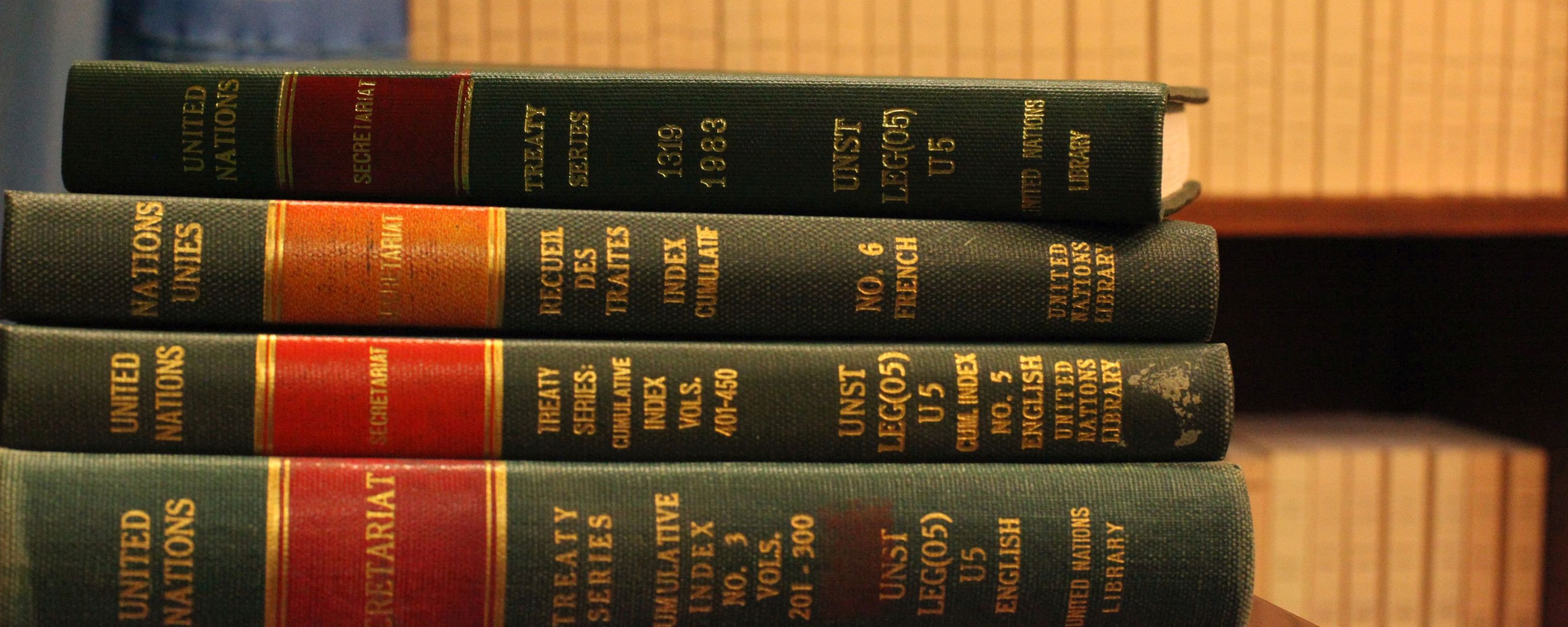
- Agreement on Measures to Reduce the Risk of Outbreak of Nuclear War Between the United States of America and the Union of Soviet Socialist Republics, signed at Washington, September 30, 1971; registered with the United Nations January 5, 1972. UN Treaty Series, Vol. 807, No. I-11509. Full text in English at the UN Treaty Collection.
- Ross Coulthart, "Reality Check" Q&A with Megan Medic, NewsNation, July 26, 2026. Source transcript ~35 minutes, cited segments at 25:21–29:34. Clip ID: zsDKeNz0xHc.
- David Grusch, interview with Ross Coulthart for NewsNation, broadcast June 14, 2023. Full interview on YouTube (V6JxUHkyDuY, 41:52).
- Rep. Anna Paulina Luna, opening statement, UAP hearing "Unidentified Anomalous Phenomena: Implications on National Security, Public Safety, and Government Transparency," House Committee on Oversight and Accountability, July 26, 2023. Hearing record: govinfo.gov CHRG-118hhrg53022.
- Luis Elizondo, Imminent: Inside the Pentagon's Hunt for UFOs, 2024. Cites Article 3 of the September 1971 risk-reduction agreement and reproduces the full text.
- "Malmstrom UFO incident," Wikipedia, accessed July 26, 2026. Cites the 1967 Air Force Echo Flight investigation file and the 1996 Great Falls Tribune interview with Robert Salas.
- National Security Archive, "False Warnings of Soviet Missile Attacks Put U.S. Forces on Alert During 1979–80," March 16, 2020. Background on the post-1971 false-alarm history. Source: nsarchive.gwu.edu.