News / Jun 10, 2026
What did David Grusch mean by "sentient plasmoid life"? Here's what we know.
The former intelligence official's unusual phrase at a Capitol UAP press conference raises more questions than it answers.

David Grusch used the phrase "sentient plasmoid life" at a Capitol UAP press conference on June 9. In physics, a plasmoid is a structure that forms in plasma. The word "sentient" is Grusch's added claim: it turns a physical phenomenon into a proposed form of aware life.
Asked how many non-human species the government was aware of, the former U.S. intelligence official did not give a number or name categories. He described a range from "corporeal bipedal life" to what he called "sentient plasmoid life," and said the U.S. government was aware of several forms.
He provided no document, specimen, named source or chain of custody to support that claim.
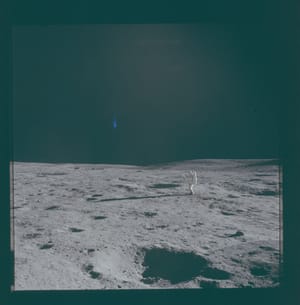
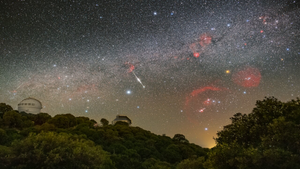
No one in public can show what that is supposed to look like. The image above treats the phrase literally, as a visual thought experiment. It is labeled as illustration because the claim remains in the words.
What is a plasmoid?
A plasmoid is a structure that forms in plasma, the charged state of matter found in stars, lightning and auroras.
In physics, the term refers to a physical phenomenon, not a living thing.
The Max Planck Institute for Plasma Physics has studied plasma balls in connection with ball-lightning research. Those objects glow, move and dissipate. Scientists study them as physical structures, not organisms.
Why "sentient" matters
The loaded word is not "plasmoid."
It is "sentient," meaning capable of awareness or experience.
Attach it to a plasma structure and the claim shifts from physics to consciousness. A luminous atmospheric object becomes, at least in the allegation, a possible mind.
That is why the phrase spread faster than earlier references to recovered craft or non-human biologics. It suggested a type of life that may not have a conventional body.
Is there any science behind the phrase?
There is science in the general neighborhood, but that is not the same as evidence for Grusch's specific claim.
A 2007 paper by physicist V. N. Tsytovich and colleagues examined whether certain structures in complex plasma could exhibit life-like properties.
More recently, papers in the Journal of Modern Physics have argued that plasmoids in the thermosphere may represent a "fourth domain of life."
That is the literature some online posts are now connecting to Grusch's phrase. Rudolph "Rudy" Schild, listed with the Center for Astrophysics, Harvard-Smithsonian, is among the authors of a 2025 Journal of Modern Physics paper that discusses NASA space shuttle imagery and argues that thermospheric plasmoids may show interactive behavior. That helps explain why the phrase had somewhere to land online. It does not show that Grusch's claim is documented.
Researchers in NASA's astrobiology program have also explored how scientists might detect life that does not share Earth chemistry, an approach called agnostic biosignatures.
None of that confirms intelligent plasma beings exist.
One of the recent Journal of Modern Physics papers notes explicitly that no evidence exists that such plasmoids contain a genome or DNA.
Life-like behavior is not the same as life. Motion is not intention. A glowing object changing direction is not consciousness.
What did Grusch actually provide?
A phrase.
Grusch offered no document, specimen, program name, scientist, lab or chain of custody. He did not explain whether "sentient plasmoid life" came from a classified briefing, a witness account, a source document or his own attempt to describe something that resists ordinary language.
He also noted he did not have the "full compendium," suggesting his knowledge has limits.
Why this matters
The UAP conversation has long centered on craft, propulsion systems and retrieval programs. Grusch's comment pushes it in a different direction, toward biology and toward a stranger question.
Journalist Leslie Kean, who helped organize the June 9 event, has argued that biological evidence of another life form should not fall under the same national-security secrecy rules as technology.
Her point: you can classify a hangar. It is harder to justify classifying proof of life.
If Grusch's claim is taken seriously, the next question is not only where a craft is stored. It is what kind of life people are now alleging the government knows about.
That question does not have a public answer yet.
Grusch has not provided documents or named sources to back the claim. Congress has not announced a follow-up hearing focused on that statement.
Related notes
- David Grusch put biology on the Capitol steps
- David Grusch and the Immaculate Constellation gap
- David Grusch pointed researchers to a 1971 Australian UFO file. Here's what it says
- Burlison told NewsNation the FBI filmed the same plasma orbs in U.S. neighborhoods
- Lue Elizondo says blue orbs led two dogs into a Utah field
- The "four alien species" claim started with one careful sentence
Sources
- Reuters: "LIVE: Lawmakers, whistleblower call for release of UFO records," June 9, 2026.
- C-SPAN: "Rep. Burlison and Others on UAP Declassification," June 9, 2026.
- Cybernews: "Congress pushes UFO disclosure as Grusch escalates alien claims," June 10, 2026.
- PR Newswire: June 9 UAP transparency event announcement, May 28, 2026.
- Max Planck Institute for Plasma Physics: Ball lightning and laboratory plasmoids.
- Tsytovich et al.: "From plasma crystals and helical structures towards inorganic living matter," New Journal of Physics, 2007.
- NASA Astrobiology: "Agnostic Biosignatures," and the path to life as we don't know it.
- Joseph, Armstrong, Wolowski, Safa, Dunne, del Gaudio, and Schild: "Plasmas: A Fourth Domain of Life?", Journal of Modern Physics, 2025.
- AARO public site.