Main Article / Jul 25, 2026
Bennu's smallest grains may show how Jupiter sorted the young Solar System
A new Bennu study traces rare early-Solar-System minerals through NASA's returned asteroid material. Its findings point to dust moving outward and being filtered near proto-Jupiter.
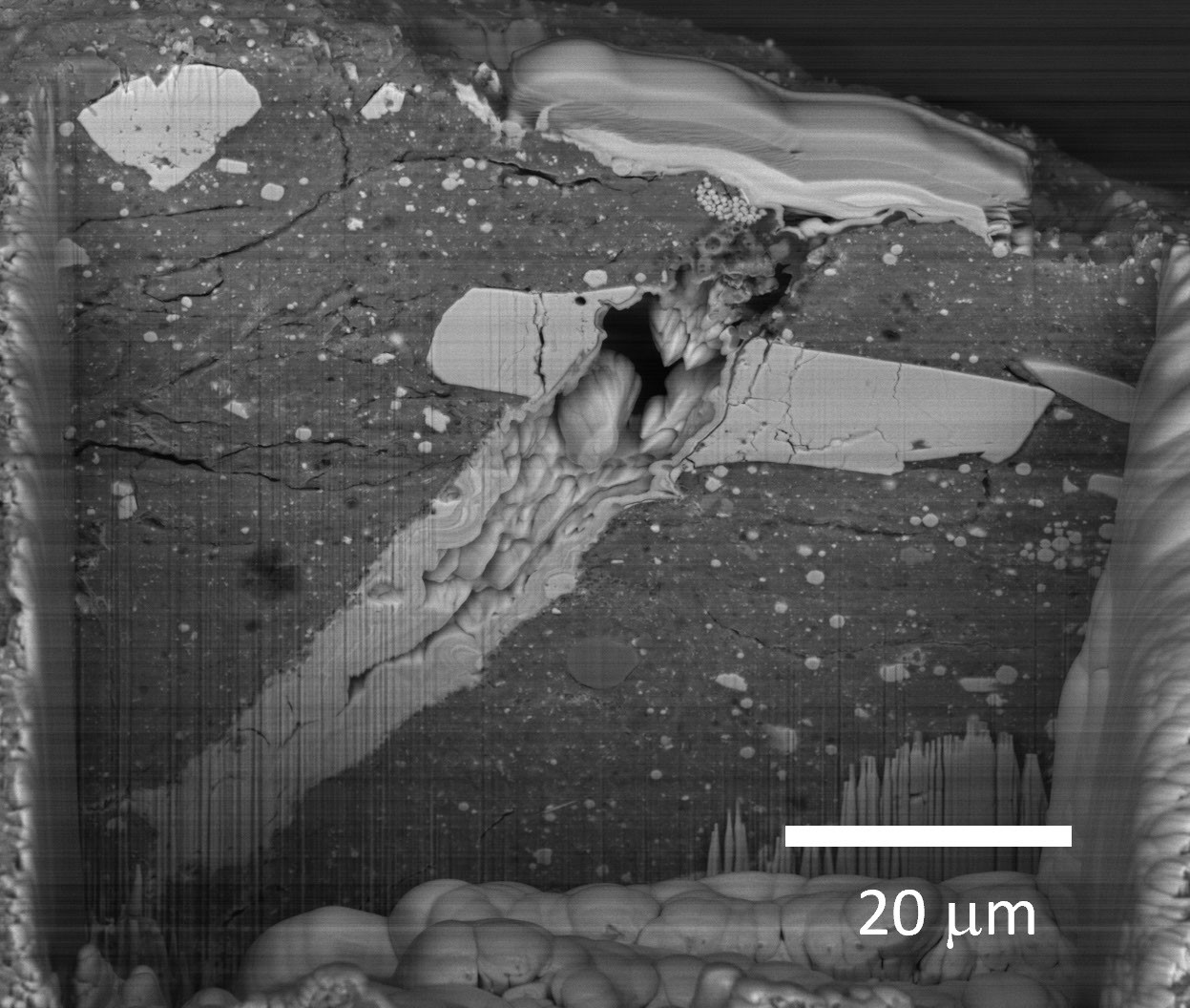
A new Nature Communications study of material returned by NASA's OSIRIS-REx mission points away from life and toward planetary architecture. Rare mineral grains preserved in asteroid Bennu appear to record how dust moved through the young Solar System, and how the growing Jupiter may have helped sort that material.
The research examines refractory inclusions: tiny heat-formed mineral fragments from the earliest stage of Solar System history. The team measured their chemistry and isotope signatures, then compared them with inclusions in meteorites and in samples returned from asteroid Ryugu by JAXA's Hayabusa2 mission. The journal currently labels the version as an unedited early-access manuscript.
The study does not argue that Bennu came from Jupiter or that one asteroid sample can explain the entire early Solar System. It suggests that Bennu's small inclusions are consistent with dust that formed near the young Sun, drifted outward through the disk, and was later filtered by a pressure bump associated with proto-Jupiter.
Small grains, large history
In Bennu's returned sample, the inclusions identified so far are generally smaller than about 100 micrometres. They carry mineralogical and isotopic signatures that connect them to the earliest stages of planetary formation.
The paper compares their oxygen-isotope chemistry and aluminium-magnesium chronology with refractory inclusions found in carbonaceous meteorites and in material from Ryugu. The similarities support a shared early reservoir of solids rather than isolated material that formed and remained in place.
Material that began near the young Sun appears to have been carried outward and mixed into the ingredients of bodies that formed farther away. Bennu is a rubble-pile asteroid assembled from fragments of a larger parent body, but those fragments retained a record of that older movement.
The proto-Jupiter filter
The most useful part of the new study is what the Bennu sample doesn't contain. The researchers report no large, sub-millimetre refractory inclusions of the kind often found in carbonaceous chondrite meteorites. The sample instead contains a population of much smaller inclusions.
The authors interpret that size difference as consistent with a pressure bump in the protoplanetary disk, associated with proto-Jupiter. It would not have been a solid wall, but it could have affected which grains drifted across it, which were trapped, and which populations were filtered into different regions of the disk.
That is an interpretive model, not a direct observation of Jupiter in action. The paper says Bennu's constituents are consistent with accumulation in the outer Solar System beyond that boundary, but it does not assign Bennu a single birthplace.
Why the sample matters
Spacecraft images can show an asteroid's shape, boulders and surface texture. They cannot provide an oxygen-isotope measurement from a grain tens of micrometres wide. The OSIRIS-REx sample lets laboratories cut, image and date material at a scale that turns a general question — where did this asteroid's ingredients come from? — into a set of testable comparisons.
NASA's broader Bennu work has already shown that its material has a mixed history: dust from the Solar System, organic material from interstellar space and presolar stardust, later altered by water and radiation. The new paper narrows one part of that record. It focuses on early, heat-formed minerals and on the route they may have taken before Bennu's parent body assembled.
Bennu samples contain compounds relevant to prebiotic chemistry, but they are not evidence of life. This is not a life-detection paper. Its subject is the architecture of the young Solar System: how solids formed, moved and were sorted before planets settled into their current arrangement.
What remains open
The inclusions identified so far are rare, and the comparison depends on what has been analyzed from Bennu, Ryugu and meteorite collections. Further work may find more inclusions, revise the size distribution or sharpen the boundary between different source populations.
The journal page labels this version an unedited early-access manuscript, so details may still change before final publication. The central claim is specific enough to test: more analyses can check whether other Bennu grains follow the same pattern and whether additional samples support the proto-Jupiter filtering model.
Sources
- Refractory inclusions in Bennu samples indicative of outer Solar System accretion, Nature Communications (2026; early-access manuscript).
- NASA: “NASA’s Bennu Samples Reveal Complex Origins, Dramatic Transformation”, August 22, 2025.
- NASA: “NASA’s Asteroid Bennu Sample Reveals Mix of Life’s Ingredients”, January 29, 2025.
- NASA Science: OSIRIS-REx and asteroid Bennu mission background.