Short Note / Jun 15, 2026
The 1998 UFO mailbag inside PURSUE Release 03
PURSUE Release 03 includes a strange side file from 1998: constituent letters about UFOs, Mars photos, astronaut sightings, congressional hearings, and NASA's old answer that it had no UFO investigation program.
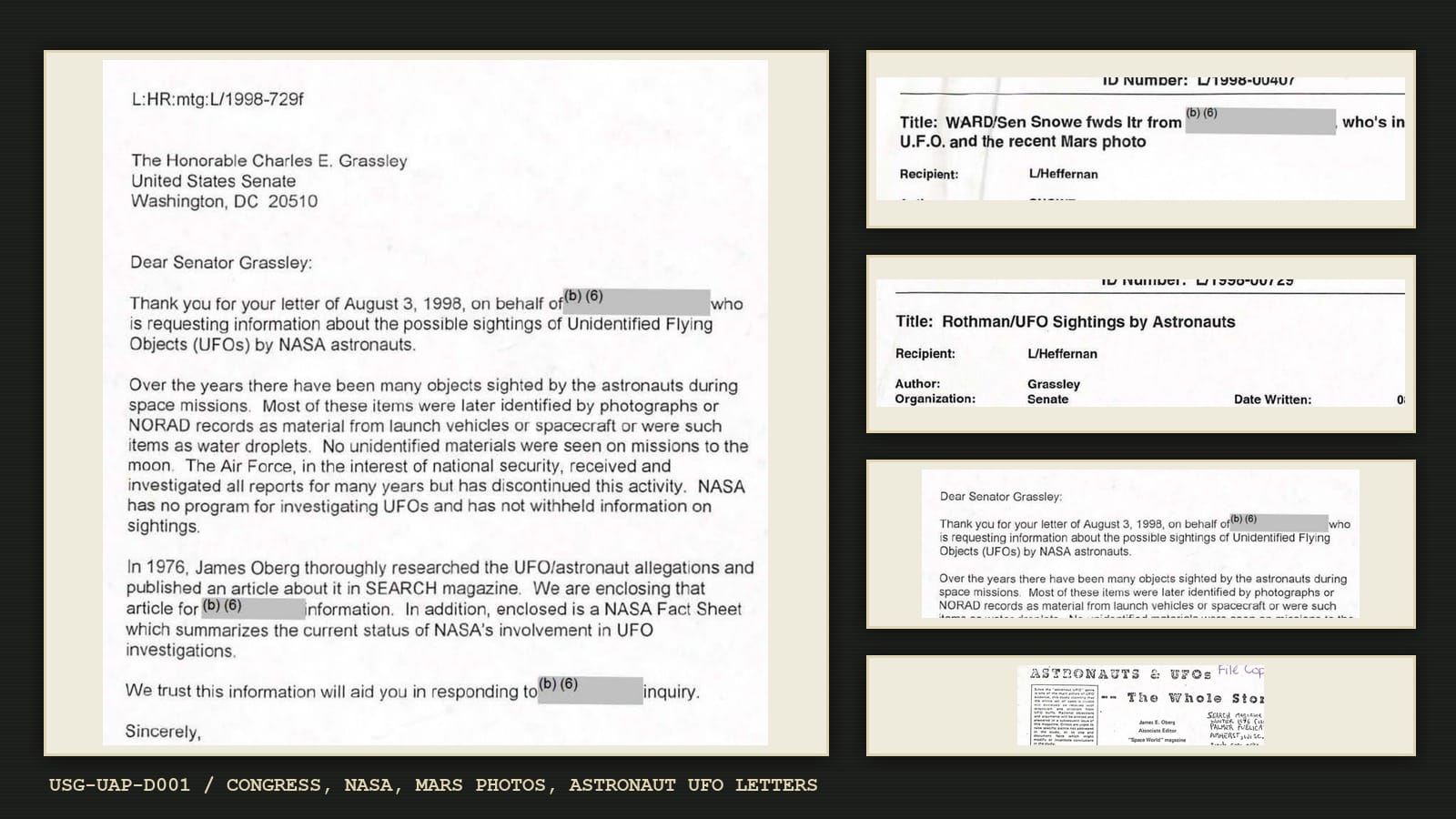
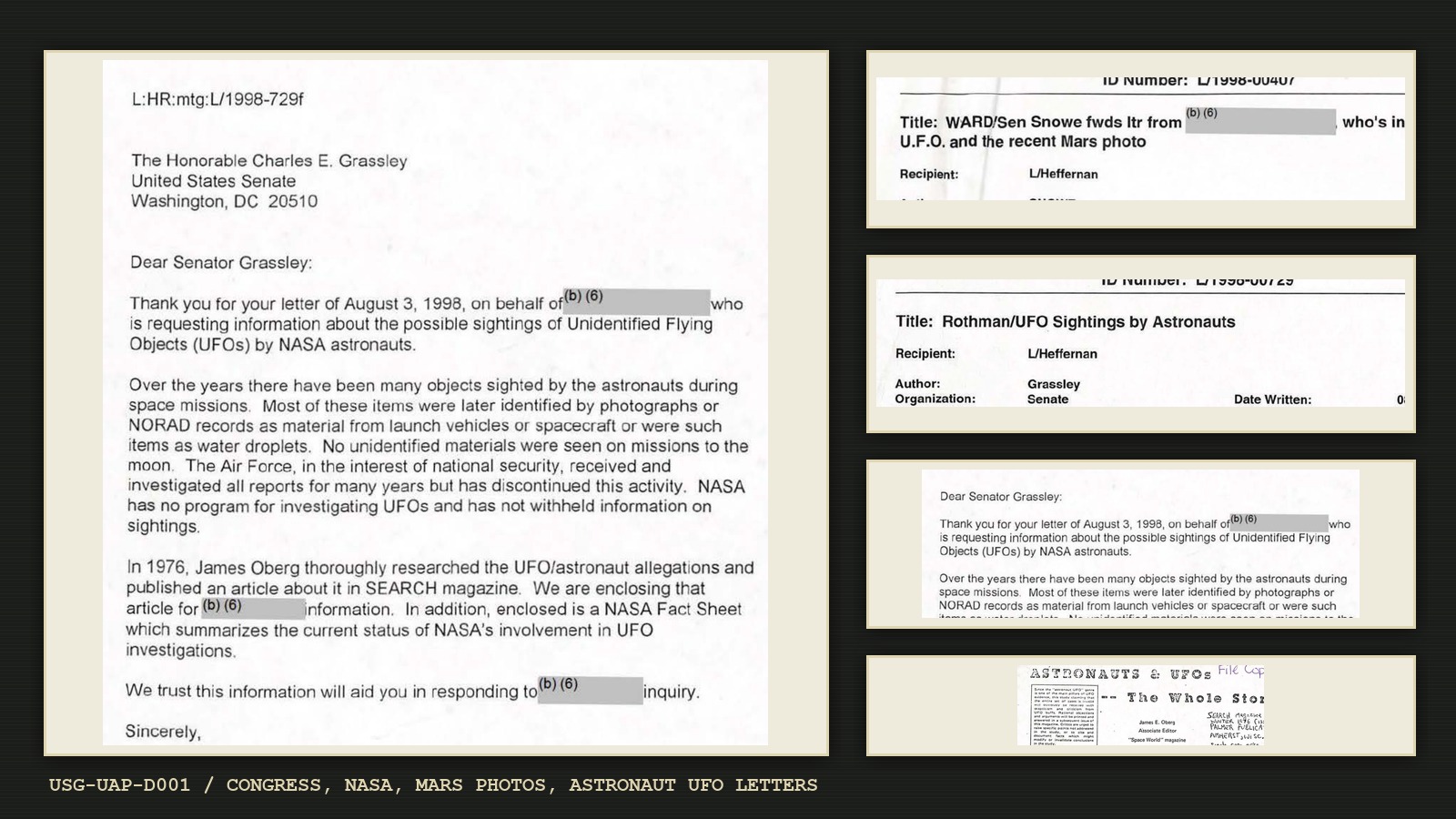
One file in PURSUE Release 03 is a stack of constituent mail — and NASA's official answers to it.
USG-UAP-D001 is a 1998 correspondence package routed through Congress, the White House, and NASA after citizens wrote in about UFOs, Mars photographs, astronaut sightings, government secrecy, hearings, and federal spending. Released June 12, 2026, through the Department of War's PURSUE portal, the file is one of the quieter items in the tranche — and one of the more revealing ones.
What landed in the inbox
The official Release 03 data describes USG-UAP-D001 as a collection of documents from 1998 involving responses to constituent UFO inquiries.
The topics cover a wide range: alleged UFO sightings by NASA astronauts, questions about the authenticity of Mars mission photos, claims that the U.S. government was withholding information, questions about federal spending, and calls for congressional hearings.
Two Senate routing sheets show how the mail moved. Sen. Olympia Snowe (R-Maine) forwarded a letter from a constituent interested in UFOs and a recent Mars photo. Sen. Charles Grassley (R-Iowa) forwarded an Aug. 3, 1998, request for information on UFO sightings by astronauts. Both letters landed at NASA.
NASA's 1998 answer
In a September 1998 reply to Grassley, NASA addressed the astronaut question directly.
The agency said many objects had been sighted by astronauts during space missions, but that most were later identified through photographs or NORAD records as material from launch vehicles or spacecraft, or as items such as water droplets. It also stated that no unidentified materials were seen on missions to the moon.
Then came the line that defined the pre-AARO era: NASA had no program for investigating UFOs and had not withheld information on sightings.
The Oberg attachment
NASA's reply included a copy of a 1976 article by James Oberg, a spaceflight analyst and longtime skeptic of astronaut UFO claims, published in Search magazine.
Oberg's article was NASA's supporting reference — the agency's way of saying: here is the technical review that accounts for what astronauts reported seeing. Acknowledge the sightings, point to prosaic explanations, and direct the reader to a skeptical expert.
The Oberg attachment shows the old response pattern clearly. It is not a rebuttal to every astronaut UFO claim. It is a snapshot of what a formal 1998 government answer looked like when a senator asked NASA to respond.
Why keep this one
Most Release 03 items point to a specific case, image, audio excerpt, or historical study. USG-UAP-D001 points to the inbox.
It documents the pressure layer that existed around UFOs long before AARO, before congressional UAP hearings, before "UAP" replaced "UFO" as the official term. Citizens were writing their senators. Senators were forwarding the letters. NASA was drafting replies and sending along skeptical literature.
The vocabulary in the file is still "UFO." The routing is still constituent letter to Senate office to agency reply. The questions — astronaut sightings, Mars photos, government secrecy — are the same ones driving today's disclosure debate.
USG-UAP-D001 does not contain a dramatic new sighting. It contains something more durable: evidence that the public was already demanding answers in 1998, and that official Washington already had a template for not quite giving them.
Related UAP Logbook notes
- PURSUE Release 03: CIA files, FBI orbs, and a 1949 flying saucer study
- NASA-UAP-D023: Gordon Cooper and Cronkite, 1962
- NASA-UAP-D025: the Apollo 16 "alien starbase" line
- "Orbs Launching Orbs": The unresolved AARO case from PURSUE Release 03
Sources
- USG-UAP-D001: Congressional, White House, UFO-related Constituent Correspondence, 1998, released in PURSUE Release 03.
- PURSUE Release 03 data CSV.