Science / Jul 29, 2026
Hessdalen's Lights Have Their Own Field Station
After a surge of reports, Hessdalen built an observation station. Its cameras, radar and weather instruments have made the case more testable, not solved it.
source chainProject Hessdalen's 1984 technical report Hessdalen Automatic Measurement Station 2024 VLF survey
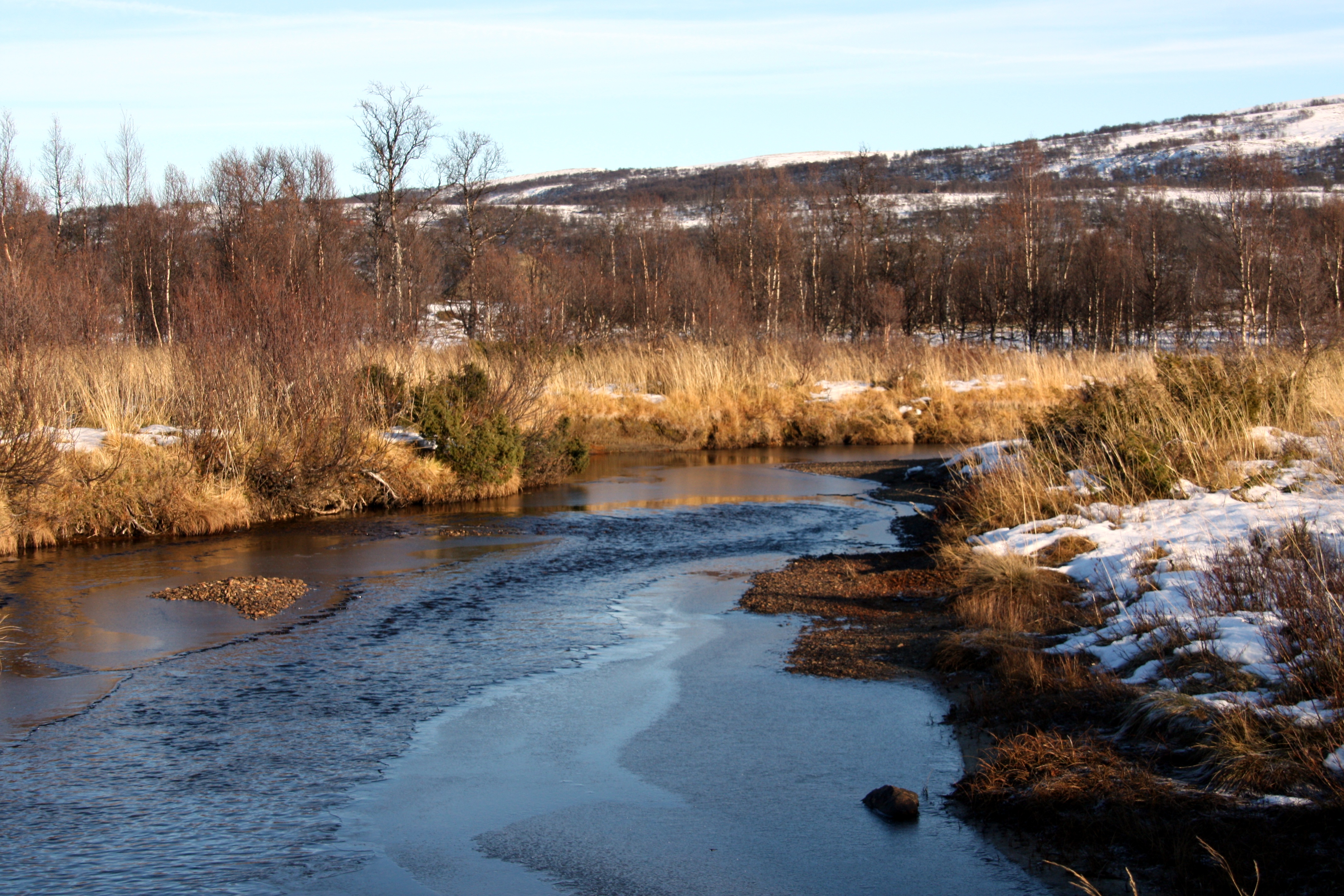
In the winter of 1981, people in the Hessdalen valley began reporting lights low over the ground and on the surrounding slopes. Some seemed to hang in place; others moved through the valley. The UFO label arrived early. In 1983, a small volunteer project formed to collect measurements instead of more stories.
Erling Strand wrote the technical report from the first field campaign, which ran from 21 January to 26 February 1984. It used cameras, radar, a spectrum analyser, magnetometers, a seismograph, a laser, a Geiger counter and infrared equipment. The report records what the team saw, what the instruments registered and what the instruments missed.
The winter when the reports piled up
The project describes an abrupt rise in reports from December 1981. During the 1984 campaign it logged 188 reports of different lights. That total included aircraft reports, because the team was trying to sort ordinary traffic from the remaining cases rather than treating every light as a mystery.
It scored each report two ways: documentation quality and the likelihood of a known explanation. The authors say the second score was subjective. Fifty-three reports reached the project's F5 threshold for the Hessdalen phenomenon or above. Four were scored F9 or F10 for strangeness and G7 or better for documentation. The report says that sample was too small to establish the nature of the lights.
What the instruments caught
The 1984 team recorded 36 radar returns. Only three were probably seen as lights at the same time. Some radar traces were strong, but the report says a strong return can come from a solid object or from a sharp local gradient in temperature, humidity or pressure; strongly ionised gas was another possibility raised by a radar specialist consulted by the project.
One paired visual-and-radar event produced an estimated speed of roughly 8 to 9 kilometres per second. The timing accuracy was only two to three seconds. Elsewhere, the report lists cameras that missed key moments, noisy spectral film, displays no operator could watch continuously, and the missing direct link to regional air-traffic radar.
The spectroscopy was equally unfinished. Of seven diffraction-grating films, four produced spectra usable enough to inspect. The report says the strongest examples may have been a known light, and the best-documented unusual example was too weak to identify the spectrum. It explicitly says those images could not prove a continuous spectrum for the Hessdalen phenomenon.
The Blue Box was built for the next time
Rather than wait for another staffed winter campaign, the project installed an Automatic Measurement Station in August 1998. The blue container on the side of Rognefjell became known as the Blue Box. Its purpose was practical: compare frames every second and start recording when the scene changed.
A later version used two colour cameras 171 metres apart. If both caught the same light, the system could calculate a distance and point a zoom camera toward it. It also collected weather measurements and magnetic data. The station's own technical notes say the radar produced enough noise that the project did not publish its screen captures as reliable evidence.
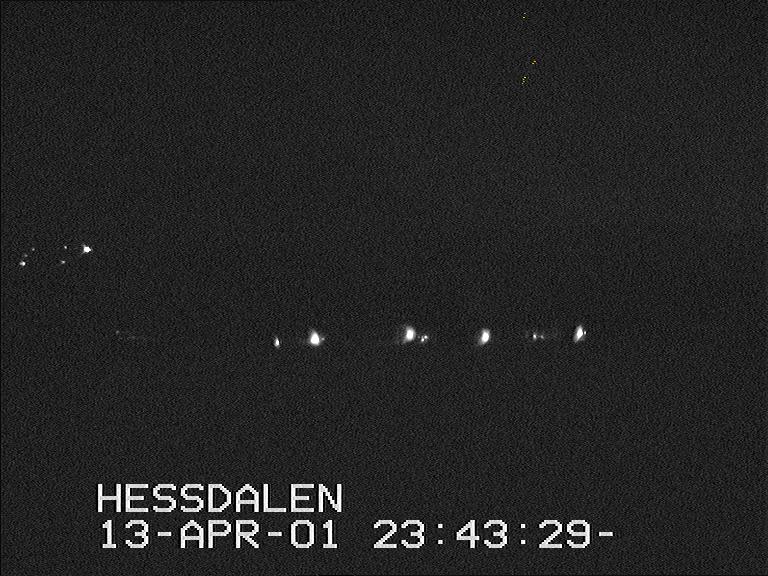
Italian and Norwegian researchers returned for the EMBLA 2000 mission, which concentrated on radio and optical measurements. In 2002, the project also ran a Science Camp in the valley with school pupils, teachers and students working from the surrounding slopes. The current Project Hessdalen site still describes the Blue Box as a multi-sensor station and makes camera material available. A recurring local light can therefore be compared with the same landscape, weather and equipment rather than passed around as a detached clip.
Why a plasma explanation is still a proposal
Several explanations have been proposed. Some reported lights may be aircraft, car headlights, astronomical objects or optical effects. The project invited many ball-lightning researchers to a 1994 workshop because that field also studies unexplained lights. The meeting brought together 27 scientists from eight countries; it did not settle on an explanation.
One published model proposes a dusty plasma: radon decay, airborne dust and ionised air could create structures that account for some reported optical and spectral properties. A 2024 study of very-low-frequency electromagnetic measurements likewise examines how local geology, mineral deposits and atmospheric physics might favour luminous phenomena in the valley.
These are hypotheses. The dusty-plasma paper says no existing theory accounts for all, sometimes contradictory, observations. The 2024 paper points to a research path; it does not identify a final mechanism.
Why the station still matters
Hessdalen has dated reports, an instrument campaign, a long-running camera station and published attempts to explain parts of the record. It also has ordinary sources of light in the valley, sensor noise, missed captures and measurements that do not line up cleanly.
No Project Hessdalen document identifies a spacecraft or nonhuman technology. The remaining job is more ordinary: separate known lights from the rest, compare the remainder against weather, flight and camera data, and see whether any proposed physics survives that test.
Sources
- Project Hessdalen: Final technical report, 1984. The campaign's methods, 188 reports, classification system, radar returns, spectrum limits and equipment limitations.
- Project Hessdalen: project history and Automatic Measurement Station.
- Project Hessdalen: Automatic Measurement Station technical description, including camera, weather, radar and flight-detection systems.
- Project Hessdalen: 2001 alarm-image archive.
- Project Hessdalen: EMBLA 2000 mission record and 2002 Science Camp record.
- Project Hessdalen: project history, 1998, on the 1981–83 report surge and the 1983 founding of the project.
- Per Arne Slotte / Wikimedia Commons: Hessjøen river, Hessdalen area, 2009, CC BY-SA 2.0.
- G. S. Paiva and C. A. Taft, “A hypothetical dusty plasma mechanism of Hessdalen lights”, Journal of Atmospheric and Solar-Terrestrial Physics, 2010.
- G. N. Vargemezis et al., “Contribution of VLF electromagnetic survey to the investigation of Hessdalen lights (Norway)”, Journal of Applied Geophysics, 2024.