
News / Jun 30, 2026
Six thousand planets. No finished life claim.
The exoplanet life search is no longer only a planet count. It is a spectrum problem: weak atmospheric features, active stars, contested molecules, and future telescopes built to separate a living world from a chemical false alarm.
The planet is not a picture first. It is a dip in starlight.
A distant world crosses the face of its star. A fraction of the star's light passes through the planet's atmosphere, if there is one. Molecules absorb some colors more than others. The missing colors become a spectrum. The spectrum becomes an argument.
That is where the exoplanet search for life stands now.
NASA's confirmed exoplanet count passed 6,000 in 2025, with thousands more candidates waiting behind it. The inventory is no longer the hard part by itself. Astronomers know planets are common. They know small worlds exist in habitable zones. They know some atmospheres can be read from dozens or hundreds of light-years away. The harder question is what kind of signal would be enough to move from "interesting chemistry" to "possible life" without letting the word possible do all the work.
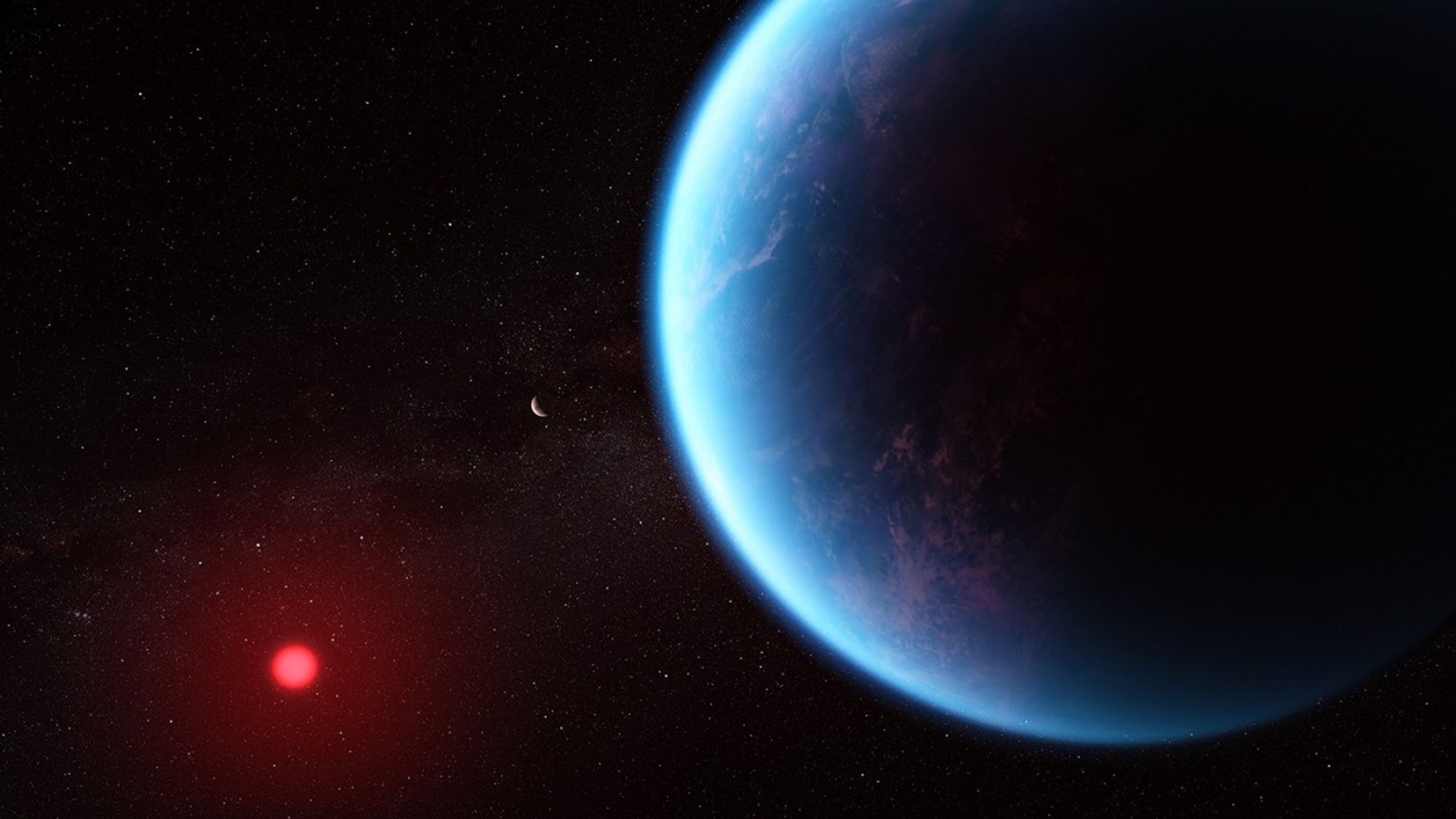
The spectrum problem
JWST has made exoplanet atmospheres feel newly close. It can detect methane, carbon dioxide, water vapor, sulfur chemistry, and cloud signatures in some planetary atmospheres. But the cleanest results so far are often on large, hot, inflated planets. Those are excellent laboratories for atmospheric physics. They are not Earth.
Small temperate planets are meaner targets. Their signals are smaller. Their host stars can be active. Star spots and flares can imitate or contaminate atmospheric features. A cloud deck can flatten a spectrum. A planet may have no atmosphere at all. Even when a molecule is really present, the next question is whether biology is required to make it.
NASA's own Webb explainer puts the boundary plainly: finding a single biosignature does not amount to discovering life. A persuasive exoplanet life case will likely need multiple molecules, multiple observations, atmospheric models, stellar context, and years of checking.
That is not a retreat. It is the field describing the height of the bar.
K2-18 b made the word public
K2-18 b is the planet that pushed dimethyl sulfide into ordinary headlines.
It is a sub-Neptune about 120 light-years away in the constellation Leo, orbiting a cool dwarf star in the habitable zone. It is not a planet type found in our solar system. That already makes it a difficult witness. It could be a "Hycean" candidate — a hypothetical class of planet with a hydrogen-rich atmosphere over a global liquid-water ocean — or it could be something less friendly to life. Its size also means it is not a simple Earth twin.
In 2023, JWST observations reported methane and carbon dioxide in K2-18 b's atmosphere, with a possible hint of dimethyl sulfide, or DMS. On Earth, DMS is strongly associated with biological activity in marine environments. In 2025, a follow-up JWST/MIRI analysis reported new evidence for DMS and/or dimethyl disulfide, DMDS, at about 3-sigma significance, while also saying more observations were needed.
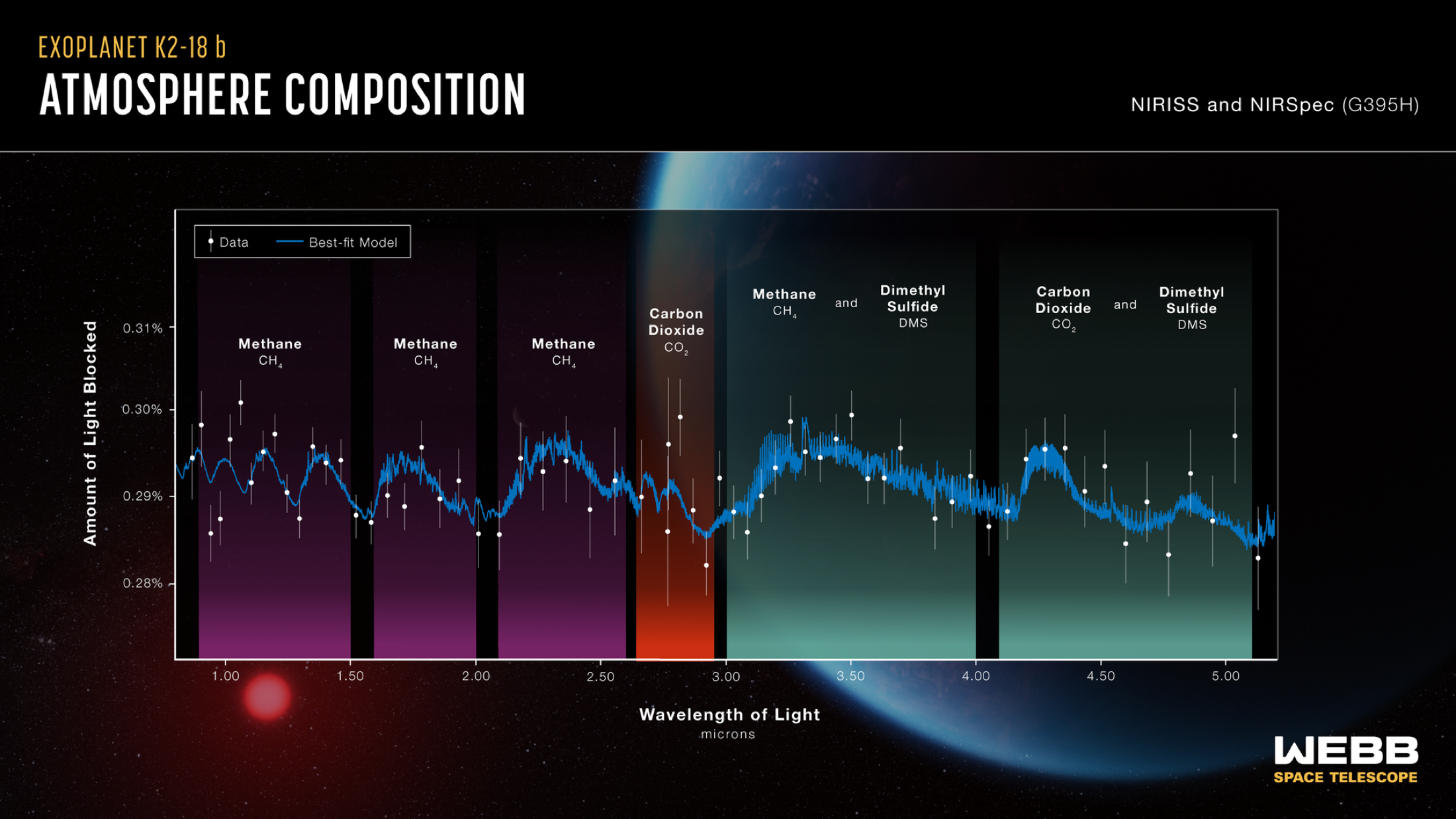
The word possible did a lot of public work there. A 3-sigma feature is not the level normally used to settle an astronomical discovery. The planet model matters. The data reduction matters. The list of molecules allowed in the retrieval matters. The instrument noise matters.
Then came the friction. A joint analysis of the JWST NIRISS, NIRSpec, and MIRI data found insufficient evidence for DMS or DMDS in K2-18 b's atmosphere. Another standards-of-evidence paper concluded that there is not yet statistically significant evidence for biosignatures there, while still confirming methane and favoring carbon dioxide.
That does not make K2-18 b a failed story. It makes it the best public example of the current machine: a real planet, real Webb data, real molecules, real debate, and no finished life claim.
The rocky worlds are harder
TRAPPIST-1 was supposed to be the clean poster system: seven rocky planets around a nearby ultracool red dwarf, several in or near the region where liquid water could exist under the right conditions.
JWST has made it more interesting and less simple.
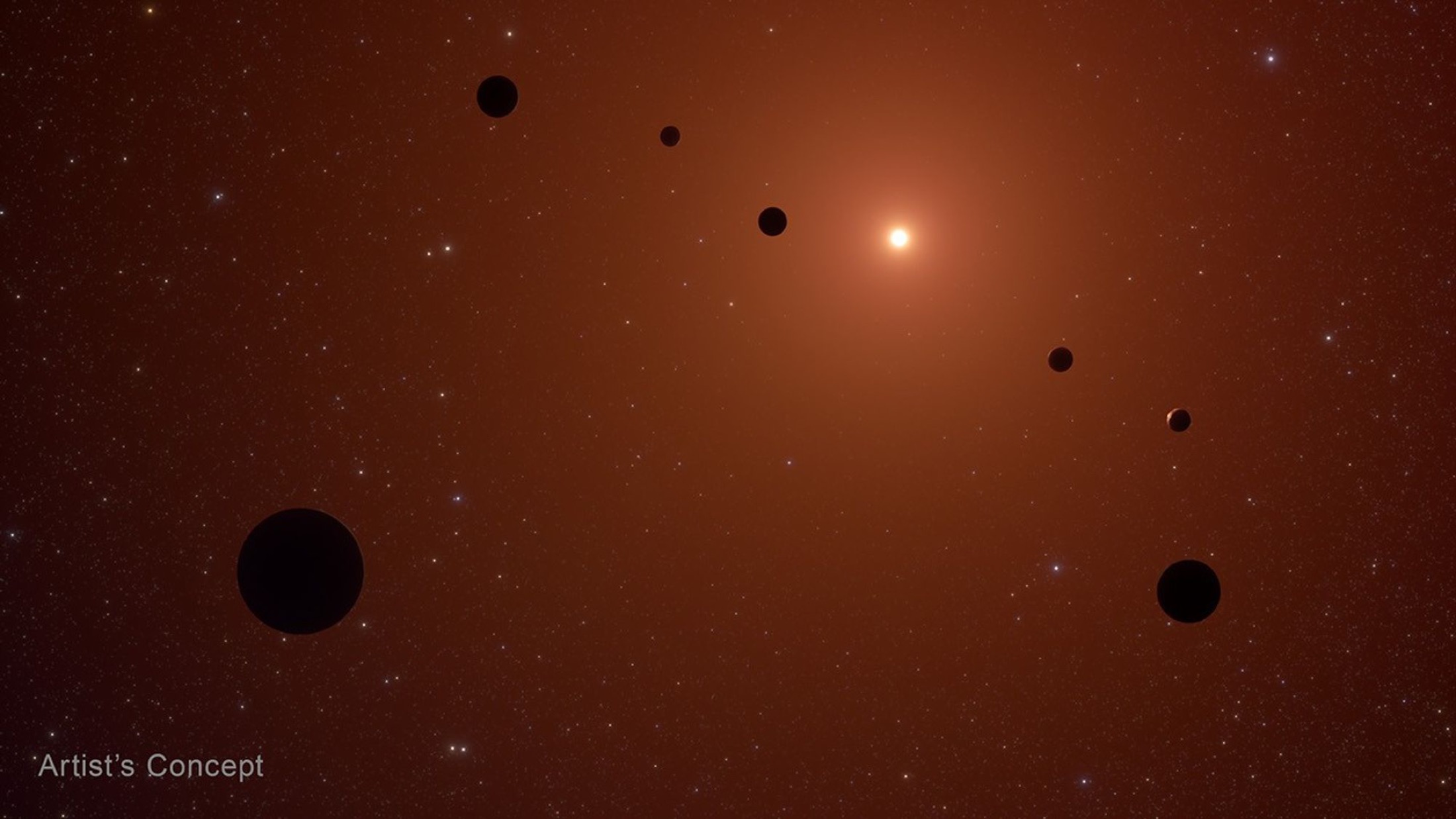
By NASA's December 2025 summary, Webb had collected data for all seven TRAPPIST-1 planets and published results for b, c, d, and e. So far, there are no signs of thick atmospheres on TRAPPIST-1 b or c. The current data for b points toward a bare rock. If c has an atmosphere, it is very thin. For d and e, scientists have ruled out thick hydrogen atmospheres, but the atmospheric picture is still under study.
The system's star adds another layer. Red dwarf activity can make it difficult to distinguish the planet's atmosphere from the star's own behavior. A habitable-zone orbit is not a biosignature. It is a location on a map. The atmosphere has to survive. The spectrum has to separate from the star.
TRAPPIST-1 is still important. It is not the simple answer some early headlines wanted it to be.
LHS 1140 b is the quieter candidate
LHS 1140 b does not have K2-18 b's public heat, but it may be one of the better small habitable-zone targets now on the table.
A 2024 JWST/NIRSpec analysis argued that the planet's transmission spectrum is inconsistent with a hydrogen-rich atmosphere across the tested scenarios. That matters because a hydrogen-rich mini-Neptune would be less Earth-like. The remaining favored picture is a water world with a high-mean-molecular-weight atmosphere, possibly nitrogen-dominated with water vapor and carbon dioxide, though the paper describes that atmospheric preference as modest.
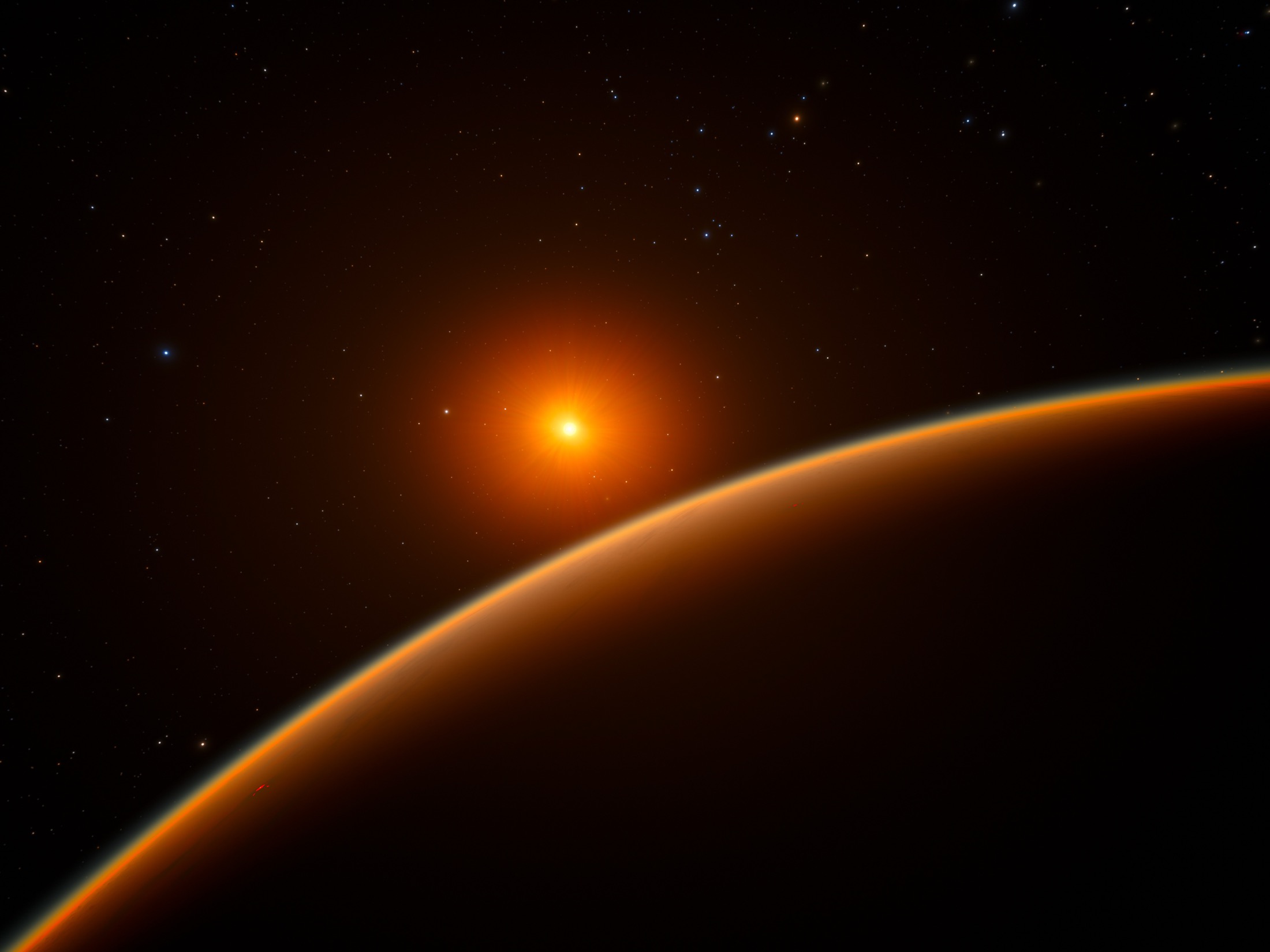
The phrase "best current opportunity" appears in the LHS 1140 b paper because the TRAPPIST-1 atmospheres remain uncertain and because this planet may be reachable enough, large enough, and temperate enough for follow-up characterization. That is a cautious kind of excitement. It does not say life. It says a planet may be worth spending telescope time on because the next observation could clarify whether it has an atmosphere that can be studied at all.
That is what progress looks like in this lane: not a landing, but a better target list.
What would count
A biosignature is not one magic gas. Oxygen can be made or destroyed by non-biological pathways. Methane can be geological. DMS is biologically interesting on Earth, but exoplanet chemistry does not get to inherit Earth's explanation automatically. Even a strong molecule detection has to be read with the planet's temperature, pressure, host star, clouds, photochemistry, geology, and possible false positives.
The strongest future claim may look less like one molecule and more like a pattern: oxygen with methane in disequilibrium, water vapor in the right context, carbon dioxide and climate constraints, surface or seasonal signatures, stellar behavior that does not explain the signal away, and repeated observations by independent teams.
This is why NASA's Habitable Environments and Biosignatures program emphasizes detectability, false positives, and false negatives. The question is not only whether life leaves traces. It is whether a telescope can tell those traces from chemistry that only looks alive from 50 light-years away.
The next telescope has a name
JWST can begin the reconnaissance. It was not built as an Earth-twin life detector.
NASA's future Habitable Worlds Observatory (HWO) concept is aimed more directly at that problem, with current planning placing a launch no earlier than the mid-2040s. The mission objective described by NASA is to identify and directly image 25 potentially habitable worlds and use spectroscopy to search their atmospheres for chemical biosignatures such as oxygen and methane.
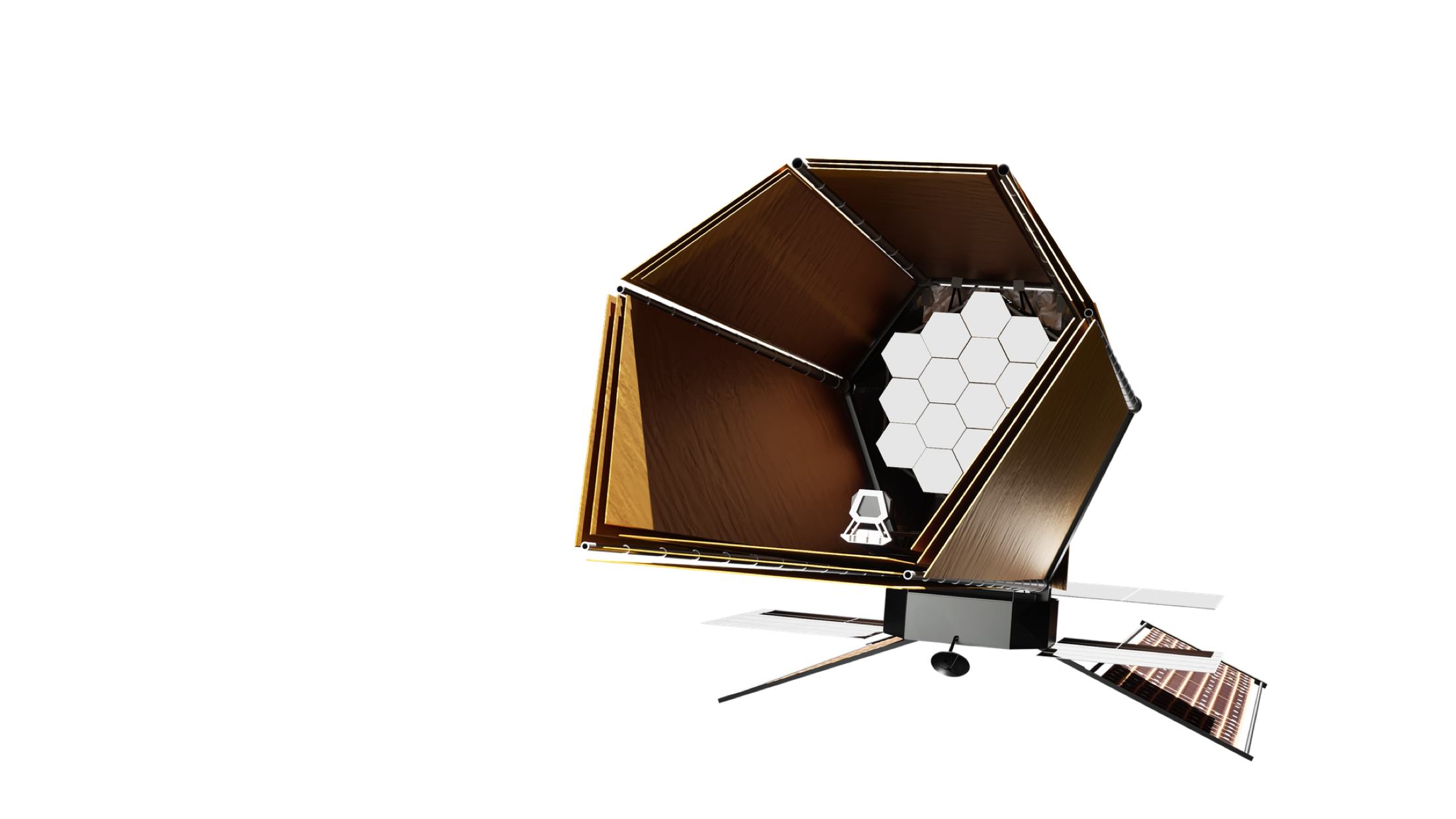
That requires blocking starlight at a level far beyond ordinary photography. NASA's 2026 technology selections for HWO mention an optical system stable to about the width of an atom during observations and a coronagraph thousands of times more capable than any space coronagraph flown so far.
The future life search, in other words, is not waiting for a better slogan. It is waiting for contrast, stability, time, and enough targets to compare.
The word remains candidate
There is a tempting version of the exoplanet story where the first alien biosignature is already sitting in a Webb spectrum, waiting for someone brave enough to say it.
The field is not there.
K2-18 b shows how fast a possible sulfur molecule becomes a public life story, and how quickly that story has to meet reanalysis. TRAPPIST-1 shows that rocky habitable-zone planets can still be bare, thin-aired, or hidden behind stellar noise. LHS 1140 b shows why a quieter target can matter more than a louder headline. HWO shows what the field thinks it still needs.
The search has moved beyond counting worlds. It has not moved beyond ambiguity.
For now, the planet remains a spectrum. The word remains candidate.
Sources
- NASA/JPL: "NASA's Tally of Planets Outside Our Solar System Reaches 6,000", Sept. 17, 2025.
- NASA/Webb: "Webb Discovers Methane, Carbon Dioxide in Atmosphere of K2-18 b", Sept. 11, 2023.
- NASA/Webb: "Reconnaissance of Potentially Habitable Worlds with NASA's Webb", June 5, 2024.
- Nikku Madhusudhan et al.: "New Constraints on DMS and DMDS in the Atmosphere of K2-18 b from JWST MIRI", arXiv:2504.12267.
- R. Luque et al.: "Insufficient evidence for DMS and DMDS in the atmosphere of K2-18 b", arXiv:2505.13407.
- Kevin B. Stevenson et al.: "K2-18b Does Not Meet The Standards of Evidence For Life", arXiv:2508.05961.
- NASA/Webb: "What is Webb Revealing About the TRAPPIST-1 System?", updated with results through December 2025.
- Mario Damiano et al.: "LHS 1140 b is a potentially habitable water world", arXiv:2403.13265 / ApJL 968 L22.
- NASA Science: Habitable Worlds Observatory overview.
- NASA: "NASA Selects Tech Proposals to Advance Search-for-Life Mission", Jan. 5, 2026.
- NASA: Habitable Environments and Biosignatures program overview.
- NASA/JPL image use policy.
- ESO image, video, music, and web text usage policy.