News / May 23, 2026
The Lake Huron shootdown video raises a basic question: why is this still a UAP?
PURSUE Release 02 includes the Lake Huron shootdown video from February 12, 2023. The useful question is not "is this exotic?" It is why a case that visually points toward the balloon lane is still being released under the UAP label.
The short version
PURSUE Release 02 includes DOW-UAP-PR071, the Lake Huron shootdown video from February 12, 2023.
It may be the most famous video in the new batch. It is also one of the least exotic-looking.
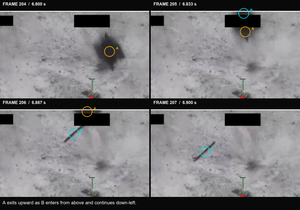
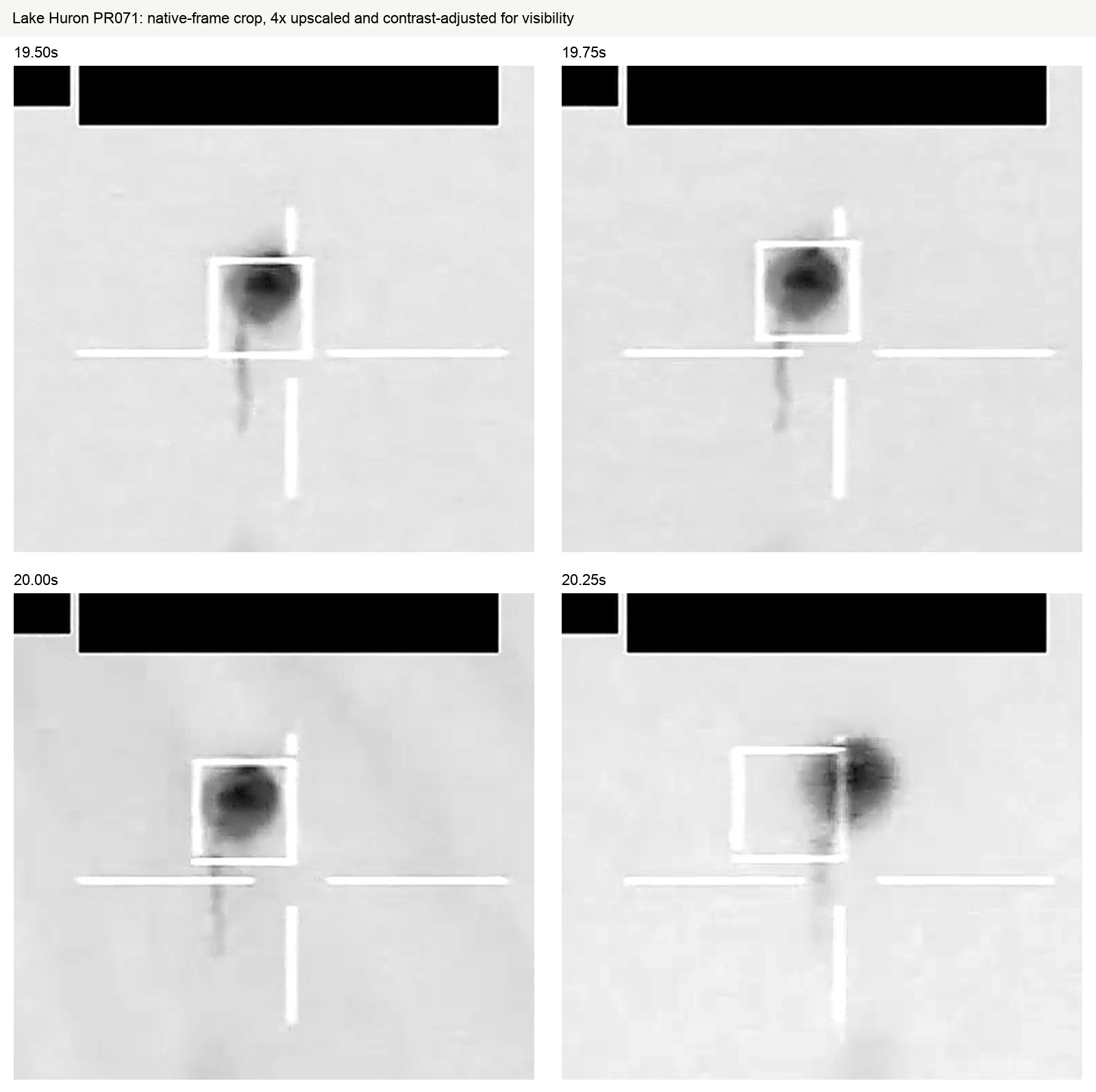
The clip appears to show a small target being hit. AARO describes a kinetic interaction around the 20-second mark, with the initial subject fragmenting in a pattern that suggests a high-energy event.
The critical point is not that the video proves a balloon. It does not. The critical point is that the public release gives us a UAP-labeled file for something that looks, on the available footage, compatible with the ordinary suspicion around this case: a small balloon-like target intercepted by a fighter.
So the useful question is not "how strange is it?" It is: if the people involved had enough context to fire on it, and if the object visually fits the balloon lane, why is the public still left with a UAP label instead of a clear assessment?
What was released
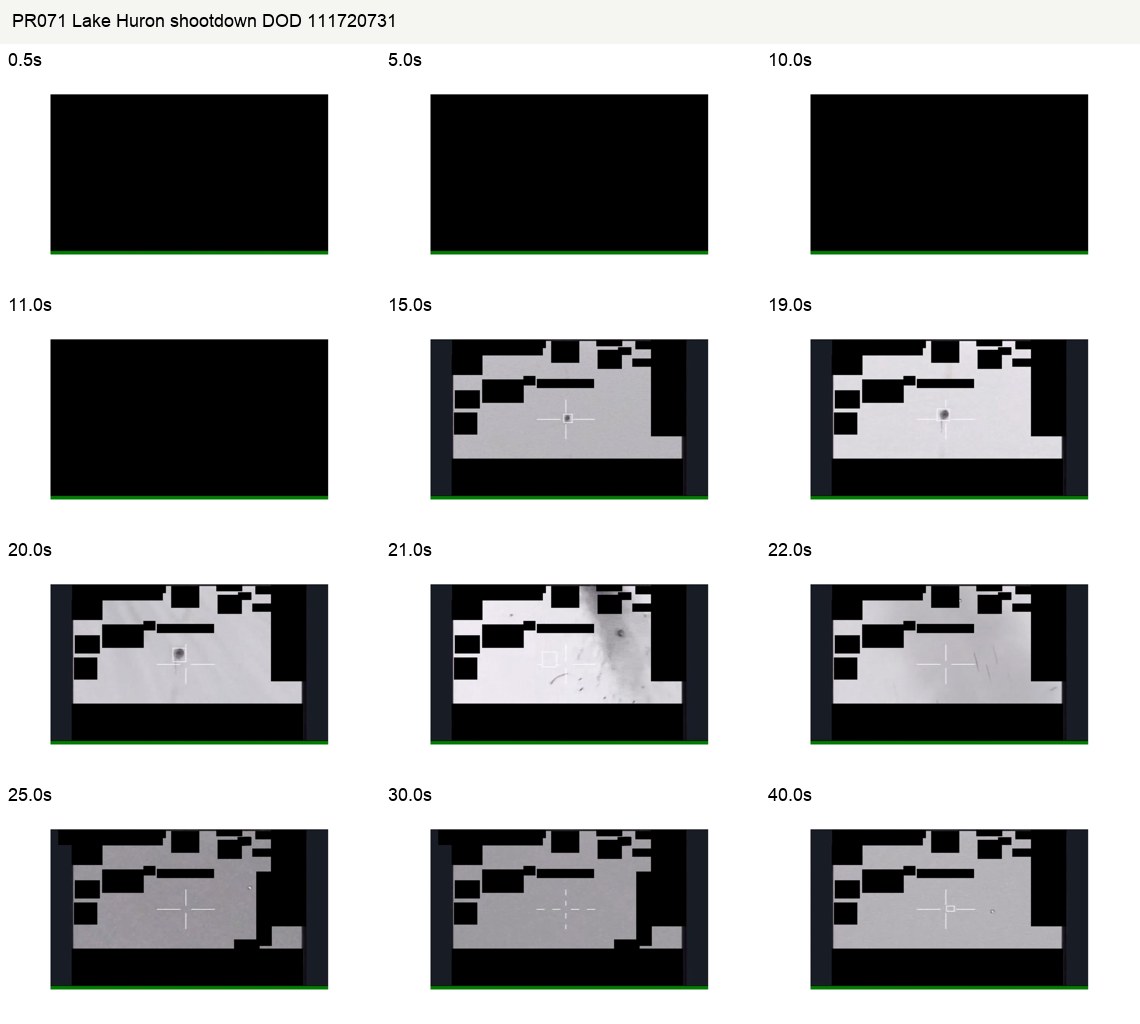
The DVIDS record identifies the clip as DOW-UAP-PR071 and lists the filename as DOD_111720731. The public video is 46 seconds long.
AARO says the uploader-defined title is "USAF ANG F-16C (callsign [CALLSIGN]) Shoots Down UAP over Lake Huron with [Weapon System], 12 Feb 2023." It assesses the video as likely derived from an infrared sensor aboard a U.S. military platform operating in the NORTHCOM area of responsibility in 2023.
The official description is careful: it says the footage appears to depict a kinetic interaction. It does not say the object was alien, advanced, or even unusual in shape. It also does not explain why the UAP label survives the release.
Why call this UAP?
This is where the file becomes interesting for a different reason.
The broader Release 02 description says AARO identified responsive materials on a classified network and that many of the materials lack a substantiated chain of custody. That warning matters here. It means the label attached to a public file may tell us less about the object than about how the record moved through the system.
If "UAP" simply means "not publicly identified in the released package," then the label is technically doing bureaucratic work. The object was not identified for the public, so it remains in the public UAP bucket.
But that is not the same as saying the object was genuinely baffling to the people who tracked it, engaged it, reviewed the footage, or handled the record later. A UAP label can mark an evidence gap. It can also mark a disclosure gap.
For Lake Huron, that distinction matters. The public clip does not show a craft with visible structure, unusual propulsion, or any behavior that needs an exotic explanation. It shows a small target and then an intercept. If there was radar, pilot audio, telemetry, threat assessment, or post-event analysis that made the object harder to identify, that material is not in this clip.
Without that missing context, calling this a UAP video risks making the case sound stranger than the video looks.
What the video shows
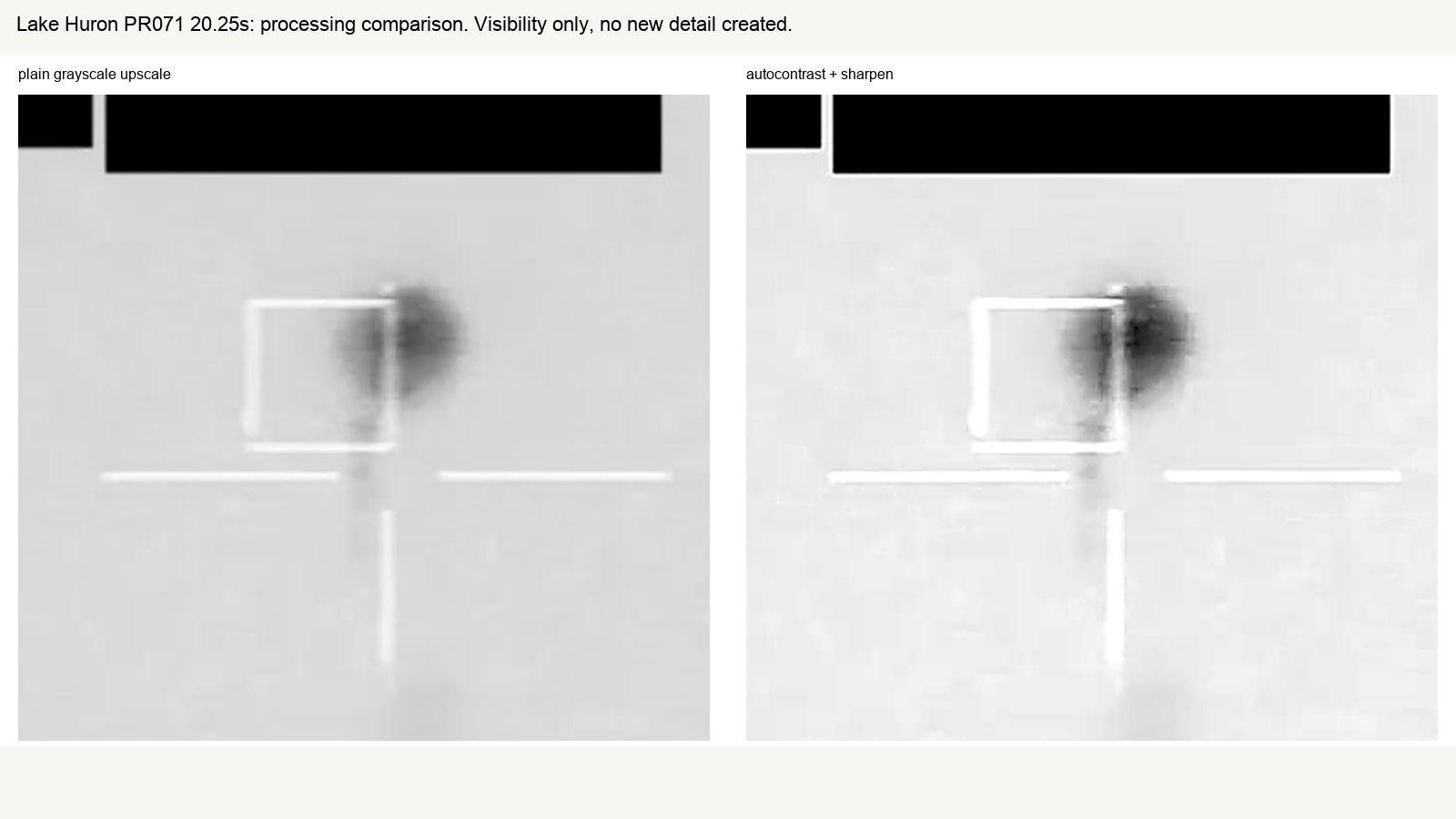
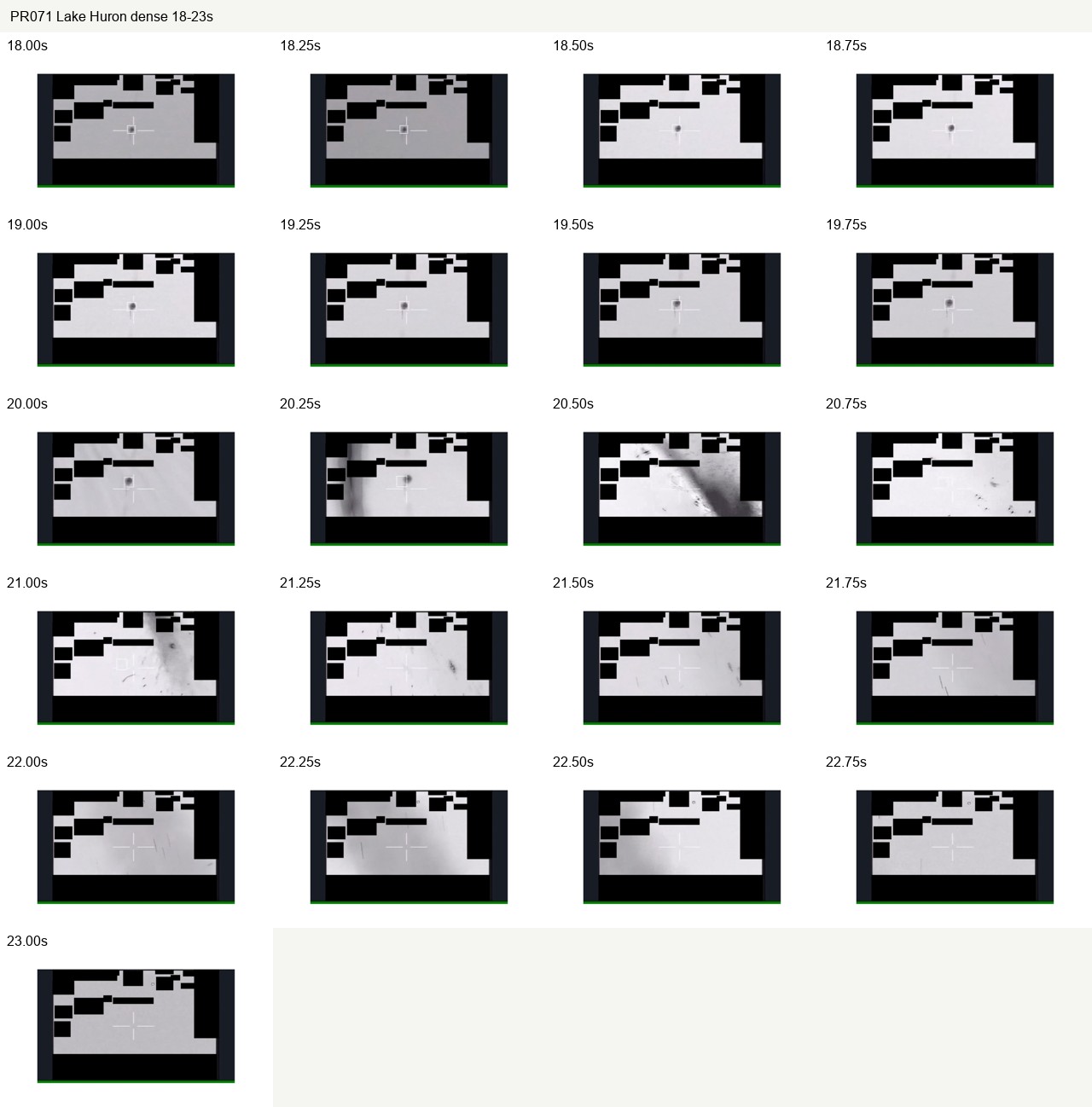
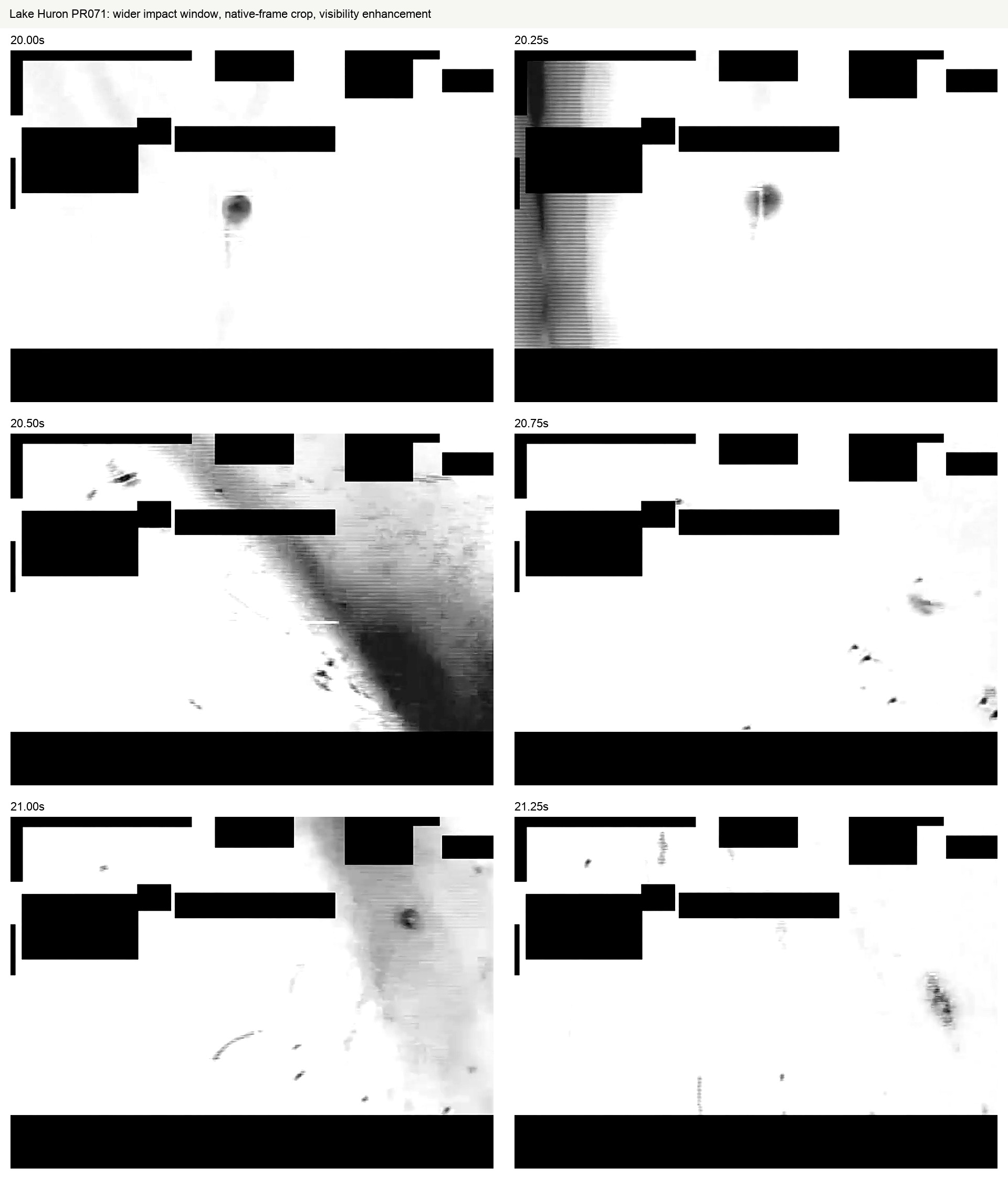
At first, not much. Then a small dark area of contrast appears near the center of the sensor display. Around 20 seconds, the scene changes quickly: a second area or interaction appears, the original target stops looking like a simple dot, and fragment-like marks become visible in the following frames.
That matches AARO's language about a kinetic interaction and fragmentation. It also looks broadly like a small object being hit.
The important point is negative: the video does not make the Lake Huron object look more mysterious than it already was. It confirms the public should take the intercept seriously. It does not turn the target into a high-strangeness object.
The balloon problem
The visual read matters because Lake Huron already had a plausible mundane context.
On February 12, 2023, the Department of Defense said an F-16 fired an AIM-9X and shot down an object at about 20,000 feet over Lake Huron. Officials framed the object as a flight-safety and surveillance concern, not as a confirmed threat to people on the ground.
Days later, Aviation Week reported that a hobby club's missing pico balloon had become a candidate explanation for one of the mystery objects shot down that week. That reporting did not prove the Lake Huron object was a hobby balloon. But it is exactly the kind of context that belongs next to this video.
The released clip does not settle the identification. It does make one thing harder: treating Lake Huron as visually exotic.
What hangs under a small balloon?
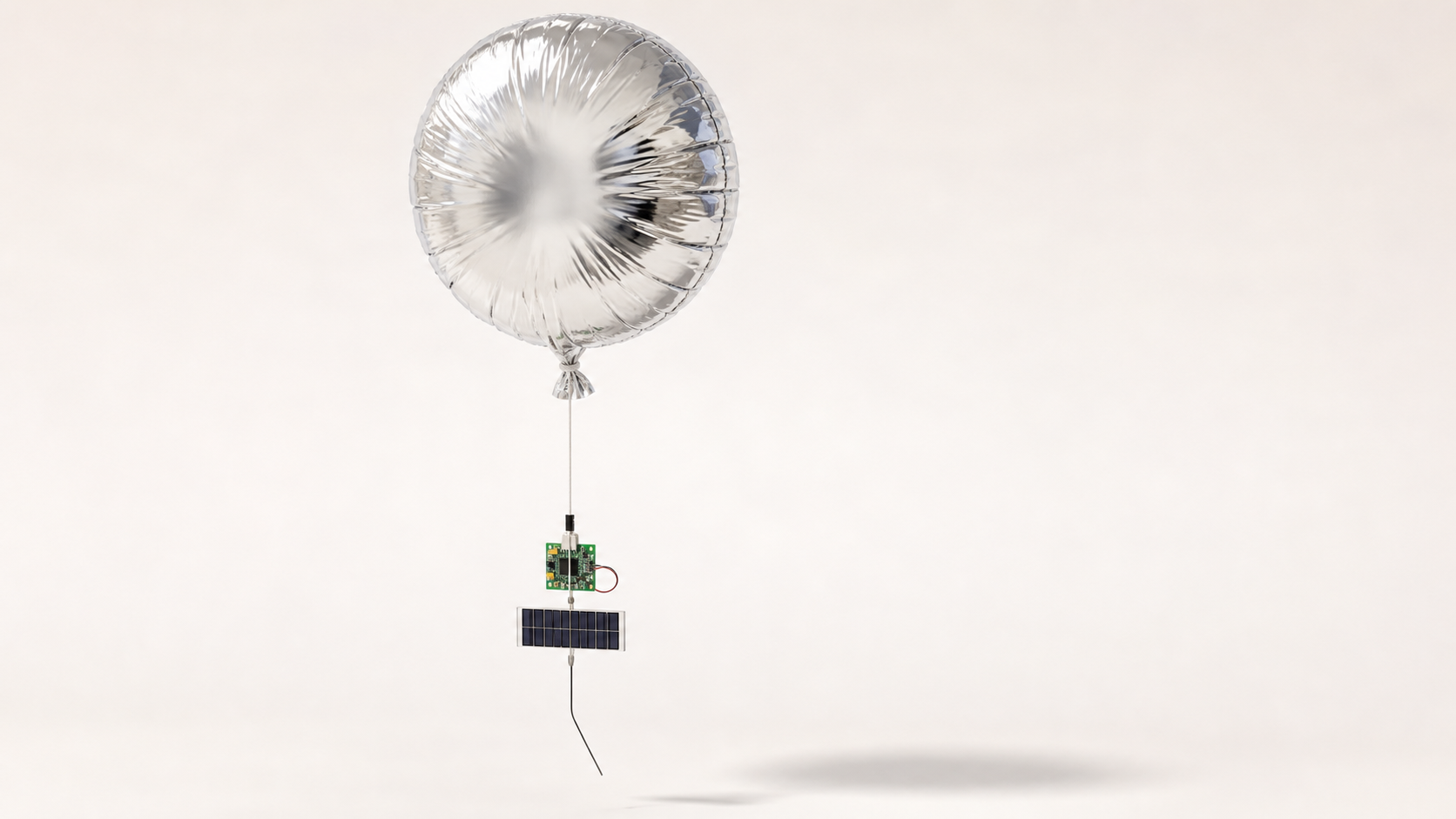
In the hobby-balloon context, "payload" does not necessarily mean a large instrument package. It can mean a tiny tracker assembly.
Pico-balloon guides and hobbyist examples describe small foil or Mylar balloons carrying lightweight electronics: a GPS receiver, microcontroller, radio transmitter, small solar panel, and a thin wire antenna. RTL-SDR's write-up on the K9YO-15 case describes that balloon's reported payload as GPS, Arduino, SI5351 transmitter hardware, and solar power, totaling 16.4 grams.
The Guardian summarized the same general class of craft as carrying trackers, solar panels, and antenna packages lighter than a small bird.
That does not prove Lake Huron was a hobby pico balloon. It does explain why a small airborne target could have something hanging below it without becoming exotic.
What it does not show
The clip does not show a clean object shape. It does not show enough geometry to estimate size. It does not include radar tracks, pilot audio, missile telemetry, wind data, debris recovery, or a final identification.
AP reported in February 2023 that U.S. Northern Command ended the search for debris from the Alaska and Lake Huron objects after search operations did not locate debris. That leaves the public with a familiar UAP problem: a real event, partial data, and no clean object ID.
What would decide it
- radar track and altitude history;
- pilot audio and cockpit timeline;
- sensor metadata and full-resolution source video;
- missile telemetry or engagement record;
- wind data and drift modeling;
- debris recovery, or a documented reason why no debris was recovered;
- a final assessment explaining whether the object was resolved or remained unidentified.
Why it matters anyway
This is still worth logging because it is a government-released visual record of a real February 2023 shootdown. That alone makes it historically useful.
But the oversight angle is not "maybe aliens." It is much more ordinary, and probably more important: how does a military engagement against a small airborne object move through the system, get labeled, get reviewed, and then get released to the public as UAP without a plain final explanation?
The Lake Huron video appears to show the intercept. It does not make the object stranger. It makes the public label more worth questioning.
Sources
- DVIDS: DOW-UAP-PR071, Lake Huron UAP shootdown video, posted May 22, 2026.
- PURSUE record: DOW-UAP-PR071, accessed May 22, 2026.
- Department of Defense statement on the Lake Huron shootdown, February 12, 2023.
- AP: U.S. ends search for objects shot down over Alaska and Lake Huron, February 17, 2023.
- Aviation Week: Hobby club's missing balloon feared shot down by USAF, February 16, 2023.
- The Guardian: balloon hobbyists and the small-payload context, February 17, 2023.
- RTL-SDR: amateur radio pico balloon discussion and K9YO-15 payload description, February 16, 2023.
- Pico Balloons by K9YO: tracker overview, accessed May 22, 2026.
- Pico Balloons by K9YO: solar panel overview, accessed May 22, 2026.
- Pico Balloons by K9YO: balloon overview, accessed May 22, 2026.