News / May 22, 2026
NASA's new UAP audio release is mostly particles, fireflies, and light flashes
The NASA audio in PURSUE Release 02 is real, but it is not a secret soundtrack to the main UAP videos. It is a cluster of historical mission excerpts: Apollo light flashes, Apollo 17 particles, Mercury fireflies, snowflake-like particles, and one odd recovery-team clip.
The short version
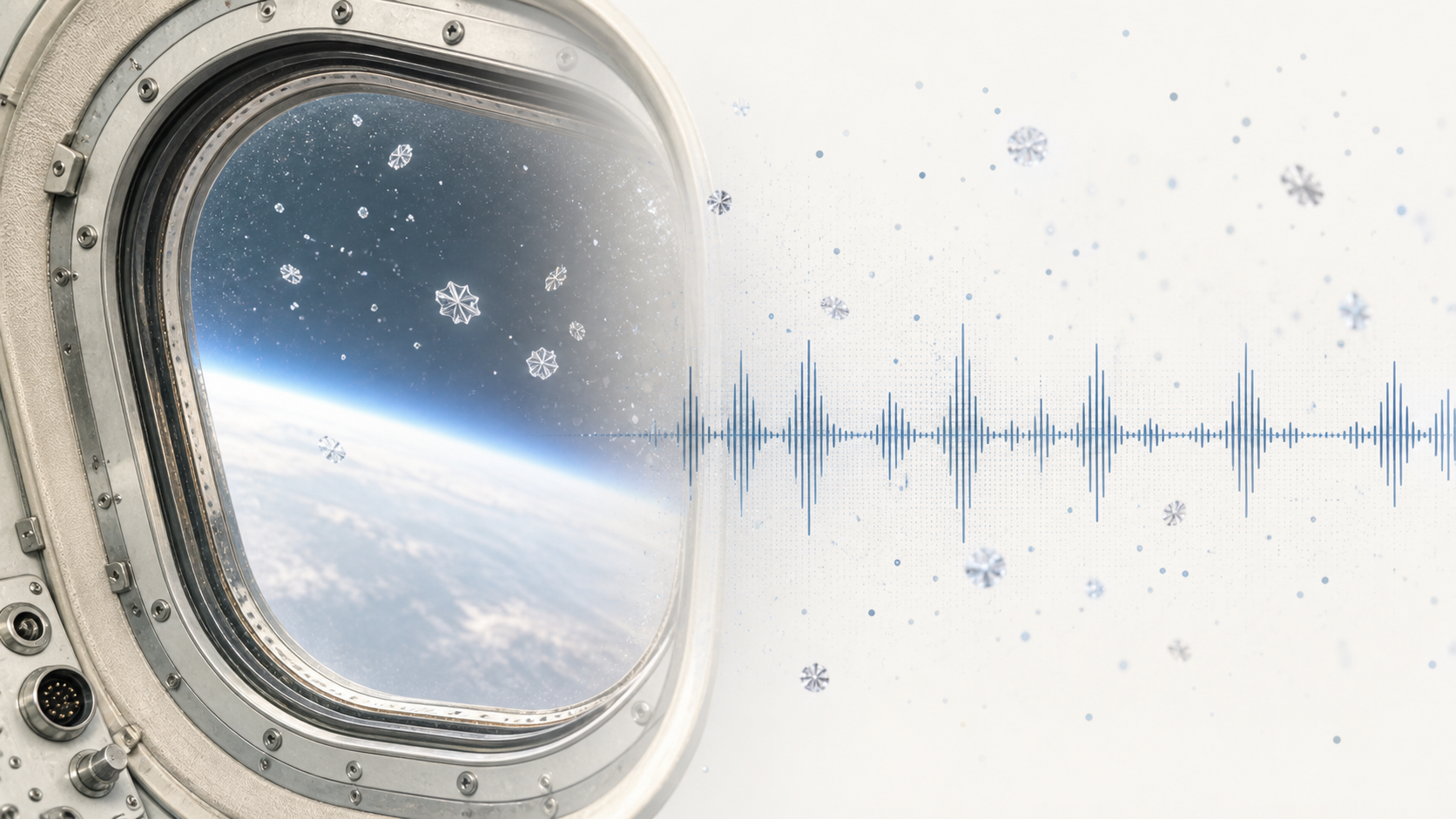
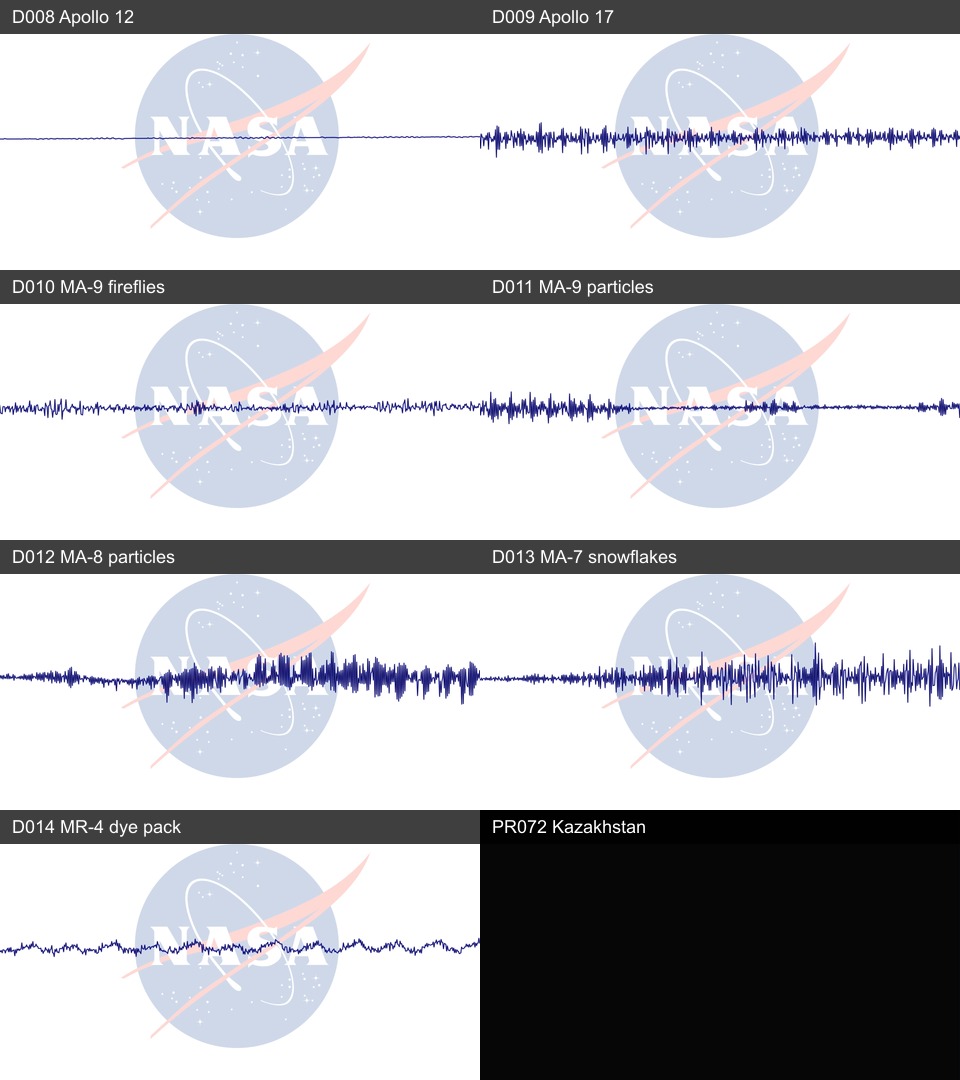
PURSUE Release 02 includes seven NASA audio records. Locally, they are packaged as MP4 files with a NASA logo and waveform visual, which makes them look like videos at first glance.
They are not hidden companion audio for the Lake Huron shootdown clip, the Syrian "instant acceleration" video, or the other military UAP videos in the release.
They are standalone historical excerpts. And once you listen to them, the pattern is pretty clear: astronauts and mission teams are talking about light flashes, particles, "fireflies," possible ice or paint chips, beacons, and one recovery oddity.
That makes the audio interesting, but not in the way a hype headline wants it to be. The story is less "NASA audio reveals craft" and more "old mission anomalies are being folded into a modern UAP bucket."
What was released
The audio set reviewed here contains seven NASA records in the May 22, 2026 release:
| Record | Mission | Core topic |
|---|---|---|
| NASA-UAP-D008 | Apollo 12 | Medical debriefing about light flashes or streaks seen in darkness. |
| NASA-UAP-D009 | Apollo 17 | Small lights, particles, or fragments near the spacecraft and S-IVB stage. |
| NASA-UAP-D010 | Mercury Atlas 9 | Gordon Cooper describing "John's fireflies." |
| NASA-UAP-D011 | Mercury Atlas 9 | Particles, sunrise, and mission-related beacons. |
| NASA-UAP-D012 | Mercury Atlas 8 | Wally Schirra describing little white objects, particles, and "lathe shavings." |
| NASA-UAP-D013 | Mercury Atlas 7 | Scott Carpenter describing white particles that looked like snowflakes. |
| NASA-UAP-D014 | Mercury-Redstone 4 | Recovery-team audio about a dye pack that did not activate. |
The archival audio is noisy, and direct quotes should be checked against the timestamped recordings. But the broad content is clear and matches the official descriptions.
Apollo 12: flashes inside the eye
The Apollo 12 medical debriefing is not a story about lights outside the spacecraft. The useful part is almost the opposite.
The crew discusses flashes and streaks seen in darkness, including with eyes closed. The official PURSUE description says NASA later determined the phenomena reported by Apollo 12 were internal to the astronauts' vision rather than external light sources.
That fits a known Apollo-era problem. NASA's technical literature treated the light-flash phenomenon seriously. A 1973 NASA Technical Reports Server entry on Apollo 14 through 17 light flashes says the most probable explanation was cosmic rays penetrating the eyes and retinas of the observers.
NASA later described the same class of experience in plainer language: astronauts were seeing cosmic rays interact with their visual system. That is strange in a human-body-in-space sense. It is not the same as seeing a physical object outside the spacecraft.
Apollo 17: fragments near the spacecraft
The Apollo 17 audio is more visual. The crew describes bright particles or fragments drifting near the spacecraft and the separated S-IVB stage.
The official description says the crew described bright particles or fragments as jagged and angular, drifting near the Apollo spacecraft and S-IVB. It also says the crew speculated that paint chips or ice chips were likely sources.
That caveat is the story. The audio contains observations, but it also contains ordinary candidate explanations from the crew itself. The objects are not framed as structured craft. They are small, bright, twinkling, particle-like material in the spacecraft environment.
Mercury: fireflies and snowflakes
The Mercury audio records form the clearest cluster.
NASA-UAP-D010 has Gordon Cooper describing "John's fireflies," the nickname tied back to John Glenn's earlier Mercury-Atlas 6 observation. PURSUE's own description says NASA later determined that the classic fireflies were attributable to frozen condensation separating from the spacecraft body.
NASA-UAP-D011 stays in the same family: sunrise, white particles drifting away, and mission-related beacon context. NASA-UAP-D012 has Wally Schirra describing little white objects that seem to come from the capsule itself, with "lathe shavings" as the memorable phrase. NASA-UAP-D013 has Scott Carpenter describing white particles that looked like snowflakes.
The background matters here. NASA's Project Mercury page places these missions in the early U.S. human-spaceflight program, where each flight was still teaching engineers what a spacecraft and its environment looked like in orbit. Small particles near a capsule were not automatically exotic. They were often exactly the kind of operational mess that early spacecraft produced: ice, condensation, debris, or mission hardware.
The odd one: a dye pack
NASA-UAP-D014 is the least useful UAP item in the audio set. The official description says the Mercury-Redstone 4 recovery team discusses a dye pack in the water that did not activate.
That may be anomalous in the broad record-keeping sense. It is not a strong UAP story. If anything, it is a reminder that the release bucket is wider than the public imagination of "UAP" usually allows.
What this is not
This audio set is not evidence that NASA astronauts were tracking craft near the Moon or in low Earth orbit.
It is also not worthless. The records are useful because they preserve how crews described unusual perceptions and nearby particle events in real time or in debriefings. The language is vivid: fireflies, snowflakes, light flashes, streaks, fragments. But vivid language is not the same as an unresolved vehicle.
The careful read is that PURSUE Release 02 has taken older spaceflight anomaly material and relabeled it into a modern UAP frame. Some of it deserves to be in an anomaly archive. Much of it also has ordinary context sitting right next to it.
What would decide it
- the original NASA transcript pages paired to each audio excerpt;
- full mission timeline context around each excerpt;
- spacecraft configuration and recent operations before the particle observations;
- photographs or film taken during the same window, if any;
- NASA post-flight technical assessments of each specific observation;
- clear separation between internal visual phenomena and external objects.
Why it matters anyway
The NASA audio is a useful corrective to a lazy UAP habit: treating every old astronaut anomaly as a mystery that grew larger with age.
Some of these recordings are genuinely interesting. They show astronauts noticing things that were unexpected, beautiful, and sometimes hard to categorize in the moment. But they also show how quickly the mundane candidates appear: cosmic rays, ice, condensation, paint chips, beacons, particles, recovery hardware.
That is exactly why this material belongs in a source-first logbook. Not because it proves something exotic. Because it shows how the same words can sound very different depending on whether you read the surrounding file.
Sources
- DVIDS: NASA-UAP-D008, Apollo 12 Medical Debriefing - Tape 12, 1969, posted May 22, 2026.
- DVIDS: NASA-UAP-D009, Apollo 17 Audio Excerpt, December 7, 1972, posted May 22, 2026.
- DVIDS: NASA-UAP-D010, Mercury Atlas 9 Audio Excerpt, May 15, 1963, posted May 22, 2026.
- DVIDS: NASA-UAP-D011, Mercury Atlas 9 Audio Excerpt, May 15, 1963, posted May 22, 2026.
- DVIDS: NASA-UAP-D012, Mercury Atlas 8 Audio Excerpt, October 3, 1962, posted May 22, 2026.
- DVIDS: NASA-UAP-D013, Mercury Atlas 7, May 24, 1962, posted May 22, 2026.
- DVIDS: NASA-UAP-D014, Mercury-Redstone 4, July 21, 1961, posted May 22, 2026.
- NASA Technical Reports Server: Visual light flash phenomenon, 1973.
- NASA: Seeing Cosmic Rays in Space, archived NASA article, 2012.
- NASA: Project Mercury overview, accessed May 22, 2026.
- NASA: Mercury Atlas 7, Aurora 7, accessed May 22, 2026.