Main Article / Aug 02, 2026
Tehran 1976: the F-4 UFO intercept in the U.S. intelligence file
On 19 September 1976, two Iranian F-4s were sent toward a bright object over Tehran. The released U.S. report records what their crews said happened next.
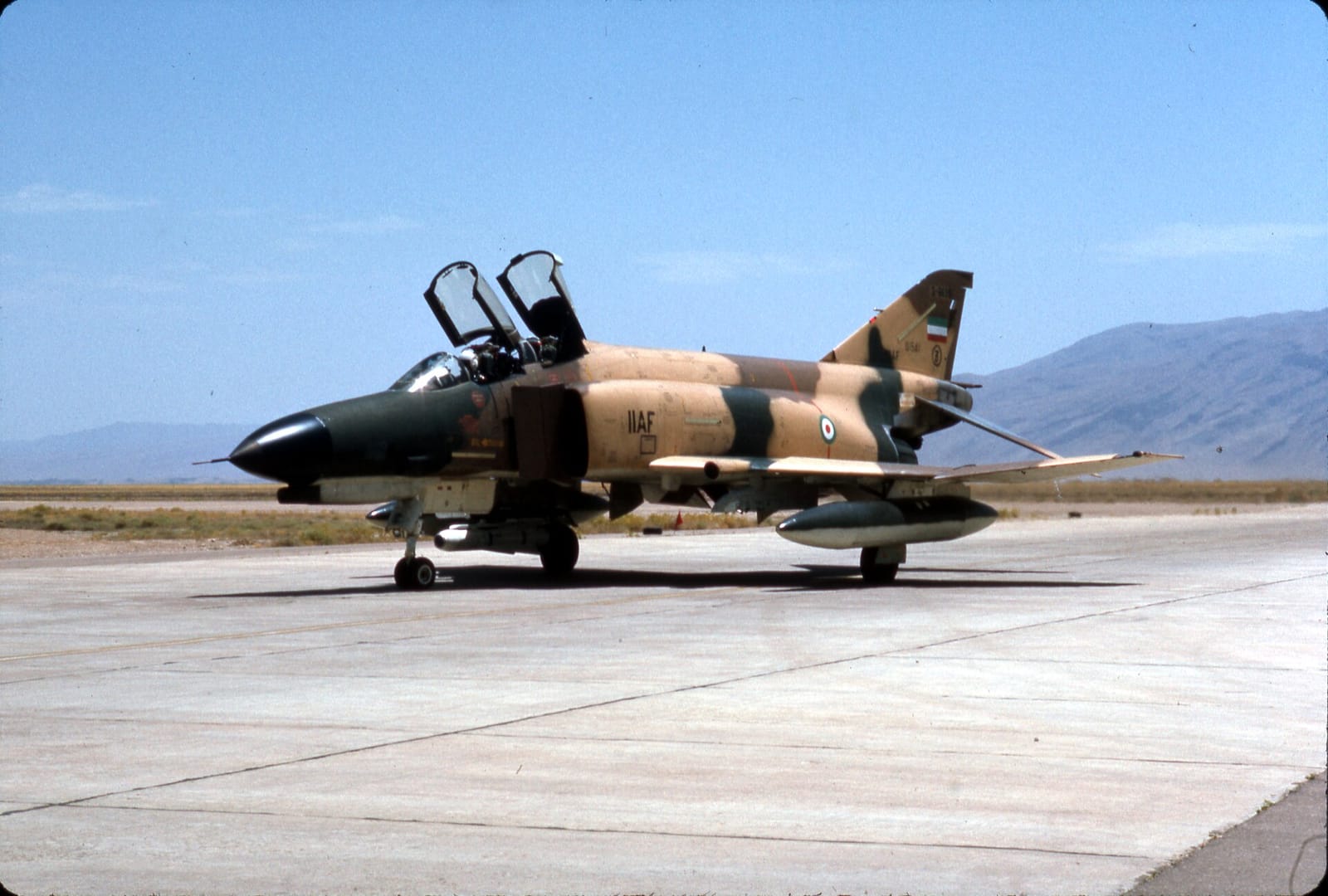
Just after midnight on September 19, 1976, Tehran's air-defense system received calls from residents who could see an unusually bright object over the city. The Imperial Iranian Air Force scrambled an F-4 Phantom II from Shahrokhi Air Base. Then it sent another.
The core public record is a three-page U.S. Defense Attaché report, circulated through intelligence channels and now published by the National Security Agency. It records two attempted intercepts, a radar return, and the crews' reports that aircraft systems failed as they closed on the light.
The first intercept
The released report says the first F-4 flew to a point about 40 nautical miles north of Tehran. The object was bright enough, it says, to be visible from roughly 70 miles away. At an estimated 25 nautical miles, the crew reported losing instrumentation and communications. The pilot broke off the intercept and returned to base; the systems returned as the aircraft turned away.
A second F-4 launched shortly afterward. Its crew acquired a radar lock at 27 nautical miles. The report compares the radar return to a 707 tanker and describes an intensely bright object whose apparent size was hard to judge. It lists flashing lights in blue-green, red and orange, arranged in a rectangular pattern. No radar tape, cockpit recording, maintenance record, or Iranian operational log accompanies the released pages.
The second F-4 and the missile panel
According to the report, a smaller bright object appeared to leave the larger one and headed toward the F-4. The pilot attempted to fire an AIM-9 missile. At that moment, the report says, the weapons-control panel went out and the crew lost UHF communications and interphone contact. The pilot turned away; the smaller object rejoined the larger light, and both disappeared from view.
The reported missile failure is why Tehran still appears in UAP discussions nearly fifty years later. It combines civilian calls, a military response, visual observation and a reported radar contact. The released file does not establish what caused the system failures, whether they were independently diagnosed, or whether the object caused them.
The search south of Tehran
The report follows the object after the intercept. It says the second crew watched a bright light descend toward the ground south of Tehran, then circled to mark the location. A daylight helicopter search found nothing at the spot first identified by the crew. Over a dry lake bed nearby, the team picked up a strong beeper signal and spoke to residents who reported a loud noise and a flash like lightning. The document says the aircraft and area were being checked for possible radiation.
The report also records radio interference during the F-4's approach to Mehrabad and says a civilian airliner experienced communications trouble in the same vicinity. The release does not identify a common cause.
It closes without an explanation and says further information would be forwarded when available. No follow-up assessment appears with the released three pages.
Where the file ends
The Tehran case is often told as a finished mystery, with later retellings adding certainty, exact maneuvers and claims about the object that the contemporary report does not settle. A U.S. defense official recorded an Iranian military response to an unidentified bright object; the record preserves what several participants reported, including unusual equipment failures; and the available public release leaves the key technical questions unanswered.
That is still a substantial historical file. It puts a 1976 Tehran night flight into an official record, and it shows how quickly a sighting can become an air-defense problem even when the final identification never arrives.
Related UAP Logbook notes
- How other governments handle UAP reports
- The 1998 Cangzhou UFO intercept is China's strangest military case
- The Pokhara disc in the CIA's Himalayan UFO file
- The Harare airport UFO that put Zimbabwe on high alert
Sources
- National Security Agency: Joint Chiefs of Staff report concerning the sighting of a UFO in Iran on 19 September 1976. The primary released report and routing material.
- Released Joint Chiefs / Defense Attaché report PDF, dated September 1976.
- U.S. National Archives: Iranian Air Force F-4 at Shiraz Air Base, August 1977. Feature-image source.