Short Note / Jul 06, 2026
Ummo turned a UFO hoax into letterhead
Ummo did not need a famous saucer photo. The Spanish UFO hoax lived on paper: typed letters, a symbol, and a claimed civilization arriving through the mail.
Ummo did not need a spectacular UFO photograph. It had letterhead.
Starting around 1965 in Madrid, the Spanish case spread through typed pages, technical jargon, and the claim that a civilization from the planet Ummo was corresponding directly with human society. By the time it ran its course, correspondents had received roughly 6,700 documents. It was less a sighting wave than a postal network, and one that eventually crossed into France as well, where many of the letters circulated in French translation.
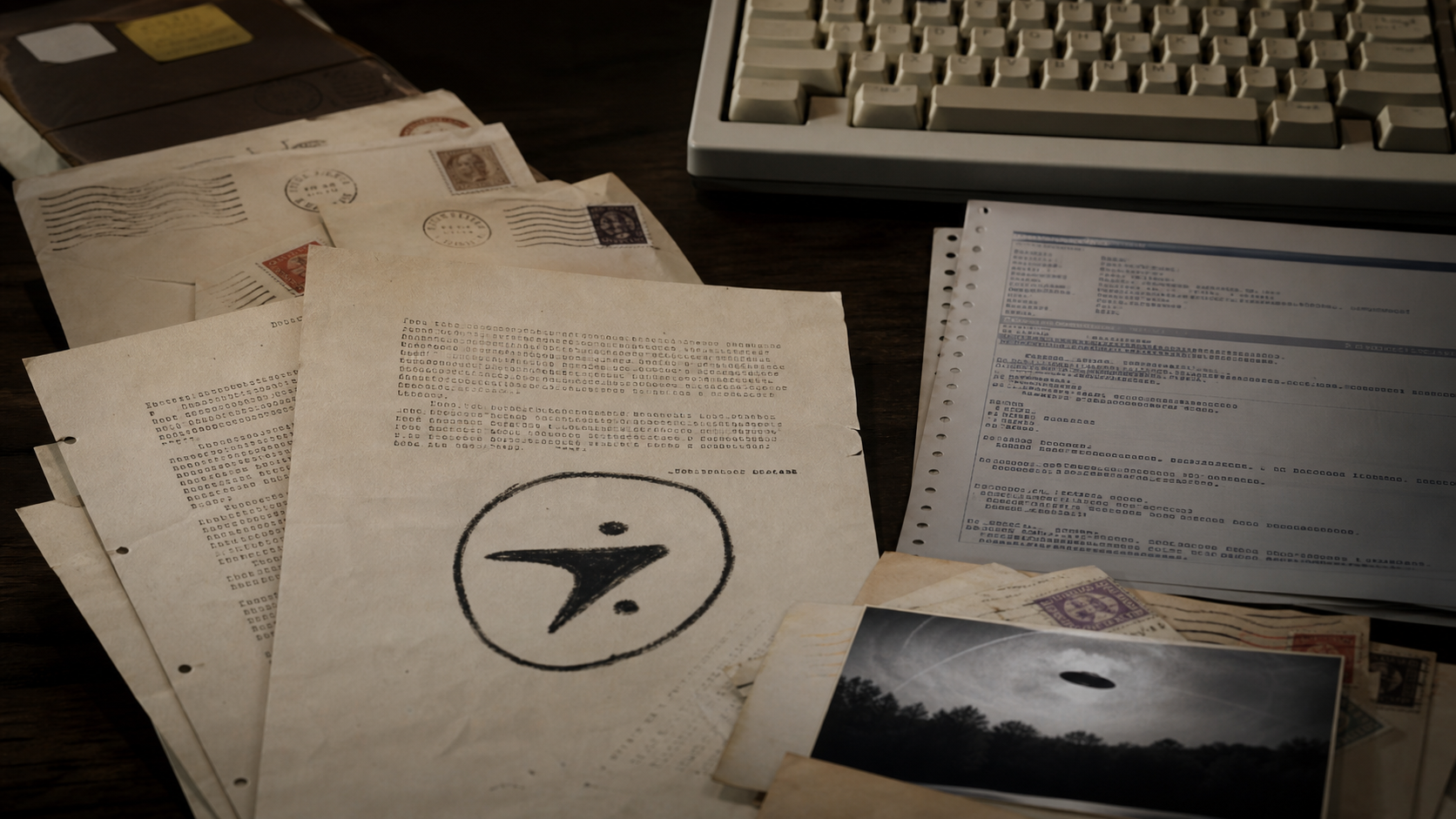
That administrative style is what made it different from the American crash-and-body hoaxes. Ummo was paper culture.
The letters did the work
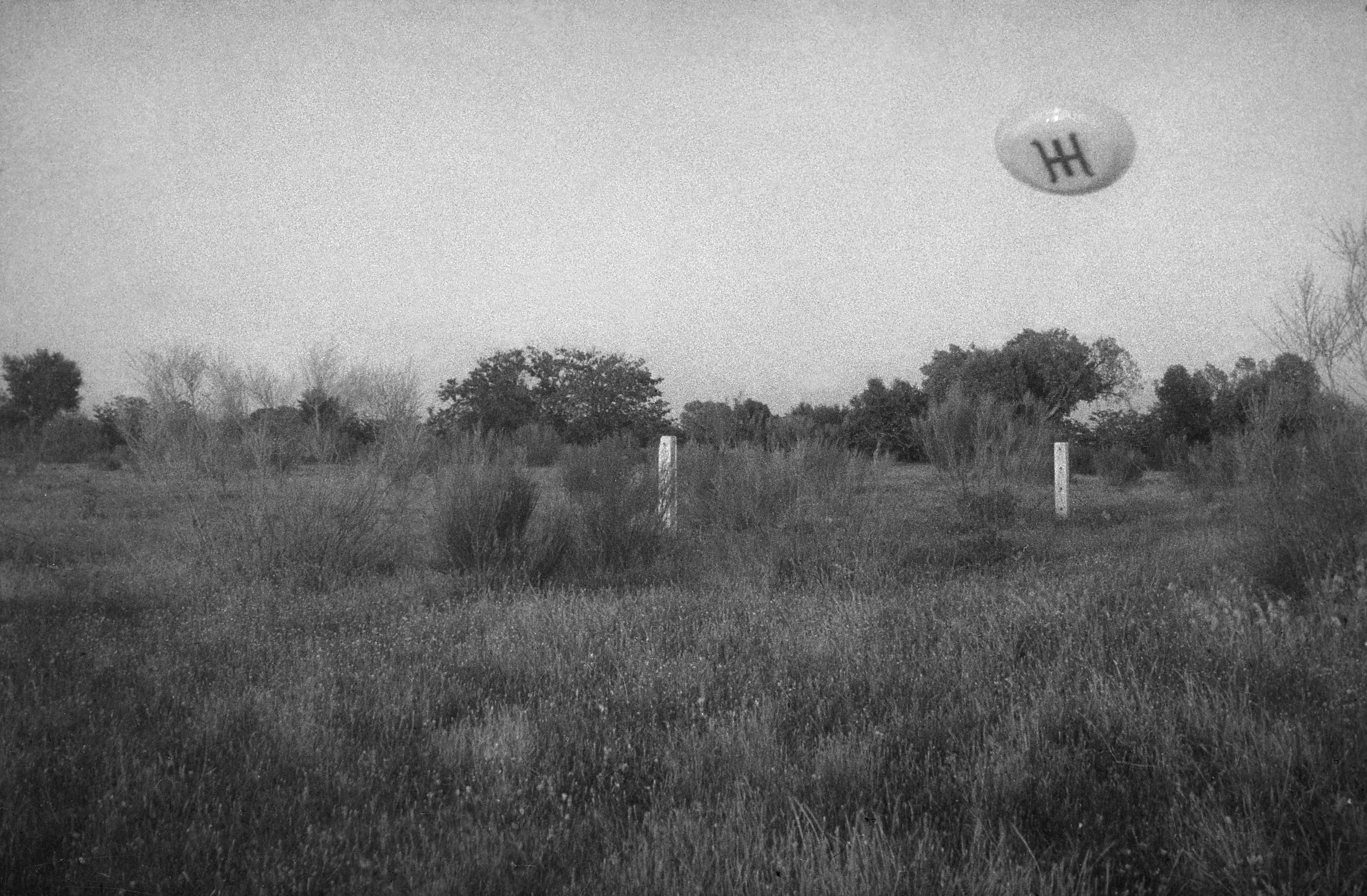
The trail runs through Fernando Sesma Manzano, a postal worker and prominent figure in the Spanish UFO scene who had been leading a society of contactee enthusiasts since the mid-1950s. Sesma hosted weekly meetings in the basement of Café Lyon in Madrid — a group known as La Ballena Alegre (The Happy Whale) — where enthusiasts gathered to discuss alien life. Sesma had already been receiving anonymous calls and letters since 1961, but the case broke into public view on February 6, 1966, when a UFO marked with a strange symbol — an "H" inside a circle — was reportedly sighted and photographed over Aluche, near Madrid, with images running in the newspaper Informaciones.
The appeal was not just the claim of contact. It was the technical texture of the pages. The letters contained complex diagrams, mathematical equations, and sociological reports about Ummite culture. By sending different chapters to different researchers, the creator forced the community to coordinate. To understand the story, researchers had to copy, translate, compile, and share the letters, effectively building their own archive of the hoax.
The experiment
In 1993, José Luis Jordán Peña, a psychologist, engineer, and vice president of the Spanish Society of Parapsychology who had been a regular at Sesma's Café Lyon gatherings, publicly confessed to creating the entire affair. He admitted to typing the letters, designing the Ummite symbol, and making the voice-distorted phone calls, describing the project as a psychological experiment meant to test public gullibility and the spread of belief systems.
The confession did not settle the matter, and not just for true believers. Prominent Spanish ufologists, including Juan José Benítez, doubted that one person could have organized and sustained something this technically dense over nearly three decades without help. Jordán Peña also made stranger claims of his own, at one point saying the CIA had supplied him with radioactive sand used in the hoax — a detail that muddied his own confession as much as it explained anything. By the time he spoke, the Ummo letters had circulated for decades, spawning books, study groups, and a complex mythology. For some believers, the confession itself became part of the cover-up, proof of how hard it is to dismantle a belief system once it has been given a physical file to live in.
Ummo remains a case built on paperwork: a civilization staged almost entirely through stationery.