News / Jun 16, 2026
UFO hoaxes wrote the playbook for disclosure
The biggest UFO hoaxes did not vanish when they were exposed. Alien Autopsy, MJ-12, Gulf Breeze, CARET, Roswell Slides, Billy Meier, and Ummo taught the disclosure era what a convincing secret was supposed to look like.
The evidence was never just the object. It was always the delivery.
A body on television. A classified-looking memo. A saucer model in an attic. Technical diagrams from an anonymous insider. A slide reveal with a blurry museum placard.
None of those cases proved anything about UFOs. Several collapsed outright. But they taught the modern disclosure era how a secret is supposed to look.
That makes them worth understanding: not as curiosities, but as templates that still sit under every new clip, file, leak, and witness claim.
UFO hoaxes do not just fake objects. They build delivery systems. The grainy footage. The official paper. The dramatic reveal. The expert language. The claim that something hidden has finally slipped into public view.
Most hoaxes die. The formats stay useful. Real evidence has to compete with fake evidence that was built specifically to look real.
The broadcast: Alien Autopsy
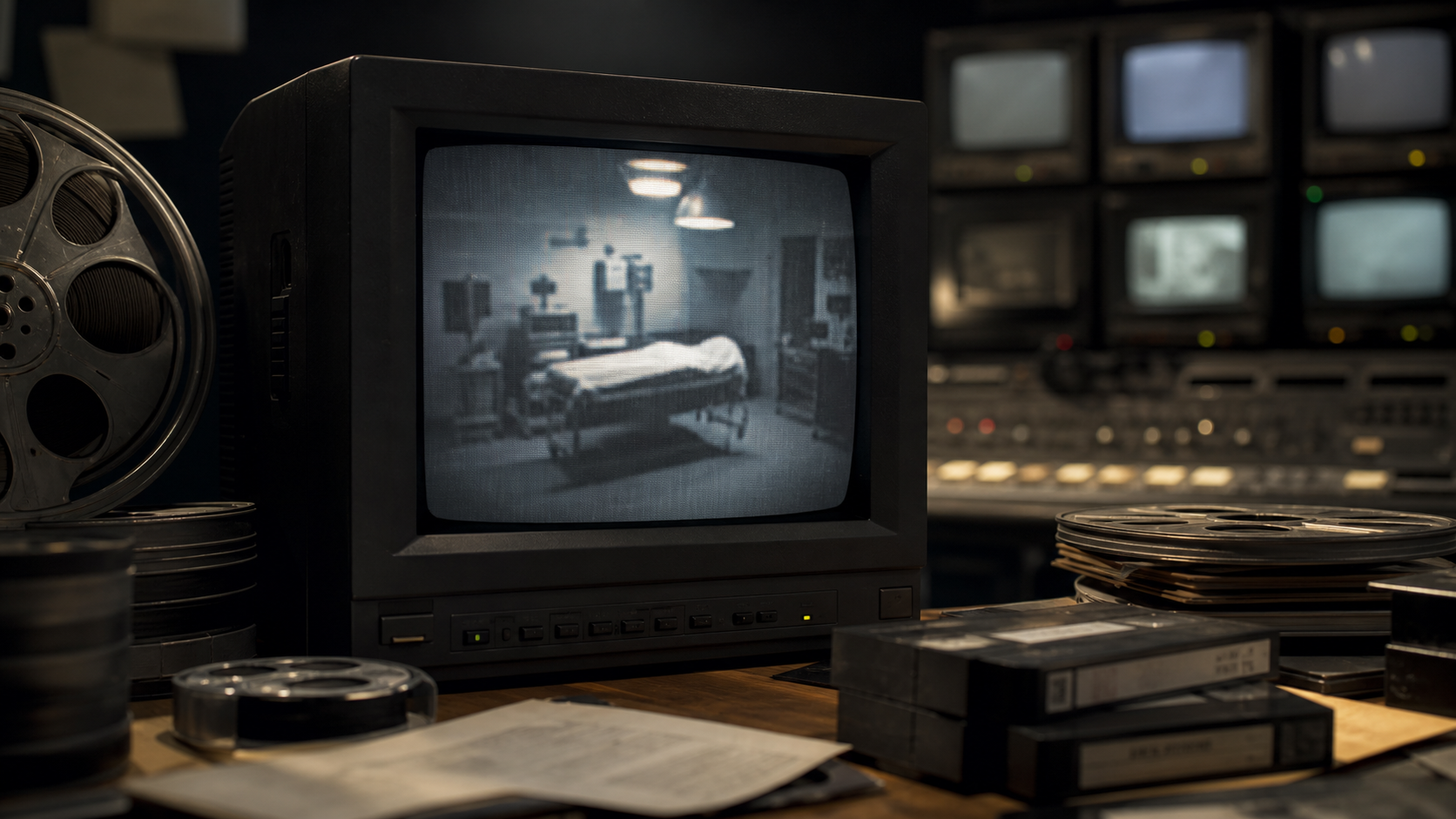
When Fox aired Alien Autopsy: Fact or Fiction, the pitch was close to perfect: grainy black-and-white footage purportedly showing the examination of a body recovered from the 1947 Roswell crash.
Black-and-white 16mm. A clinical room. Masks. Silence. The implication that the viewer was watching history being dragged into the light.
Ray Santilli and Gary Shoefield promoted the footage as material connected to a retired U.S. military cameraman. Later accounts described the broadcast version as staged or reconstructed. Santilli kept a door open to some original lost material.
For the audience, that caveat arrived late. The broadcast had already done its work.
Alien Autopsy made Roswell visual for a mass audience in a way newspaper accounts and conference rooms never had. It turned a crash-retrieval rumor into a room you could watch.
The formula has not gone away: partial image, missing source chain, dramatic claim, just enough production value to make you lean in before you ask who shot it. You see versions of it every time UFO or UAP footage surfaces without a chain of custody attached.
The paper: MJ-12
MJ-12 did not need a body. It had stationery.
The Majestic 12 documents circulated through UFO research as the file every crash-retrieval story had been waiting for: the right names, the right dates, classification markings, a presidential-briefing format, and the Roswell promise dressed in bureaucratic language.
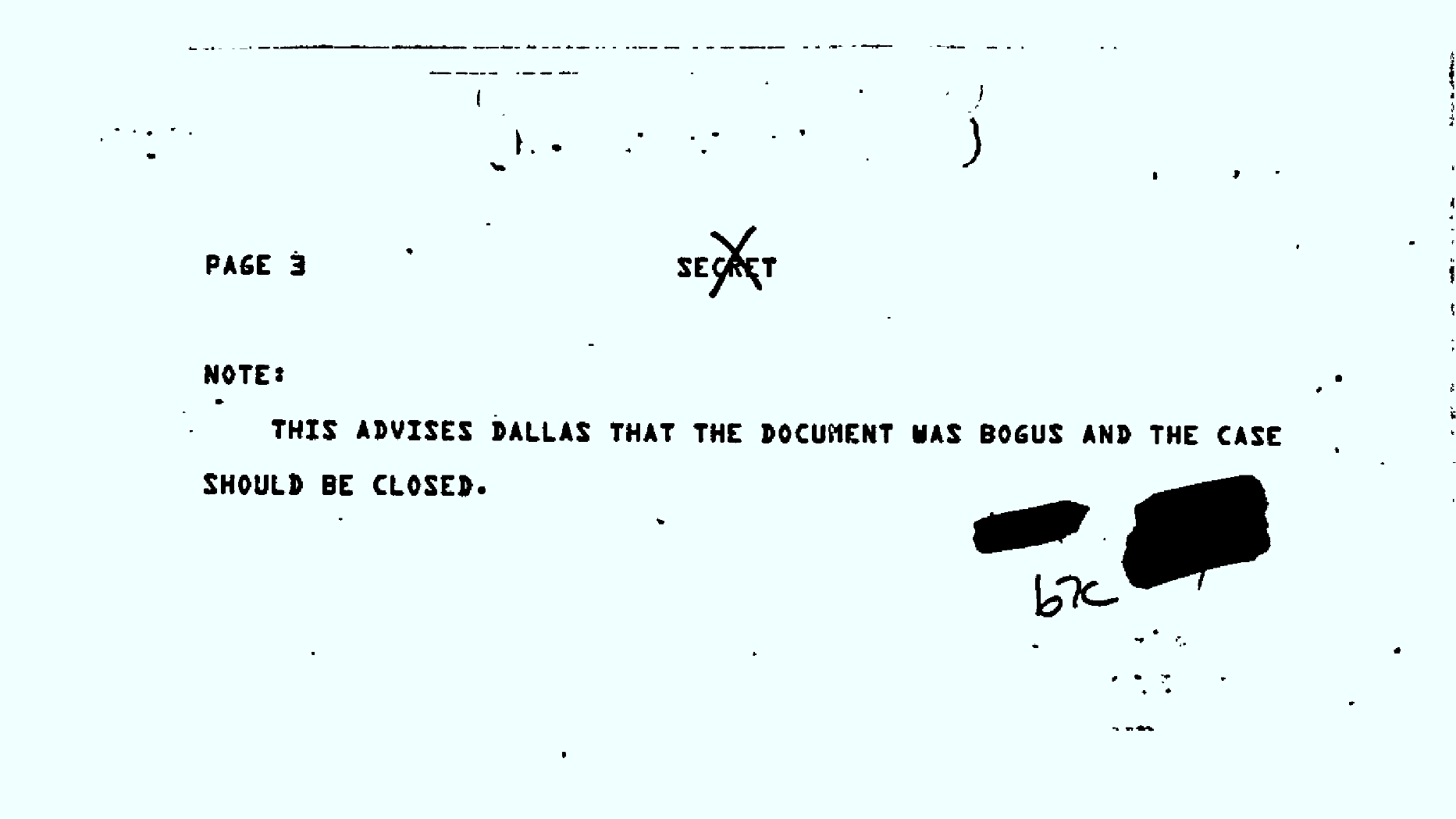
The FBI's own records on MJ-12 are dry and blunt. One page marks the document "BOGUS" and recommends that the case be closed. Another memo notes that the bureau had received what might be a classified document connected to "OPERATION MAJESTIC 12" and the alleged recovery of extraterrestrial aircraft, then narrows the problem: even a possible hoax could raise classified-document questions.
That is the hook MJ-12 left behind: a fake document can generate real paperwork, and real paperwork looks like confirmation.
The belief does not need the original document to survive. It can live in the reaction to it. Decades later, people are still parsing the FBI file, which is exactly the kind of afterlife a good forgery wants.
The model: Gulf Breeze
Gulf Breeze had everything a local UFO wave needs: a named place, repeated sightings, photographs, neighbors who had seen things, investigators, television coverage, and one man at the center.
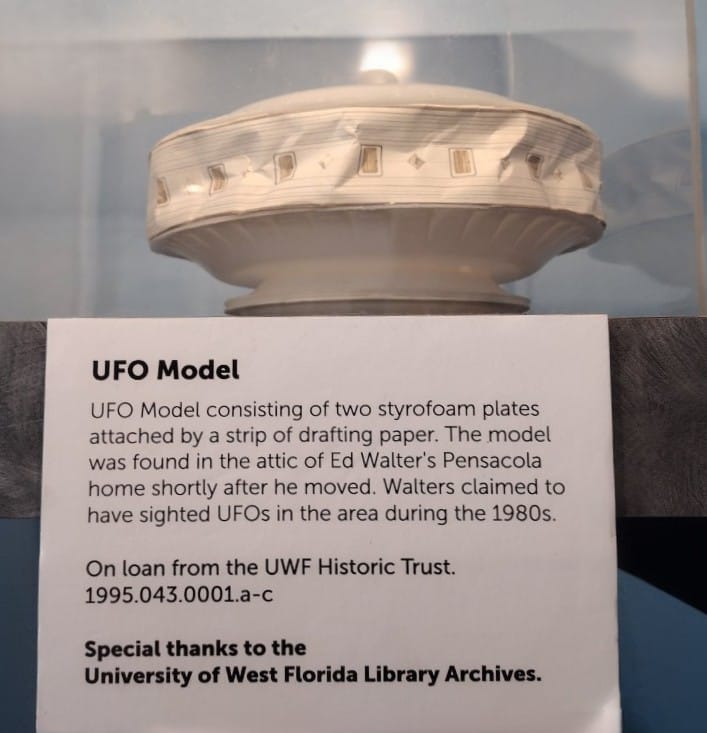
Ed Walters said he began seeing and photographing UFOs over Gulf Breeze, Florida, in late 1987. His Polaroids ran in the local paper, circulated through MUFON, made television, and ended up in books. Supporters treated the case as significant. Critics saw a staged photo series.
Then someone found a model in the attic.
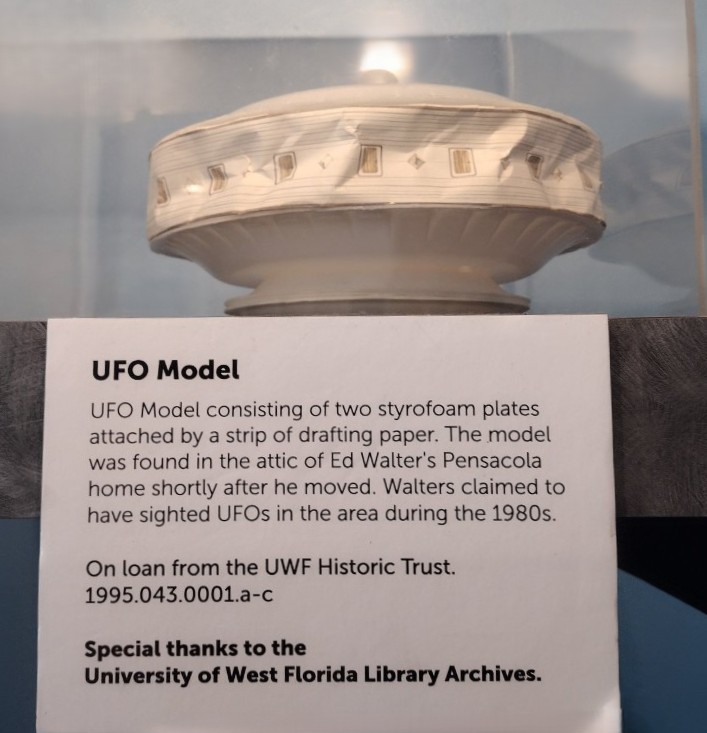
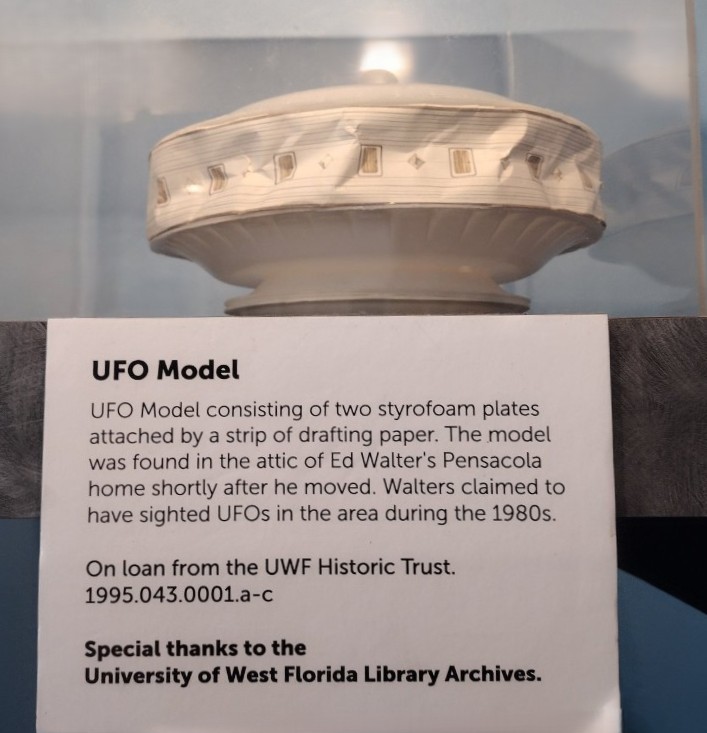
In 1990, after Walters had moved out, a prop turned up in his former home. The construction was almost insultingly simple: foam plates, drafting paper, tape, colored material, punched-out windows. Craig Myers, a reporter for the Pensacola News Journal, said his team was able to duplicate some of the published photographs using it. Walters said he had never seen the model and called the find a setup.
That denial became part of the case. For some people, the model closed the question. For others, it opened a new one. The split never closed, which is roughly the outcome every durable hoax produces. The debunking object was physical and sitting in a house. The belief system moved around it anyway.
The contact photo: Billy Meier
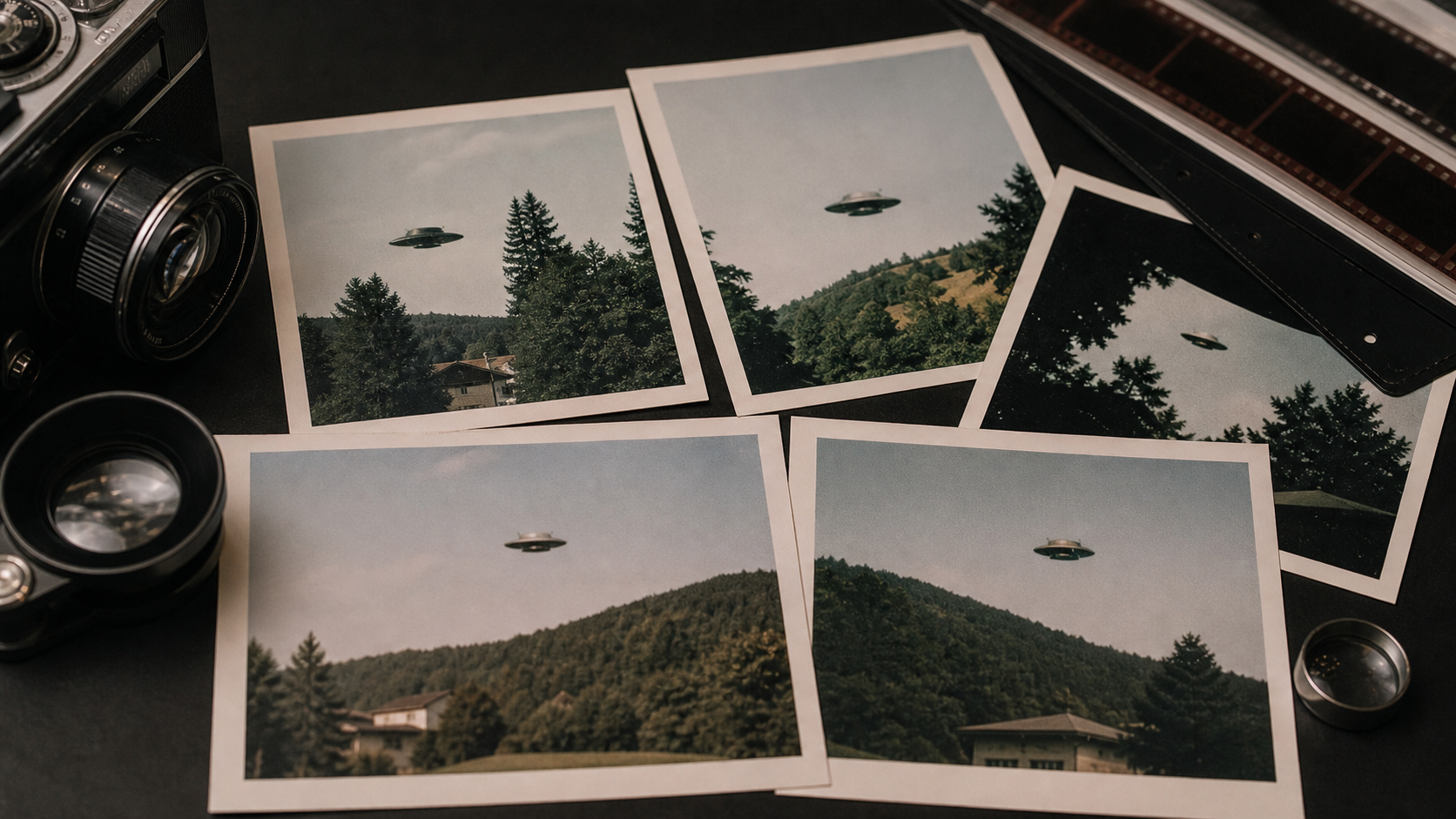
Billy Meier's UFO photos work because they are almost too simple.
A disc above trees. A craft over a landscape. A sequence that looks like one person had unhurried, repeated access to something impossible and kept remembering to bring a camera.
Supporters argued for genuine evidence. Critics pointed to model photography, double exposures, and missing provenance. Both sides built long arguments around the same pictures.
The specific debating points matter less here than the format. Meier's case made the contact photograph portable: one camera, a consistent look, a file that functions forever as either proof or fraud depending on who holds it.
Whenever a new series of photographs emerges claiming sustained contact or surveillance by unknown craft, it is working in a tradition Meier helped establish.
The technical leak: CARET
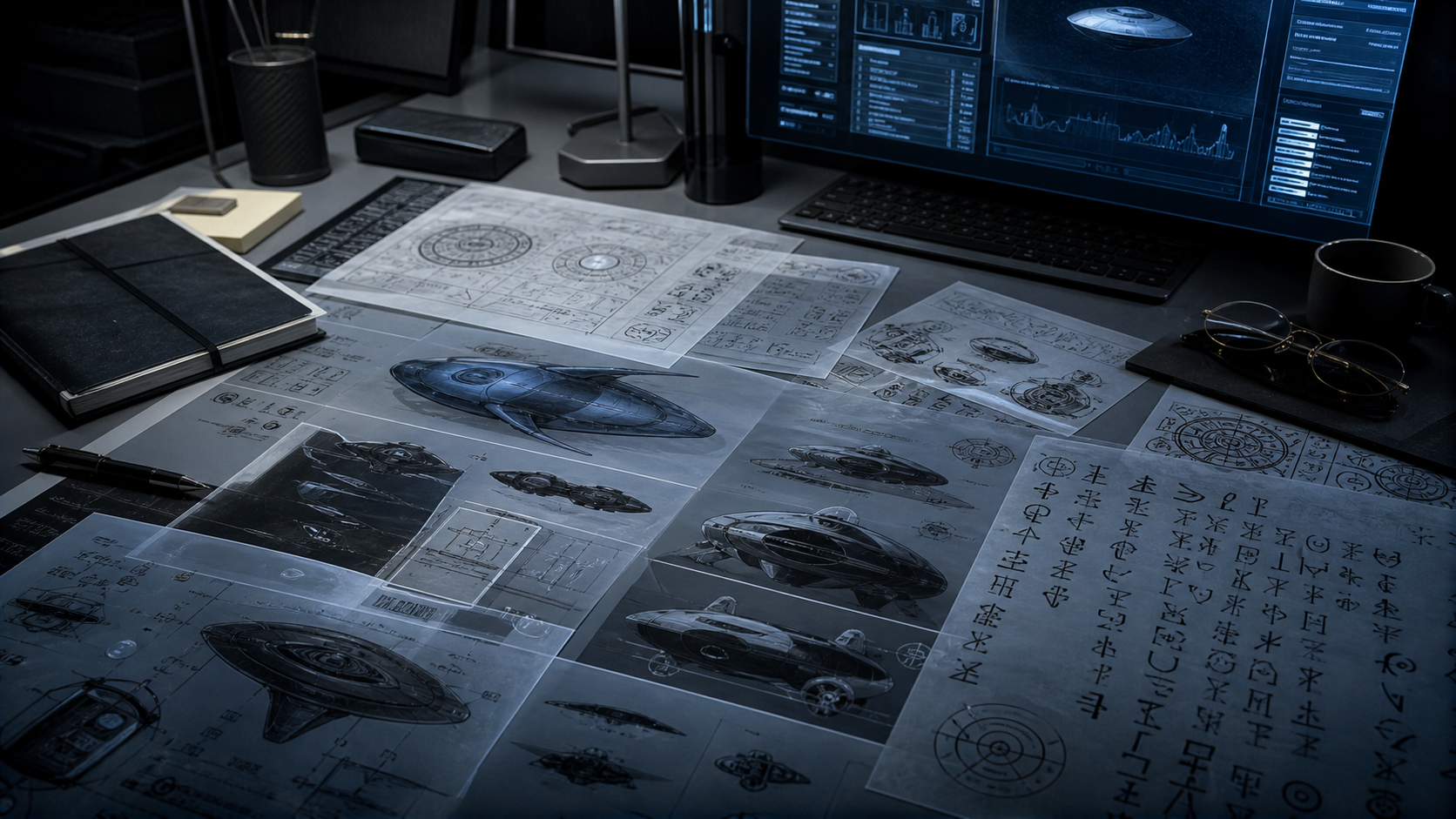
CARET did not arrive like an old saucer photo.
It arrived as an internet-era leak: drone images, diagrams covered in alien-looking script, a claimed insider identity, and the suggestion that extraterrestrial technology had already been integrated into human systems through a deliberately boring program name.
The visuals were calibrated for a specific kind of believer: someone who wanted a manual more than a miracle. Not a body on a table. Not a contactee with a story. A system. A working language. Something that looked like it came from inside a classified contractor's filing cabinet.
No verifiable insider ever surfaced, and the material is widely treated as fabricated. But the case matters as a format. Old fakes showed a craft. CARET showed a program.
It changed what a convincing insider document was supposed to look like. For a certain audience, the most convincing thing is not an alien. It is the paperwork an alien program would generate.
The reveal: Roswell Slides
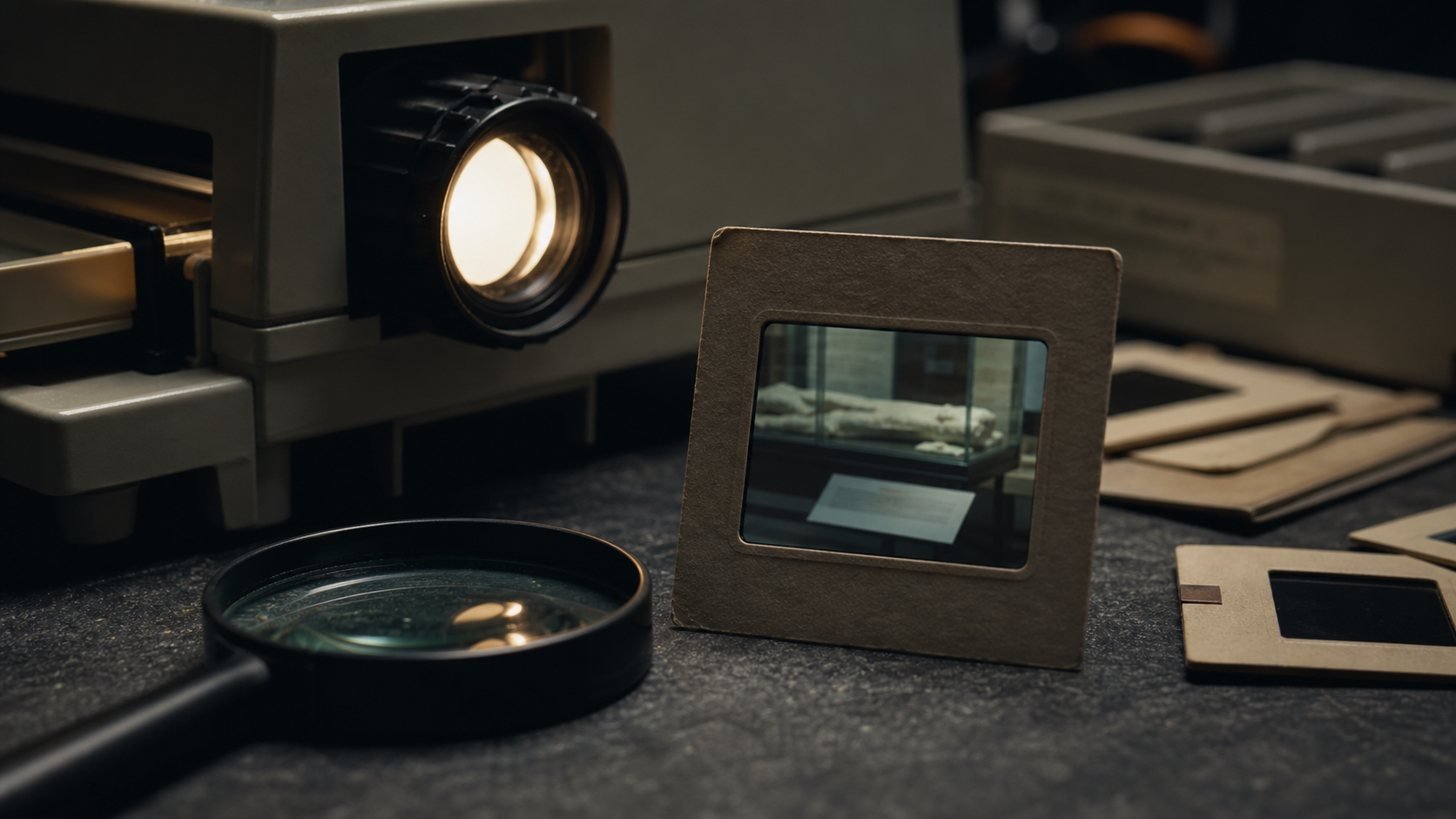
The Roswell Slides had a fatal detail sitting inside them the whole time: a placard.
Two slides were promoted as images of a possible non-human body connected to Roswell. The event built around them, BeWitness, had stage production, months of buildup, names from the UFO research community, and a sold-out venue in Mexico City.
Then outside researchers started working on the blurred museum label visible in the corner of the images.
The body was not the key. The label was. The Roswell Slides Research Group recovered the text and traced the remains to a mummified child once held at Mesa Verde National Park. A September 1938 issue of Mesa Verde Notes described the mummy in detail: a two-year-old boy, removed from ruins in 1894 and later returned by the original taker's son.
The answer had been in the frame the whole time, waiting for someone patient enough to read it.
The slides did not fail because the image was unconvincing. They failed because the event was built around the reveal rather than the elementary question of what was actually in the photograph. Reveal culture is very good at selling the moment. It tends to be less interested in the label.
The correspondence: Ummo
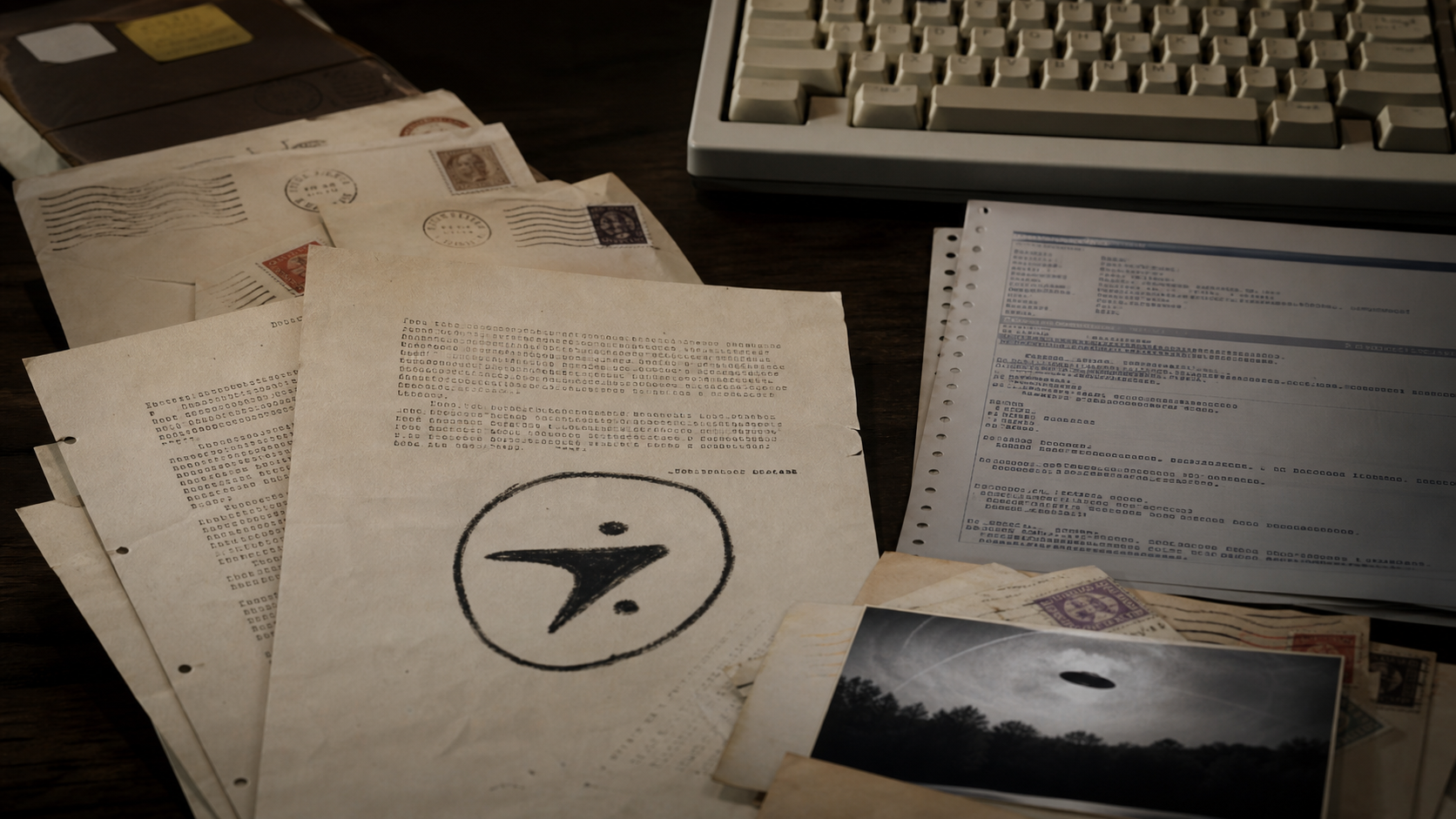
Some hoaxes do not need one image. They need a mailbox.
Ummo grew through correspondence: letters written in careful technical language, with symbols and contact claims, mailed to UFO researchers and curious civilians in Spain and France over years. Jose Luis Jordan Pena later claimed responsibility. Most researchers accepted this as the key to the case, though some believers kept arguing.
What matters more than attribution is the mechanism. Ummo built an entire civilization by mail. No model, no broadcast, no slide projector. Just documents that read like a world being delivered one envelope at a time.
The method has adapted. Versions of it appear in anonymous forum posts, document drops, and social media threads that accumulate over months into something that feels, from the inside, like a coherent picture of hidden reality.
What the hoaxes left behind
Alien Autopsy left the room: the clinical space that makes a body look like evidence.
MJ-12 left the official-looking memo and the understanding that bureaucratic form is its own kind of credibility.
Gulf Breeze left a debunking object that the belief system absorbed and kept moving around.
Billy Meier left the repeatable contact photograph, endlessly reproducible, endlessly arguable.
CARET left the technical leak format, designed for people who want a program rather than a miracle.
Roswell Slides left the stage-managed reveal that collapsed under a museum label nobody had read carefully.
Ummo left the letter-world, proof that you can build a fake civilization out of nothing but consistent correspondence.
Most people who report UAP sightings are not hoaxers. That is worth saying plainly. The problem is not that every witness is fabricating something. The problem is that these cases established the shapes that convincing-seeming evidence is supposed to arrive in.
A new piece of footage, a new document, a new insider claim: whatever it is, it enters a landscape these hoaxes helped design. Real evidence has to beat templates that were built specifically to look real.
That is what makes them worth understanding: not as footnotes to UFO history, but as the formats still sitting under the next file, clip, leak, and witness claim.
Sources
- FBI Vault: Majestic 12.
- The Black Vault mirror: FBI Majestic 12 file PDF.
- LiveScience: The Story Behind the Alien Autopsy Hoax.
- Pensacola Beach: The Gulf Breeze UFO Incident.
- Wikimedia Commons: Gulf Breeze UFO model, CC0.
- The New Yorker: The Enticing Mysteries of U.F.O. Photography.
- UFO Online archive: Isaac / Chad / CARET California drones.
- Roswell Slides: The Child Identified.
- Anomaly Archives: Roswell Slides collection.
- Skeptical Inquirer: The Roswell Slides Fiasco.
- Ummo overview and source trail.