Main Article / Jul 24, 2026
STS-80’s UAP photos — and the astronaut’s account
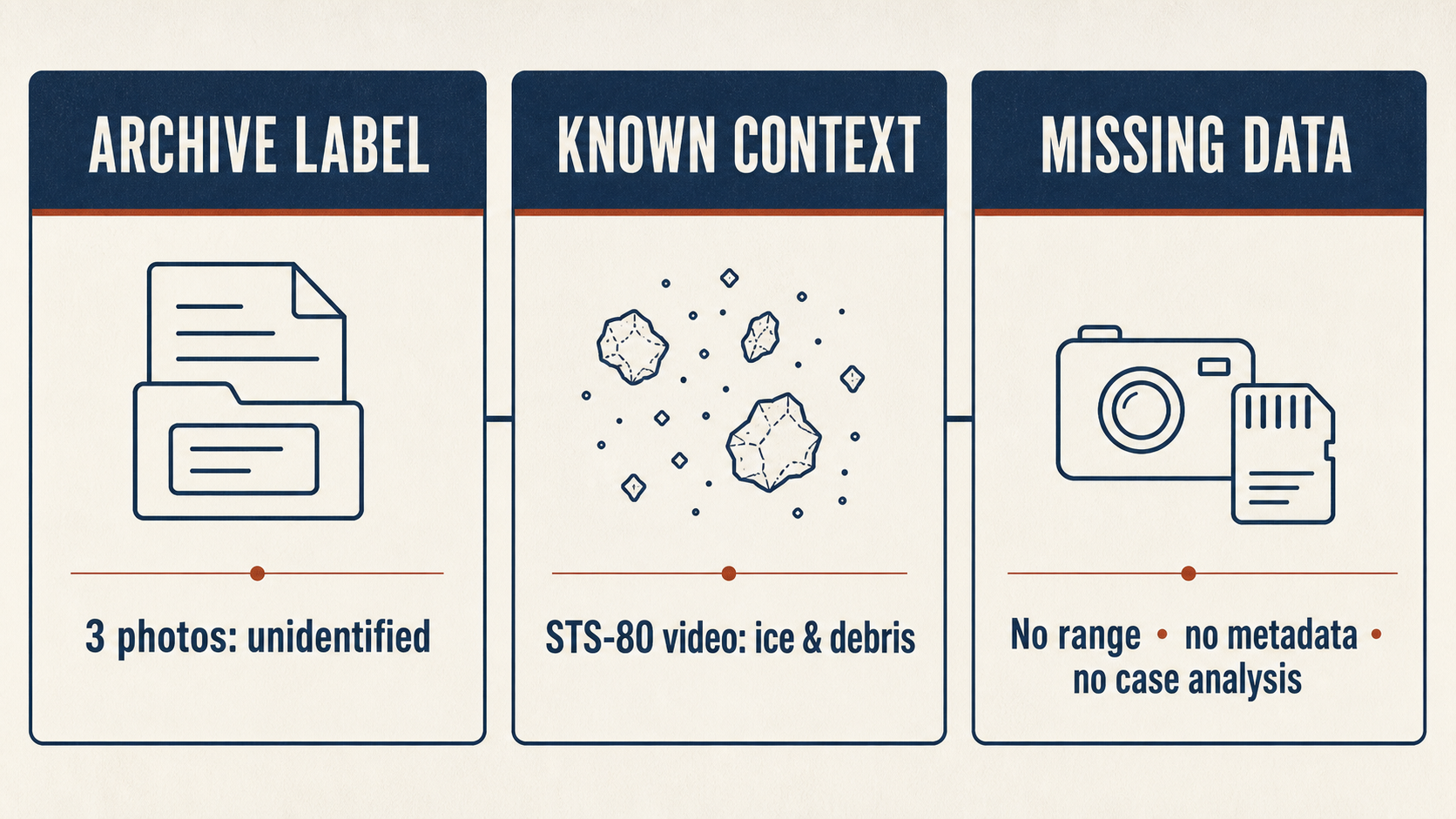
The new release gives three old Columbia images a new official label. It does not identify an object, connect the photographs to the mission's famous videos, or overturn the astronaut's account of what those videos showed.
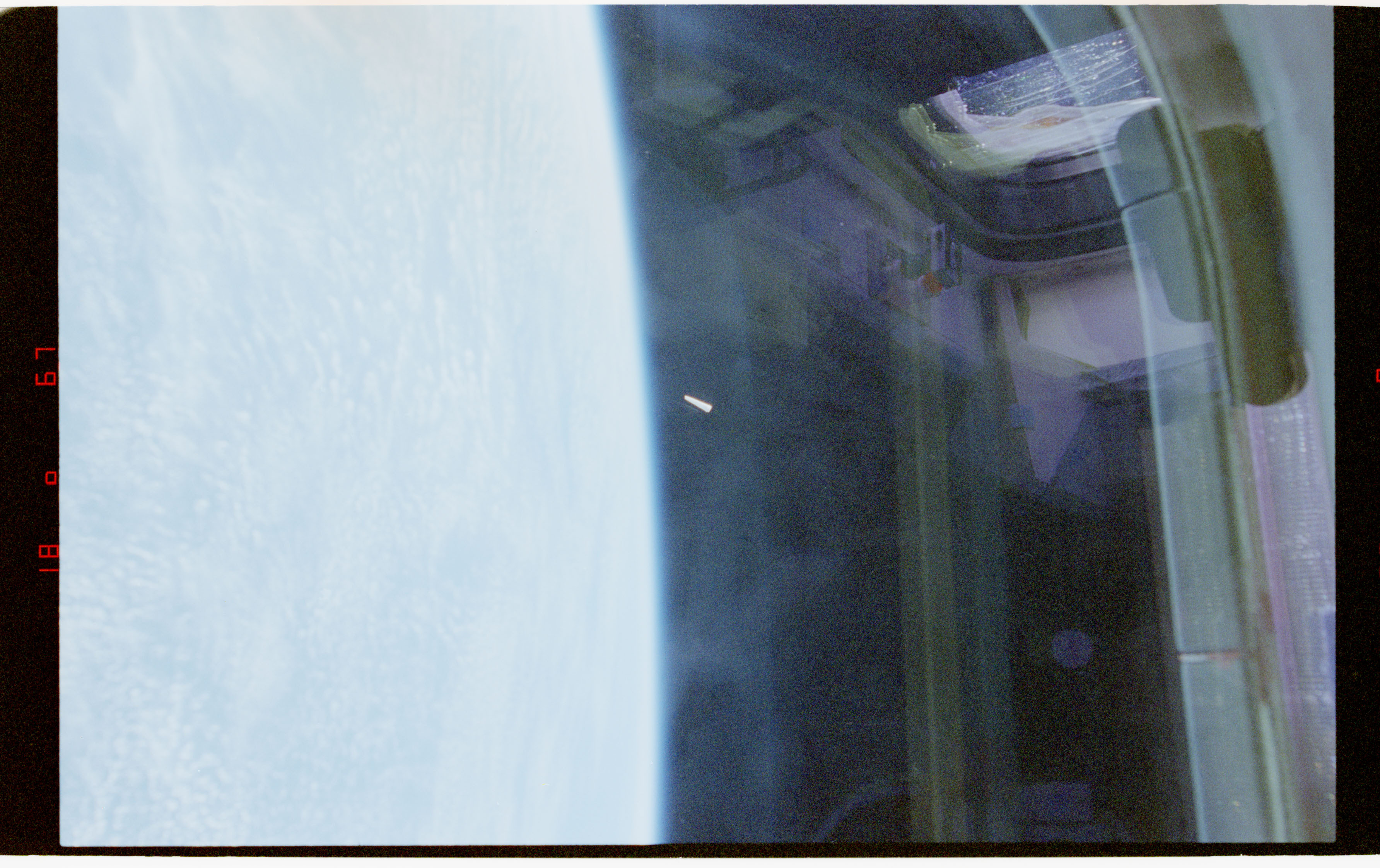
Three photographs taken from Space Shuttle Columbia in 1996 have entered the U.S. government’s UAP archive as NASA-UAP-D030, D031 and D032. The Department of War released them on July 10 in the fourth PURSUE batch, which brought the programme’s public total to 334 records.
STS-80 has featured in UFO claims for three decades, largely because night-time video from the mission appears to show bright points moving near the shuttle. The new stills are circulating with claims that NASA has acknowledged a mystery in orbit.
The new entries are unresolved records from Columbia’s November–December 1996 flight. The public release supplies no identification, camera data, precise capture time or link to the mission’s better-known videos. One of the astronauts aboard Columbia, planetary scientist Tom Jones, has described those older videos as ice crystals and debris near the shuttle, caught by changing light and sometimes moved by thruster firings.
What the three images show
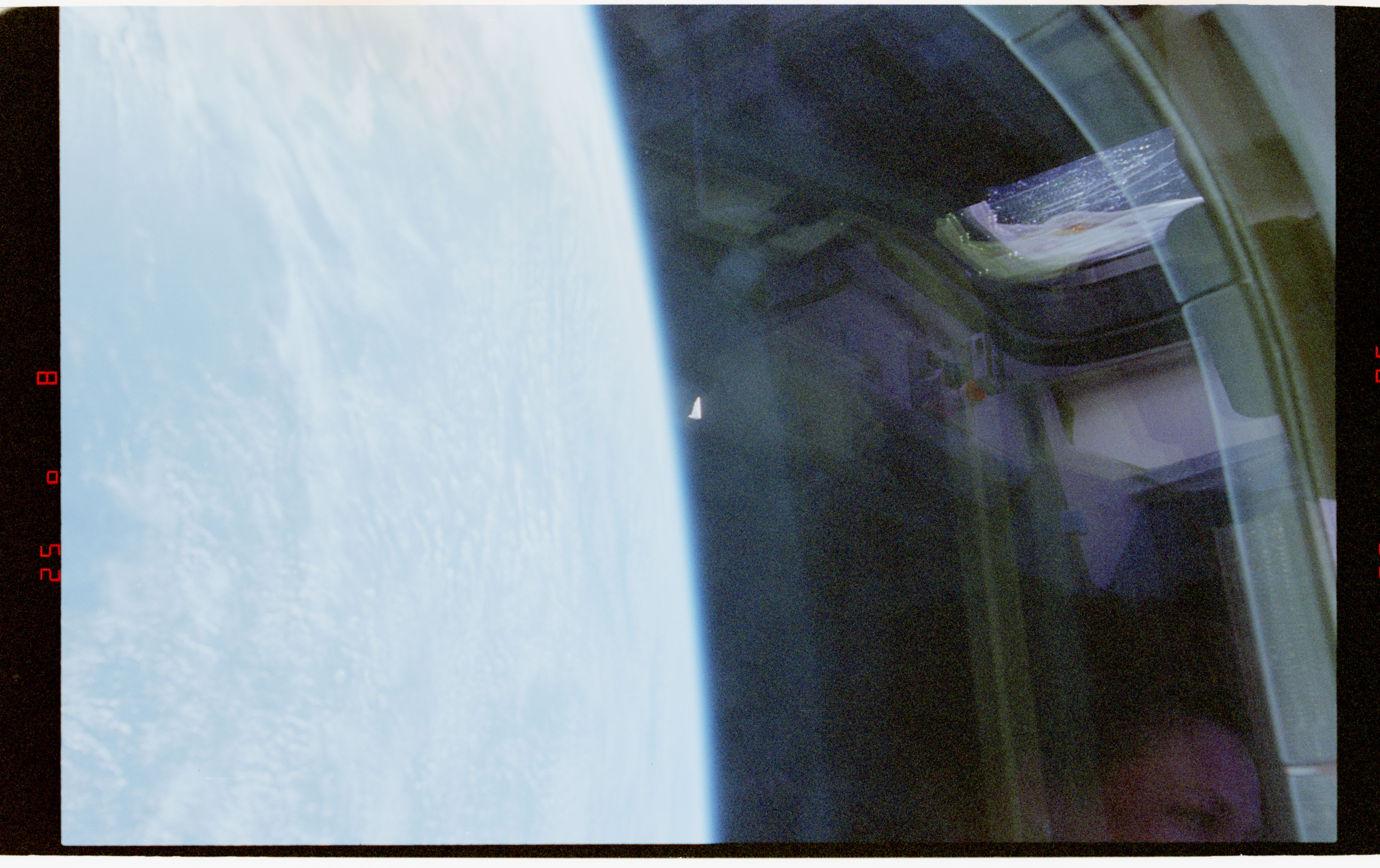
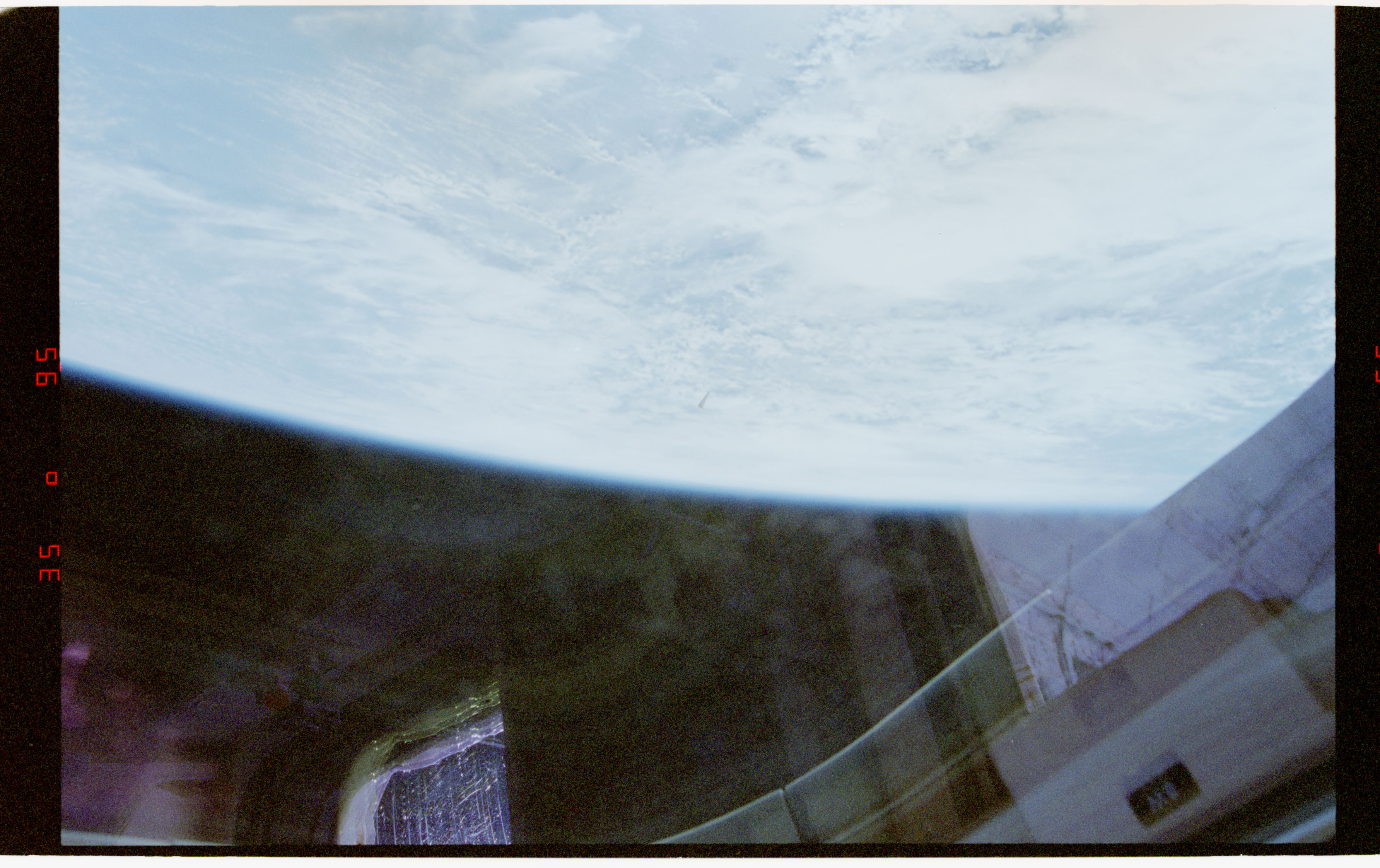
The released copies are 3568-by-2245-pixel scans with film-edge markings. They appear to have been taken through Columbia’s windows: reflections and parts of the orbiter are visible in the frames.
- D030: a small bright, elongated mark sits between Earth’s limb and Columbia’s payload-bay structure.
- D031: a bright, compact mark appears in a similar part of the frame, beside the payload-bay structure.
- D032: a faint, narrow dark mark appears over Earth, with Columbia’s payload bay in the lower part of the image.
Those visual details do not establish size, range or motion. The public index does not provide a capture sequence, camera or lens information, exposure data, or a technical analysis of the three frames.
What entered the new archive
Release 04 contains 40 records: 14 PDFs, four Apollo audio files, three NASA images from STS-80 and 19 video records. The STS-80 entries are each listed as an unidentified object in low-Earth orbit. Columbia’s 17-day mission flew from November 19 to December 7, 1996.
“Unidentified” is a file status, not a finding about origin. The archive says its materials are unresolved when the available data do not permit a definitive determination. These entries contain no case analysis, crew debrief, trajectory reconstruction, distance estimate or identification. A still image cannot show whether a mark is close to the camera, far from the shuttle, reflecting sunlight or connected to mission hardware.
Why STS-80 became a UFO case
STS-80 was a busy science mission. Columbia deployed and later retrieved two free-flying research satellites: ORFEUS-SPAS II, an ultraviolet observatory, and the Wake Shield Facility-3, a platform used to create an ultra-vacuum behind it in orbit. The payload-bay cameras also recorded the dark, sunlit and twilight conditions around the shuttle.
Clips from those cameras developed a long afterlife in UFO media. Points of light appear against the black background, brighten and fade, and in some excerpts seem to change direction. That visual grammar has made STS-80 a recurring example of what viewers call an object manoeuvring in space.
Jones, a mission specialist on STS-80, addressed that claim directly in a 2016 essay titled Did UFOs Visit STS-80 Columbia?. He wrote that he had reviewed the video in 1997 and identified the points as ice particles or human-made debris floating near the shuttle, likely within tens of feet of the orbiter. In orbital twilight, he explained, particles can emerge from the shuttle’s shadow and become brilliantly sunlit. A thruster firing can also change the path of nearby material without implying that the material is under its own propulsion.
Jones was not writing from a distance. He was one of five people on the flight, alongside commander Kenneth Cockrell, pilot Kent Rominger, and mission specialists Tamara Jernigan and Story Musgrave. He says neither the crew nor Mission Control treated the visual material as evidence of an alien craft.
What Jones’ account covers
Jones’ account is first-hand context for the STS-80 videos that made the mission well known. NASA’s post-flight technical record also documents an assessment of debris, ice and thermal-protection-system conditions during the mission. Both records establish that ice and mission-related debris were present around Columbia.
The three July 2026 stills require their own technical record. The release does not say whether they are frames from the camera sequences Jones discussed, whether crew members saw the objects, or whether image metadata was checked against mission logs. An object can be unidentified in a photograph without supporting the broader claims often attached to it.
Jones’ explanation concerns the older video footage, not these three stills. The current release supplies too little technical context to assign the stills either to ice and debris or to a more exotic explanation.
What “unidentified” means in this release
In this release, “unidentified” means the available record does not permit a positive identification. It says nothing about distance from Columbia, control, origin or whether the visible mark was physically separate from the shuttle. Those questions require calibrated imagery, a measured range, correlated telemetry, a consistent multi-sensor track or a contemporaneous crew account.
The PURSUE archive releases unresolved material on a rolling basis and invites outside analysis where files are incomplete. That explains the label, but it does not turn a still image into an identified object or a scientific finding.
Why these files appeared in 2026
PURSUE follows President Donald Trump’s February 2026 directive to identify and release government files concerning UAP and related subjects. The Department of War says it is releasing material as agencies find and declassify it. That programme context explains the rolling releases, but not why these particular STS-80 images were selected for Release 04.
What the record still lacks
The three original image files need to be inspected at full resolution, with their dimensions and any available embedded metadata recorded. Their capture sequence can then be compared with STS-80 mission timelines, payload-bay-camera logs, shuttle attitude, thruster activity and the deployment schedules of ORFEUS-SPAS II and Wake Shield Facility-3.
The index gives a title and a mission, but not the referral chain. A NASA or Department of War account could establish whether the images were selected because of a historical public claim, an internal review or an unresolved catalogue category.
For now, the release provides three clear scans and a government label, without the mission data needed to test the competing explanations.
Related UAP Logbook reporting
- NewsNation revisits Apollo 17’s “triangle” and the STS-48 shuttle video
- The Apollo photo Jesse Michels calls “censored” — and what the original scan shows
- The Gulf of Oman infrared clip and what its file actually says
- NASA, space and UAP reporting
Sources
- U.S. Department of War, PURSUE Release 04, released July 10, 2026. The official archive and its description of unresolved records.
- PURSUE Release 04, STS-80 search. Official index for NASA-UAP-D030 through D032. The three source images are reproduced above from the official Release 04 carousel.
- Department of War, “Department of War Releases Unidentified Anomalous Phenomena Files in Historic Transparency Effort”, May 8, 2026. Programme announcement following the president’s transparency directive.
- NASA, STS-80 mission overview. Mission dates, crew and payload context.
- NASA Image and Video Library, STS080-708-065. Context image of the Wake Shield Facility during STS-80; public domain.
- Tom Jones, “Did UFOs Visit STS-80 Columbia?”, June 23, 2016. Jones’ first-hand explanation of the mission’s widely circulated UAP footage.
- NASA Technical Reports Server, “Debris/Ice/TPS Assessment and Integrated Photographic Analysis of Shuttle Mission STS-80”, NASA-TM-112189, 1997. NASA’s post-flight debris/ice assessment.
- CBS News, “Pentagon releases new batch of UFO files”, July 10, 2026. Independent overview of the fourth release and its contents.