Short Note / Jul 08, 2026
Mike Gold says NASA's UAP team did not get the archive case
Mike Gold told NewsNation that NASA's UAP Independent Study Team was not an investigation of decades of NASA UFO archive claims. The new hook is what comes next: a Disclosure Foundation effort to review NASA material.
Mike Gold's most useful line in the new Reality Check interview is not the loudest one.
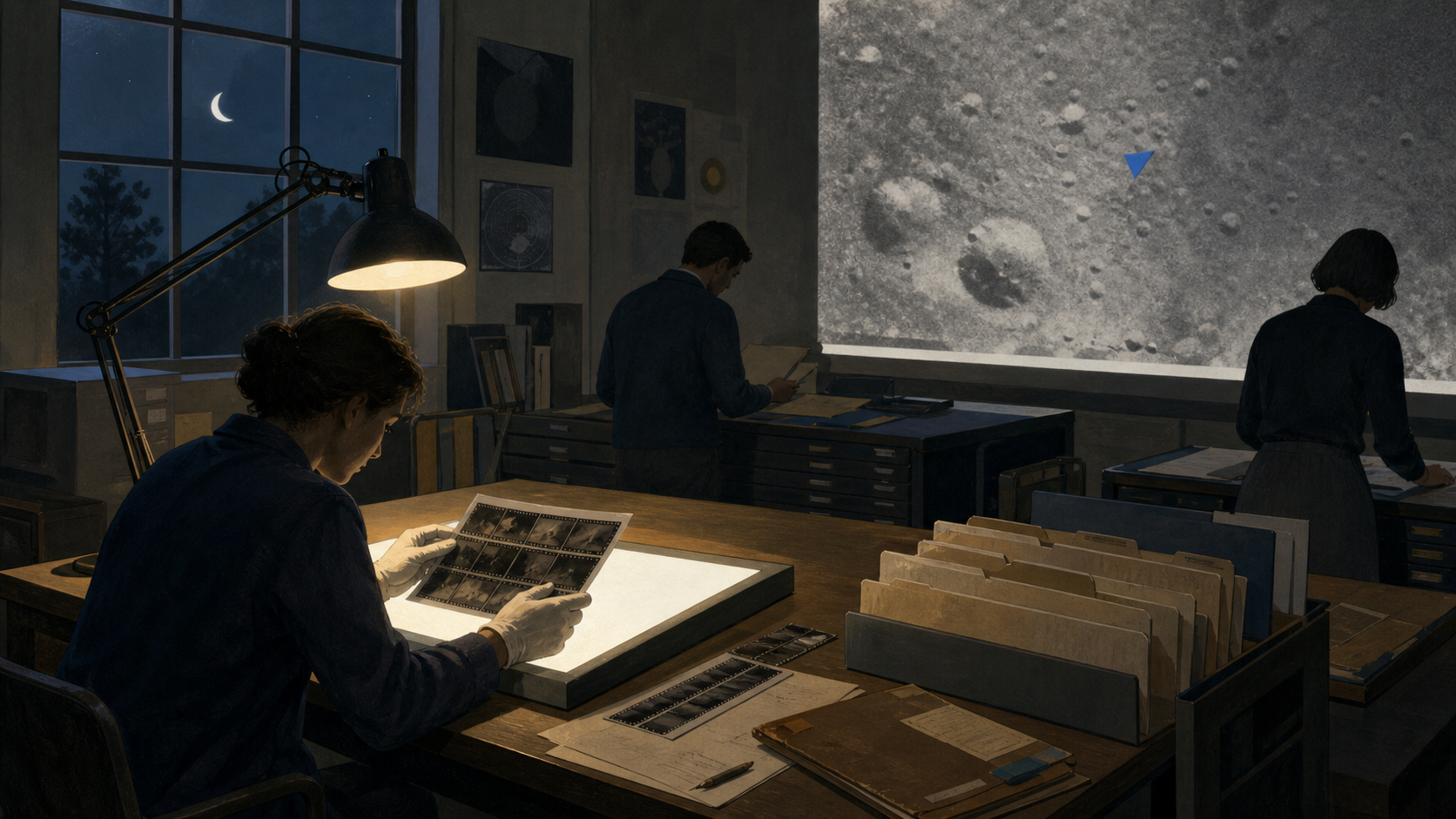
The July 7, 2026 NewsNation episode is titled like a NASA coverup story. Ross Coulthart asks about Apollo images, alleged lunar structures, old astronaut stories, ISS-feed claims, and whether more UAP files are coming. Gold, a former NASA official and member of NASA's UAP Independent Study Team, keeps steering the conversation back to a narrower point: the NASA study team was never set up as a decades-deep archive investigation.
Gold said the team's remit was to ask whether UAP was worth looking at as a threshold topic, what NASA resources could be applied, and how those resources should be used. The briefings the team received were mostly about capabilities, he said, not a parade of NASA anomaly files, imagery, or mission records.
That distinction changes the criticism. If the NASA study team did not resolve old NASA UFO claims, Gold's answer is that resolving them was never the job.
The archive job is moving outside NASA
This is not a new lane for Gold. In a May 7, 2025 Disclosure Foundation panel, he argued for going into NASA archives, discussed lunar horizon glow and Apollo 17 imagery, and said AI and machine learning should be used to search for material worth closer study. ABC News quoted him the next month making the same stigma argument in plainer political terms: secrecy plus stigma makes it hard for agencies and people to examine UAP seriously.
The Coulthart interview is not a new position surfacing. It is Gold's existing argument now attached to a named project.
The Disclosure Foundation announced on June 24 that it will review NASA archival material for UAP information. For that initiative, Gold is listed on the executive committee, alongside Jordan Flowers, Beatriz Villarroel, Maaneli Derakhshani, Travis Taylor, Reggie Brothers, and Stephen Bruehl. The Foundation's team page separately lists Gold as an advisory board member. That looks like overlapping roles, not a different project.
In the NewsNation interview, Gold said the goal is to implement one of the NASA team's own recommendations: use artificial intelligence and machine learning to look through NASA archives and identify material that deserves further study.
He also drew a hard boundary around the effort. The Disclosure Foundation is independent. It is not NASA. It cannot force the agency to open every file, compel classified databases, or make the Defense Department hand over space-surveillance records. Gold's narrower claim is that enough public NASA material already exists to begin asking better questions.
"Not having all of the data is not not having none of the data," he told Coulthart, according to the transcript.
What Gold did and did not say
Gold did not confirm the Apollo 11 hotel-room stories, moon-structure claims, or the strongest versions of NASA airbrushing lore. He said no one at NASA accused him of treason, and pushed back on the idea of a single villain inside the agency pulling strings.
His explanation was less cinematic: bureaucracy, stigma, and the career cost of treating UAP as a research topic. Academics on the NASA UAP team faced pressure simply for participating, he said, not for making claims about aliens or non-human intelligence.
That framing lines up with NASA's 2023 UAP report, which said the agency could contribute data expertise, archives, AI and machine-learning methods, and aviation-safety reporting infrastructure. The same report also stated plainly that the independent study team was not a review of previous UAP incidents.
The open question is whether the new private review can turn that recommendation into a public list of testable NASA archive targets: specific images, dates, mission IDs, sensor records, missing metadata, or requests for declassification.
The declassification piece
Gold also said he had come from the National Archives, and that his impression is the next stage will not simply be another batch of already-public material. The early tranches, in his description, were low-hanging fruit. The harder question now is what classified material can actually be declassified.
He was careful there too. Gold described the National Archives as an advocate or ombudsman for public interest and sensible declassification, not the sole authority deciding what gets released.
So the note coming out of this interview is not "NASA admits UFO coverup." The more useful and more checkable version is narrower: a former NASA UAP-team member, repeating an argument he has been making publicly for more than a year, says the first NASA effort never actually investigated the archive, and a new nonprofit now wants to test what can be found in the public material NASA already holds.
What this note establishes
- Gold says NASA's UAP Independent Study Team was mainly about whether and how NASA should study UAP, not a full investigation of decades of NASA anomaly claims.
- The Disclosure Foundation has announced a NASA archive review, with Gold and several other UAP figures on its executive committee.
- Gold says the effort will look for anomalies in NASA material and use AI/ML where possible, but it has no power to compel NASA or defense agencies.
- Gold has been making the same core argument about NASA archives, AI/ML search, and stigma in public since at least May 2025.
- The public test will be whether the review produces named images, datasets, requests, or findings that can be checked outside the interview circuit.
Sources
- NewsNation Reality Check: Mike Gold interview, YouTube, July 7, 2026.
- Disclosure Foundation: Understanding UAP: Innovation Panel with Mike Gold, YouTube, May 7, 2025.
- ABC News: UFO sleuths want fewer secrets in Trump-era investigations, June 2025.
- NASA UAP Independent Study Team Report, September 2023.
- NASA: UAP report release and director announcement, September 14, 2023.
- Disclosure Foundation: NASA archive review announcement, June 24, 2026.
- Disclosure Foundation: Mike Gold team profile.