Main Article / Jul 28, 2026
The House put a UAP records board back into the defense bill. It still has to survive.
The House-passed 2027 defense bill includes a new UAP Records Review Board, a National Archives collection and a records sweep. It is the strongest House UAP disclosure step in years — and it is not law yet.
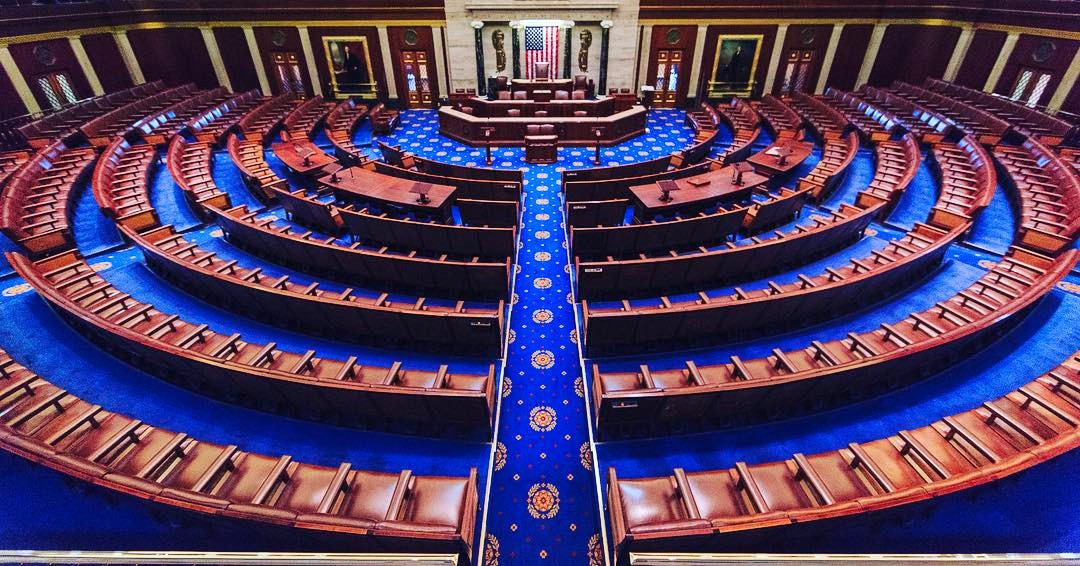
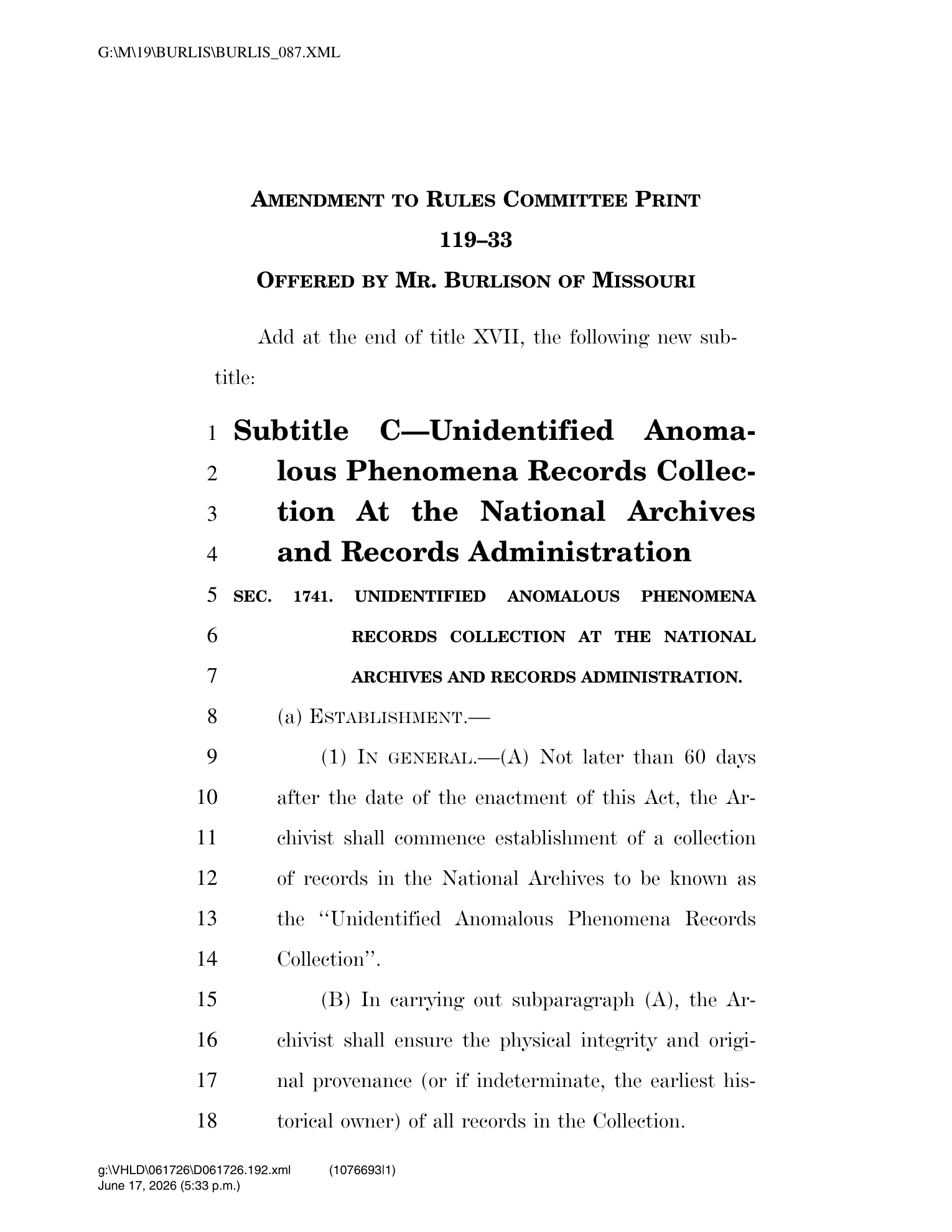
On July 22, the House passed its FY2027 National Defense Authorization Act, H.R. 8800, by 216 votes to 212. Attached to the bill is a 57-page UAP disclosure amendment from Missouri Republican Eric Burlison. It would order a records collection at the National Archives and create an independent board to review what the government keeps classified.
The margin matters. The House adopted the rule that allowed consideration of the bill by 214–211 the day before. The UAP provision now moves with the House bill, but it has not become law. The Senate has to pass its own defense bill, and the two chambers must settle on final language before it can reach the president.
Burlison’s Amendment 1044 was made in order by the Rules Committee. Its listed sponsors include Republicans Eli Crane, Anna Paulina Luna and Nick Begich, as well as Democrats André Carson and Jared Moskowitz. The bipartisan group backed one amendment; the 216–212 roll call was on the larger defense bill, not a separate vote on UAP disclosure.
A records collection, with a deadline
The amendment would give the Archivist 60 days after enactment to begin an Unidentified Anomalous Phenomena Records Collection. It covers government, government-provided and government-funded records concerning UAP, “technologies of unknown origin” and “non-human intelligence,” while expressly excluding temporarily non-attributed objects. Agencies would have to identify, organise, preserve and transmit the relevant material. The National Archives would publish an index and a subject guide.
Most records would be due for full public release 25 years after their creation. A president could postpone disclosure only through a written certification tied to a specified harm to military defence, intelligence operations, law enforcement or foreign relations. The proposal is not an order to post every file immediately. It is a different process for deciding what remains withheld.
The board would have powers the archive does not
The proposed UAP Records Review Board would be a nine-member independent agency, appointed by the president with Senate confirmation. Its powers include reviewing requests to delay disclosure, holding hearings, taking testimony and subpoenaing witnesses and documents. The bill also defines records broadly enough to reach material held by current or former government contractors.
The final House version assigns continuing legislative oversight of the collection to the House Committee on Oversight and Government Reform and the Senate Committee on Homeland Security and Governmental Affairs. It would give board members accelerated access to relevant special-access programs, subject to the normal clearance process. That is a concrete institutional design, not simply a request for another Pentagon briefing.
The provision also revives a clause that drew intense attention in the 2023 UAP Disclosure Act debate: eminent domain. Its text says the federal government would exercise eminent domain over recovered technologies of unknown origin and biological evidence of non-human intelligence controlled by private people or entities, “in the interests of the public good.” The clause is part of a proposed records statute; it is not a congressional finding that such material exists.
The 2023 comparison
Senators Chuck Schumer and Mike Rounds secured a narrower UAP disclosure title in the FY2024 NDAA. The enacted law created a National Archives collection, but the broader review-board and eminent-domain provisions from their earlier proposal did not survive negotiations. Burlison’s House amendment puts both elements back on the table.
That history is why the Senate stage matters more than the amendment’s headlines. It can retain the collection but remove the board; keep the board but cut its subpoena authority; or omit the whole subtitle in a House–Senate compromise. The House vote gives the proposal leverage in those negotiations, not a guarantee of an outcome.
What to watch next
There are three straightforward tests. First, does an UAP records subtitle survive in the final conference agreement? Second, if it does, does Congress fund the board and are its members appointed? Third, does the board ever order the release of a record over an agency’s objection? Until those steps occur, the amendment is a detailed legislative proposal attached to a House bill — not proof of a hidden program or a disclosure event.
Sources
- U.S. House Committee on Rules: H.R. 8800, FY2027 National Defense Authorization Act, listing Amendment 1044, Version 3, as Made in Order and naming the bipartisan sponsors.
- Amendment 1044, revised July 20: Unidentified Anomalous Phenomena Records Collection at the National Archives and Records Administration, offered by Rep. Eric Burlison.
- Office of the Clerk: final House passage of H.R. 8800, 216–212, July 22, 2026.
- Office of the Clerk: House adoption of H. Res. 1438, 214–211, July 21, 2026.
- House Republican Conference: passage of the FY2027 NDAA, July 23, 2026.
- UAP Logbook: Burlison’s UAP records board entered the NDAA stack, June 2026.
- National Archives: UAP records.