Main Article / Jul 27, 2026
Why ESA is sending an aircraft to watch two old satellites fall back to Earth
ESA is moving Samba and Tango just enough to give one airborne science team two chances to watch them burn up over the South Pacific. The goal is not a spectacle: it is data on how a satellite actually comes apart.
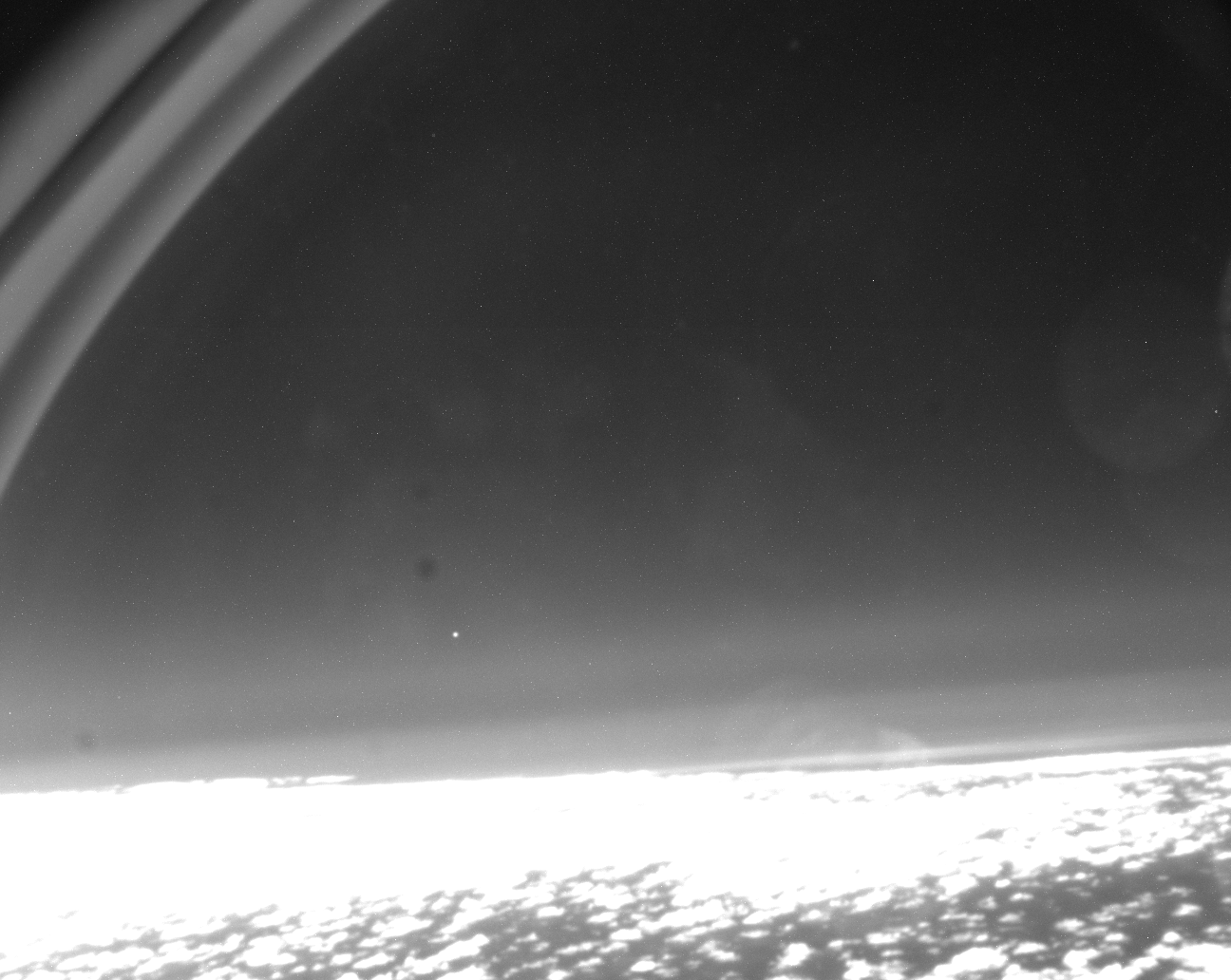
A bright point hung over the Pacific horizon as ESA's aircraft watched one of its old Cluster satellites return to Earth in 2024. In the photograph, it has none of the usual visual anchors: just a small light, a dark sky and no obvious scale. ESA had the object, the orbit and the observation plan. The point was Salsa, one of four Cluster science satellites, breaking apart high in the atmosphere.
ESA is preparing two more observations. The remaining Cluster spacecraft, Samba and Tango, are scheduled to reenter over a remote part of the South Pacific on 31 August and 1 September 2026. Small trajectory adjustments made in January are intended to let the same airborne team reach both events, return to land, refuel and fly out again.
In nearly 70 years of spaceflight, about 10,000 intact satellites and rocket bodies have reentered the atmosphere, according to ESA. Very few have been watched at close range by an aircraft carrying dedicated instruments.
Why move a satellite to meet a plane?
Cluster launched in 2000 to study Earth's magnetic environment. Its four near-identical spacecraft were called Rumba, Salsa, Samba and Tango. Salsa reentered in September 2024. Rumba followed in November 2025. “By watching them reenter the atmosphere in a predictable location,” ESA engineer Beatriz Jilete said, the team has a chance to compare the same satellite design under different trajectories and atmospheric conditions.
The useful part of a reentry happens at roughly 80 km altitude and often over ocean. Balloons cannot reach it. Spacecraft in orbit are too far away for a detailed view. Ground observers are usually too far from the predicted corridor. A targeted reentry over a remote ocean gives an aircraft a workable chance of getting underneath it.
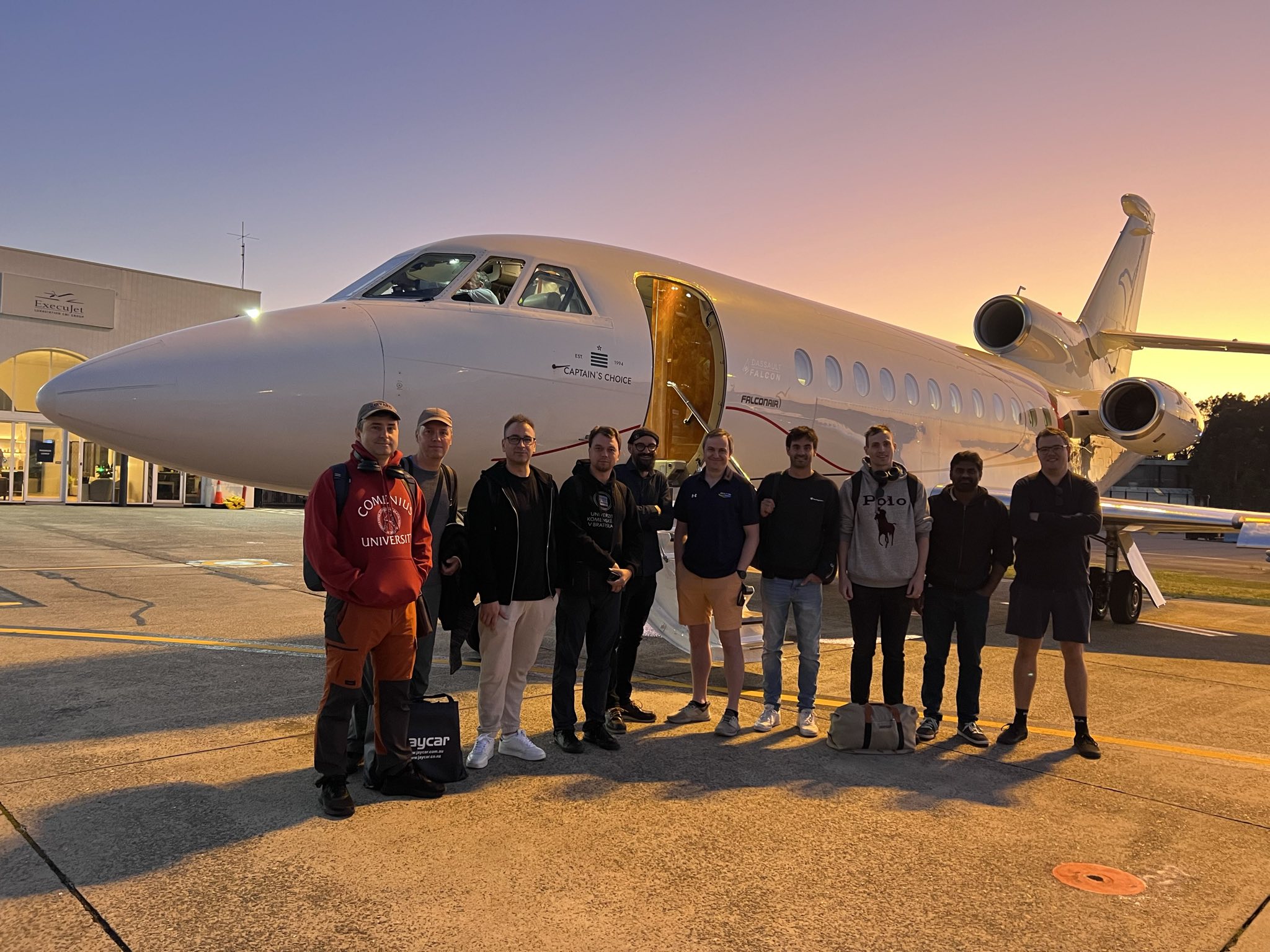
For Samba and Tango, timing is the constraint. They are due about 24 hours apart. ESA's flight-dynamics and operations teams made the small burns on 19 and 20 January, shifting the reentry locations closer together: Samba a little farther east, Tango a little farther west. That gives the aircraft time to return to the same airport, refuel and send the team back out.
What the plane is trying to measure
The team is looking for the onset of heating, the sequence of fragmentation and any materials that survive long enough to travel farther down. Those observations test the models behind “design for demise,” the engineering approach intended to make future spacecraft burn up as completely as possible at the end of a mission.
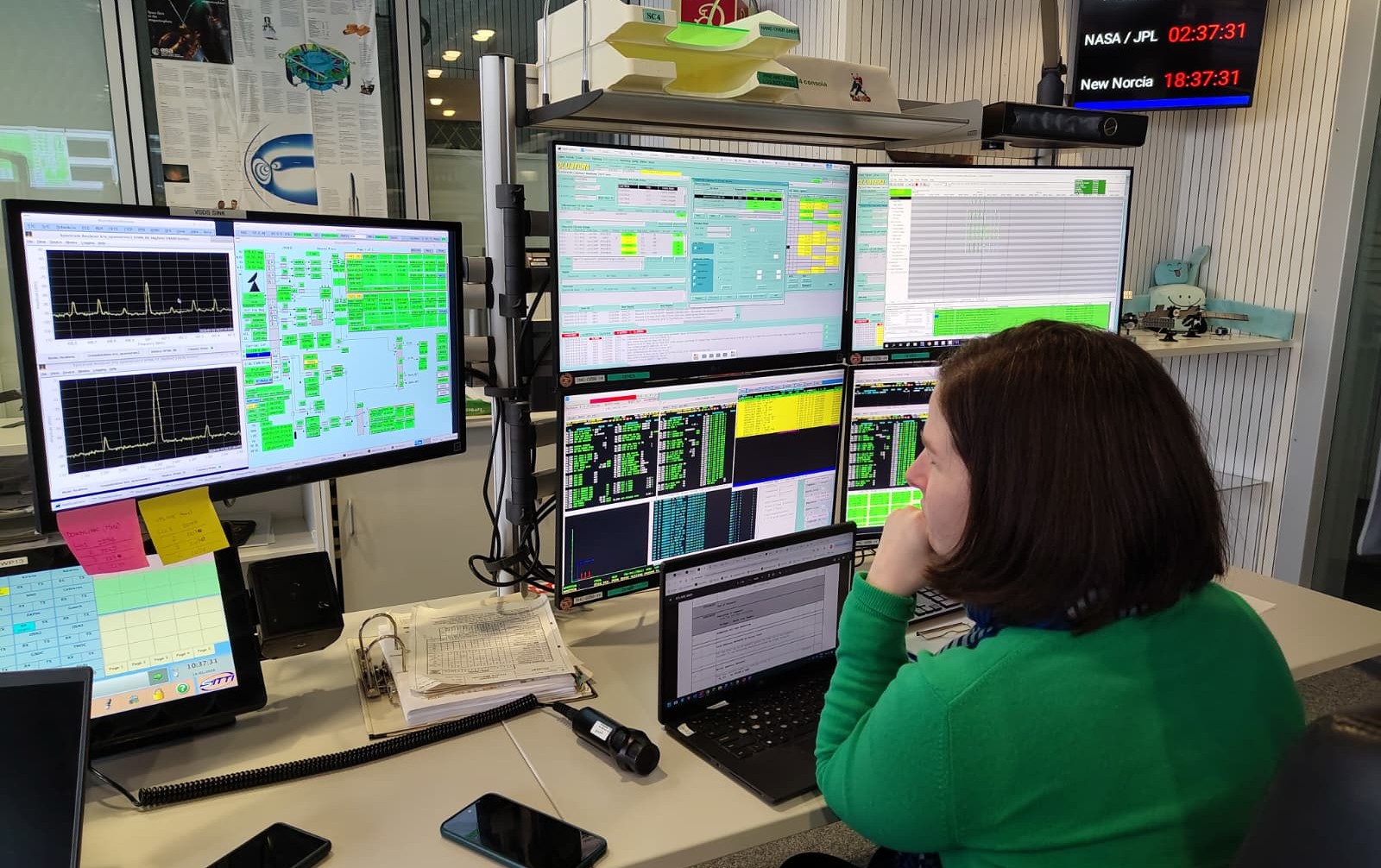
ESA expects a second data stream from the spacecraft themselves. Bruno Sousa, the Cluster operations manager, said Samba and Tango's solar panels have not degraded as much as those on the first two reentries. If the satellites remain active through their final perigee pass, ESA may collect temperature data down to about 110 km while the aircraft observes the descent from below.
The 2024 Salsa campaign used a Dassault Falcon 900 business jet fitted with 26 time-synchronised cameras at six observation stations. A conference paper in ESA's Space Debris Conference proceedings says the highly eccentric orbit made the forecast difficult enough that the final flight path used a prediction made 52 hours before reentry. Multiple cameras recorded the entry for up to 25 seconds.
Those seconds are useful because engineers cannot fully reproduce a real reentry on the ground. ESA's next dedicated experiment, Draco, is planned for 2027: a satellite designed to record its own destruction with more than 200 sensors and four cameras. A protected capsule is intended to preserve the data after the spacecraft breaks apart.
Why this matters for strange lights in the sky
Satellite reentries can produce bright, fragmented and unfamiliar lights. They may be visible far from the point where material ultimately falls, while a short video usually carries none of the timing, direction or trajectory context needed for identification. A known scheduled reentry is therefore one of the first explanations to check before a clip is labelled a UFO.
The Cluster campaign starts with an unusually complete record: ESA knows the spacecraft, its approximate corridor and the planned observation geometry. The resulting imagery and instrument data should show what a documented satellite breakup looks like under conditions that are normally too remote to study.
For Samba and Tango, the calendar is already set: 31 August and 1 September, over the South Pacific. The final time and viewing conditions will still depend on the last stages of orbital decay and weather. ESA is trying to put a plane in position before those uncertainties close in.
Sources
- European Space Agency, “Moving satellites to meet a plane for rare reentry data,” 2 February 2026
- European Space Agency, “Frequently asked questions: Cluster's Salsa reentry,” 2024
- European Space Agency, “Cluster satellite reenters Earth's atmosphere,” 9 September 2024
- European Space Agency, “Reentry observation campaign team ready for takeoff,” 8 September 2024
- European Space Agency, “Checking in with Tango after command upload,” 2 February 2026
- European Space Agency, “Draco mission made for destruction,” 24 September 2024
- Löhle et al., “First results from the Salsa Airborne Re-entry Observation Mission Campaign,” ESA Space Debris Conference proceedings, 2025