Main Article / Jul 13, 2026
Richard Dolan tours every file in PURSUE Release 04 and finds 80 years of unresolved history
On July 11, 2026, UAP historian Richard Dolan published a 57-minute file-by-file review of PURSUE Release 04. He calls the release 'not disclosure' but says it 'moves the historical record forward.' His tour runs from a 1947 theodolite reading in Virginia to a 2015 diamond-shaped object over a U.S. nuclear weapons plant.

On the morning of July 11, 2026, UAP historian Richard Dolan posted a 57-minute, 55-second video to his Intelligent Disclosure channel. The title left little ambiguity about the angle: "UAP Release #4: What Actually Matters? Full Richard Dolan Analysis." The subject was PURSUE Release 04, the Department of War's fourth tranche of declassified UAP records, released on July 10.
By the time Dolan sat down with the files, the release had already passed through a faster news cycle. CBS had run interviews with Harvard astrophysicist Avi Loeb and Disclosure Foundation executive director Jordan Flowers. A short clip had picked up a nickname on X as "The Starfish UFO." Face the Nation and The Hill had packaged 19 videos for quick consumption online.
Dolan's approach was slower. He read a 1948 Air Force study aloud, worked a 1949 Los Alamos conference transcript page by page, and isolated what the Department of War's own file descriptions did and didn't say. One discrepancy surfaced early: Dolan counted 39 files; the department's portal lists 40. He did not explain the gap, and neither the Department of War nor Dolan has clarified whether it reflects a duplicate listing, a portal error, or a file withdrawn after publication — an open question the review leaves unresolved.
How a historian reads a release
Dolan was explicit about his yardstick. "I do not judge these releases by whether they have a photograph of an alien or some dramatic official admission," he said. "I judge them by whether I think they move the historical record forward." On that measure, he judged Release 04 a modest success — "a few worthwhile" additions to the paper trail, not a breakthrough.
He was equally direct about what the release was not. "This is not disclosure, not by any stretch," he said, describing what actual disclosure would look like in his view: a four-star general on camera, in a hangar or underground facility, recording plain video on an iPhone. Short of that, he read the release as evidence of "an insider tug-of-war" — a bureaucracy responding to congressional and public pressure for transparency without delivering the underlying answer.
That framing sat alongside two other reception voices the release produced. Loeb's read was scientific and cautious: "There is no single video image, or any other data that indicates a non-human origin for any of these objects." Flowers pushed advocacy. Dolan pushed institutional history. None of the three closed the question the release was ostensibly meant to address, and no skeptic or mainstream historian has yet stepped in to challenge Dolan's framing directly. His reading is, for the moment, effectively unanswered.
The "real prizes": three documents from 1947–1949
Dolan singled out three files as the ones "you ought to know about" — pieces of the institutional record the U.S. government built around unidentified aerial reports in the late 1940s.
The 1948 Air Force study that used the word "MUST"
DOW-UAP-D093 and DOW-UAP-D094 are the December 1948 and April 1949 versions of Analysis of Flying Object Incidents in the United States — Air Intelligence Report No. 100-203-79, also known as Study 203. Dolan walked through its reasoning: analysts reviewing more than 200 reports weighed witness quality — Air Force officers, commercial pilots, weather bureau staff, engineers — and concluded something real was being observed. "It must be accepted that some type of flying objects have been observed," he read, noting that the study capitalized the word itself.
The same document floated a Soviet-origin theory, listing four possible motives — undermining confidence in the atomic bomb, photographic reconnaissance, probing U.S. air defenses, familiarization flights — and flagged sightings near Oak Ridge, Los Alamos, and Hanford. Dolan's rebuttal was blunt: nearly 80 years on, there is still no evidence the Soviets had aircraft capable of the reported performance in 1948.
Two sightings in the study stood out to Dolan for predating the modern UFO era. Two Weather Bureau employees in Richmond, Virginia, tracking balloons with a theodolite, reported two metallic discs in April 1947. The date is worth flagging rather than treating as settled: Dolan placed the report "two full months before" Kenneth Arnold's June 1947 sighting, but the exact month of the Richmond incident in the original document is worth confirming against the declassified page rather than the spoken review. The other was the January 1948 death of National Guard pilot Thomas Mantell, who crashed pursuing an unidentified object; Dolan read his final radio transmission twice.
Project Sign's first report
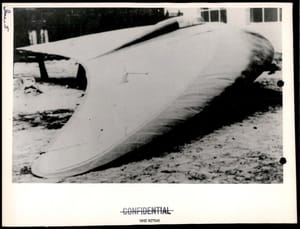
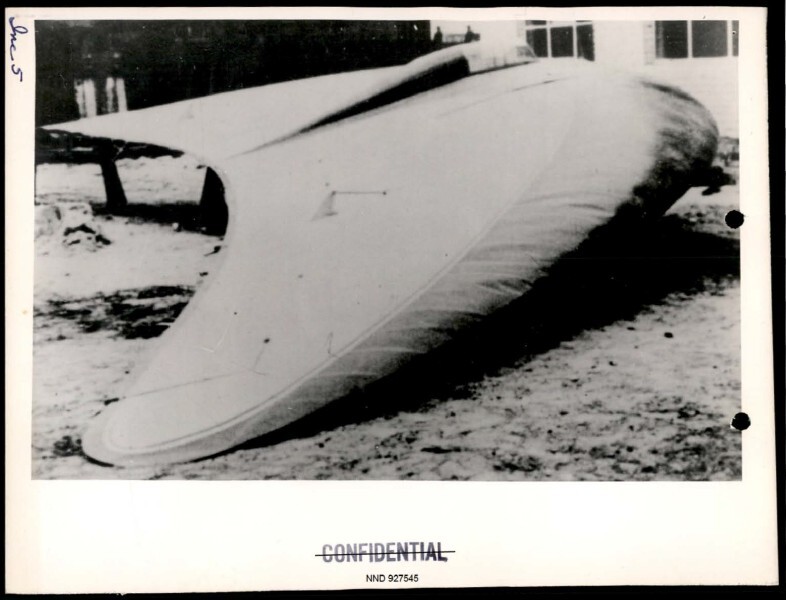
DOW-UAP-D097 is the initial report of Project Sign, the Air Force's first formal UFO investigation, established in late 1947. Prepared at Wright-Patterson Field and signed by Colonel H.M. McCoy, it consolidated roughly 100 incidents from April 1946 to January 1948. Dolan pointed out that investigators went as far as consulting Nobel laureate Irving Langmuir at General Electric and examining whether experimental flying-wing designs using boundary-layer control could account for some sightings. He was less interested in whether those explanations held up than in how seriously the Air Force pursued them.
One thing the review did not touch: Project Sign is also the source of the disputed "Estimate of the Situation," the draft memo reportedly concluding some UFOs were interplanetary before Air Force Chief of Staff General Hoyt Vandenberg ordered it destroyed. Dolan worked strictly from the published file and left that episode aside entirely. The omission is notable, because the Estimate is central to Project Sign's legend and to the wider "did the Air Force ever conclude UFOs were alien?" question. It is, however, also fair: the Estimate is not in this release.
Los Alamos, February 16, 1949
The document Dolan returned to most is DOE-UAP-D004, a 24-page transcript of a conference on the "green fireball" wave that had lit up New Mexico's skies since December 1948. The attendee list read like a roll call of the era's national-security establishment: Edward Teller, Norris Bradbury, Lincoln LaPaz, plus representatives from the Atomic Energy Commission, Air Force, Army, FBI, and the Armed Forces Special Weapons Project. "Much of that A team was sitting around this table discussing green fireballs," Dolan observed.
LaPaz, who had studied the fireballs for two years, described a yellowish-green color, near-horizontal trajectories, almost no sound, and long-lasting brightness — none of which matched known meteorite behavior. Teller initially tried to make the meteor explanation work, but his own physics did not cooperate: too bright for something small enough to be silent, too quiet for something large enough to be that bright. He proposed what the transcript renders as an "electron phenomenon" — a phrase worth confirming against the original page rather than treating as a settled Teller quote, since it is not a term that appears in his published physics. LaPaz's reply was terse: it did not behave like any meteorite he knew.
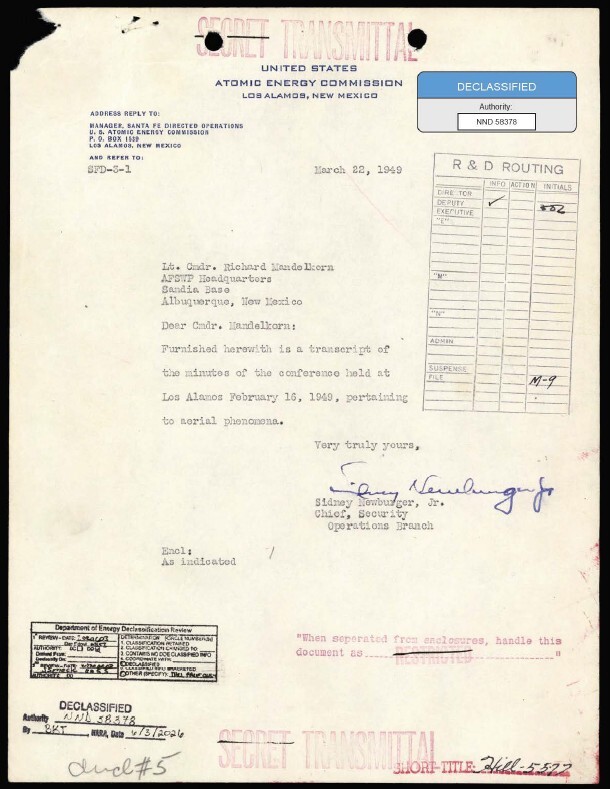
Dolan also flagged a gap between the record and its official summary. "The White House's summary is kind of accurate, but it really smooths over this interesting part," he said, quoting Teller's eventual concession that the fireballs "sounded like everything else but meteors." The episode fed directly into Project Grudge and, later, a short-lived observation network called Project Twinkle that never reached full deployment. The official verdict, two years on, was that the fireballs were probably natural in origin.
Cold War continuity: Newfoundland and Avro
Beyond the three headline documents, Dolan moved through a second tier of Cold War material he ranked lower but still called relevant. The strongest of these was a 1955 radar-visual case over Newfoundland, where a KC-97 crew tracked an object on radar for 49 minutes while its visual movements matched the radar returns exactly. A CIA physicist — the released file names him, though the spelling in the original document is worth verifying against the page — had forwarded the report years earlier expecting follow-up data; Dolan called the newly released file "essentially that missing followup." The Air Force's own review concluded it could not explain the simultaneous radar and visual sightings and recommended immediate interception if a similar case recurred.
A 1955 sighting involving Senator Richard Russell, and a CIA review of the Avro Canada flying-saucer program, drew brief treatment. Dolan called the CIA's dismissal of the Russell case "interesting" rather than convincing, noting the agency admitted its evidence was thin. On Avro, he drew a simple contrast: publicly, the government dismissed flying saucers; privately, it was trying to build one. The Avro program ended, "officially" — with the qualifier doing a lot of work in Dolan's voice.
Modern files: Pantex and 19 unmetadated videos
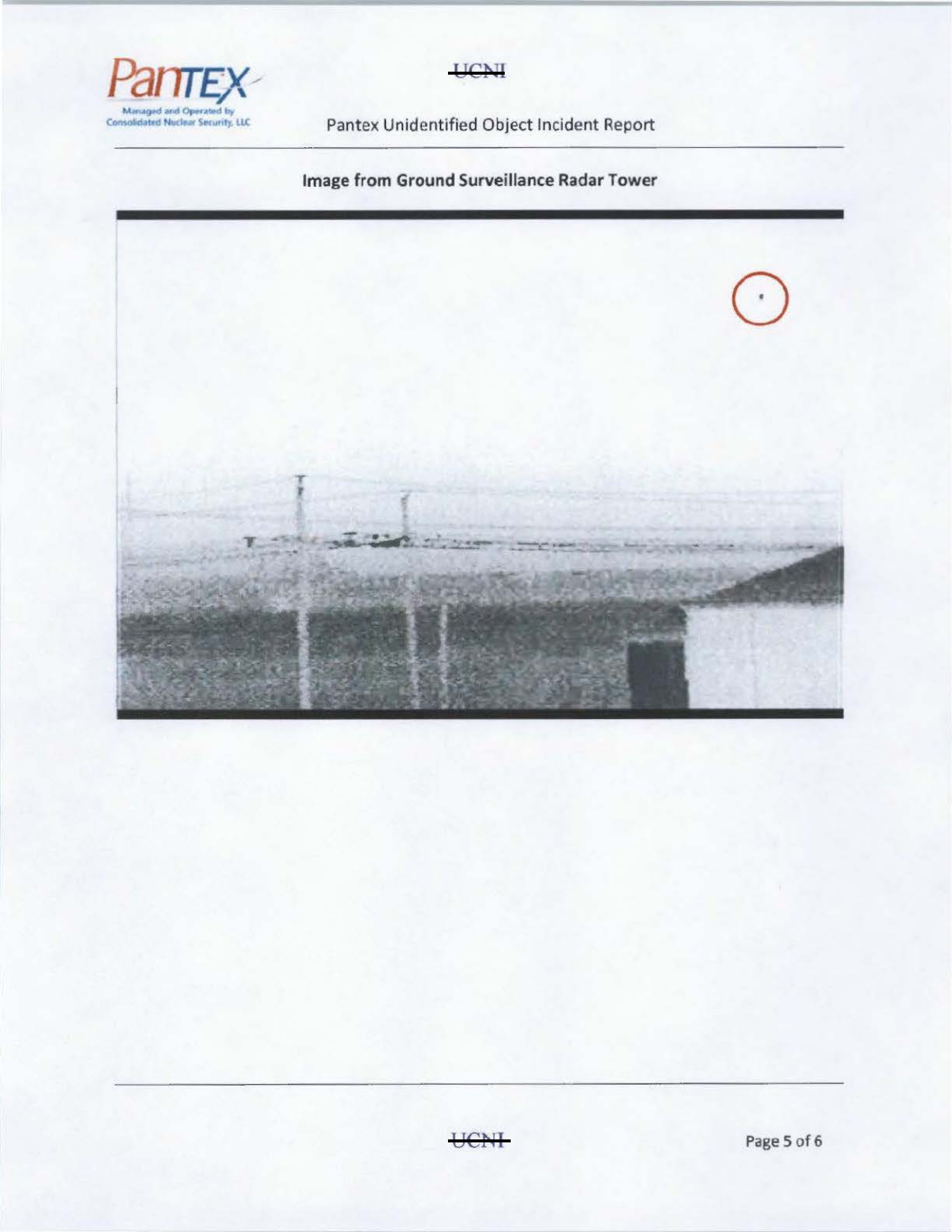
Among the modern material, Dolan rated the 2015 Pantex incident, DOE-UAP-D005, as the strongest single case. Security officers at the Texas nuclear-weapons plant tracked a diamond-shaped object for several miles. Dolan's framing cut through the speculation: even if the leading explanation is a drone, "then it was a drone operating over America's primary nuclear weapons assembly and maintenance facility. So that's actually a story by itself."
The 19 video files fared worse in his estimation, mainly because none carried metadata — no size, range, speed, or sensor information attached. He moved quickly through a 2015 eastern-U.S. clip, a 2023 Middle East recording, a 2024 East China Sea sequence of bright points moving in formation, and a 1996 western-U.S. video of two disc-shaped objects. On the 1996 clip, he echoed the Department of War's own caveat about ruling out birds or debris, calling the footage "genuinely intriguing" before conceding that missing original data made real analysis nearly impossible. On a 2019 Gulf of America clip, he was unmoved, noting the department had already offered a mundane explanation — an infrared auto-gain effect that can make an object appear to flicker near ambient temperature. "Not every UAP report turns out to be extraordinary," he said.
What didn't belong, in Dolan's view
Dolan reserved his sharpest skepticism for a handful of files he thought were padding. NASA's STS-80 still images topped the list — the mission is known among UFO researchers for genuinely intriguing video sequences, he noted, so releasing "these boring photographs" instead struck him as a strange editorial choice.
Four NASA audio files fared no better. They turned out to be Apollo 14, 16, and 17 debriefing recordings, including the well-known Apollo 16 remark about an "alien star base" that the astronauts themselves flagged as a joke, plus recordings about the light-flash phenomenon — a documented biological effect from cosmic rays passing through the retina. "It's basically interesting space medicine," Dolan said. "I wouldn't say it's a UFO mystery." His verdict on the NASA material overall was blunt: the weakest part of the release, likely included because the files happened to contain the words "alien" or "unidentified."
The historian's bottom line
Dolan closed where he started. Release 04 is not disclosure, and it does not answer what UFOs actually are. But he stopped short of calling it meaningless. Governments, he said, rarely tell their story all at once — they release it in fragments, some of which contradict each other, and the significance of a given document is not always obvious right away.
His closing argument was less a verdict than an invitation: spend time with the primary documents, especially the PDFs, and some will reward the effort. If releases like this continue "somewhat honestly," he argued, they will not necessarily clarify the phenomenon itself — but they will clarify how governments have investigated and reacted to it across eight decades.
For a journalist, that is the line worth holding: the historical record is not the same thing as the underlying question. The PURSUE file program is producing the first without delivering the second. For a historian, that is still a record worth following.
Sources
- Richard Dolan, "UAP Release #4: What Actually Matters? Full Richard Dolan Analysis," Intelligent Disclosure, July 11, 2026.
- Richard Dolan Members: companion post and video embed for the July 11, 2026 review.
- Department of War: PURSUE Release 04 portal, 40-file index, and detail pages.
- Wikipedia: Project Sign (United States Air Force UFO study, 1947–1949).
- Los Alamos National Laboratory: FOIA release on the 1949 Los Alamos aerial-phenomena conference and Project Twinkle.
- Avi Loeb, "Highlights from the Fourth UAP Data Release by the U.S. Government," Medium, July 10, 2026.
- CBS News: Avi Loeb on the Pentagon's 4th UAP files release, July 10, 2026.